
What Preschool STEM Does and Doesn’t Do for Kindergarten
Creative world school Oct 6, 2026You’ve toured a preschool, spotted STEM on the brochure, and wondered what it’s buying you. Fair question! Kindergarten is a year or two out, tuition is real money, and you’d like to know if all that rocket-building and ramp-rolling shows up anywhere down the line.
Researchers have followed thousands of children from kindergarten entry into middle school, and the short answer is encouraging, with an asterisk. Certain early skills do line up with later achievement. That phrase “line up with” is carrying a lot of weight, though, so it helps to walk through the studies one at a time.
Early Math Skills at Kindergarten Entry Predict Later Achievement
The big study here comes from 2007, when a large research team pooled six long-term data sets and asked which skills at school entry matched up with reading and math scores years later. Across all six, the strongest predictors of later achievement were school-entry math, reading, and attention skills, and early math carried the most predictive power of the three. The pattern held for boys and girls and for kids from higher- and lower-income homes.
Read that closely, though. The study measured the skills a child walks in the door with. Which program taught those skills was never part of the question, so a preschool with STEM on the sign and one without can both send off a kindergartner who counts well.
A later study zoomed in on math. Following a mostly low-income and minority group of children from preschool into fifth grade, researchers found early number skills were the strongest predictors of fifth-grade math, and advanced counting predicted better than basic counting. That group isn’t every child, so hold the finding loosely. For the at-home side, we covered counting and patterns without flashcards in its own post.
General Knowledge in Kindergarten Predicts Later Science Scores
Science works differently. A Penn State team followed more than 7,500 children from kindergarten entry through eighth grade, tracking what they knew about the natural, physical, and social world. What a child knew in kindergarten was the strongest predictor of what they knew in first grade, and that first-grade knowledge strongly predicted science scores from third through eighth grade. After third grade, the gaps barely moved.
One number from that study is hard to shake. Among kids who started kindergarten with low general knowledge, 62 percent were struggling in science by the end of third grade.
The researchers also looked at where those gaps come from. Lead author Paul Morgan tied them partly to fewer informal chances to learn about science before school, including through high-quality childcare and preschool, and he called most of the factors behind the gaps changeable. He also pointed to parents talking with young children about what’s happening in the natural and physical world around them. Everyday talk and exposure count, wherever your child gets them!
What Correlation Means for Preschool STEM Claims
Almost all of the above is correlational. Researchers watched children over years and measured which early skills lined up with later scores. That’s useful for spotting who could use extra support early. Proving that teaching a preschooler to count causes better eighth-grade science scores is a much bigger claim, and these studies weren’t built to make it.
Families who fill a house with questions, books, and measuring cups also tend to choose certain preschools, live in certain neighborhoods, and have certain resources. Good studies control for a lot of that, but none can account for every difference.
So when a program promises its STEM curriculum will put your child ahead in kindergarten, that promise is running past the evidence. The evidence supports something narrower. Kids who arrive knowing more about numbers and the world tend to keep doing well. For the social and practical side of arriving ready, here’s what readiness looks like at this age.
Why an Early Lead in STEM Skills Often Fades
Brochures tend to leave this part out. When early childhood programs do boost academic skills, that boost often shrinks over the next few years. A 2020 review in Psychological Science in the Public Interest found that fade-out is widespread and often shows up right alongside lasting gains, and the authors concluded the fade-out itself is real. One explanation researchers offer is that children who skipped the program catch up once everyone shares the same classroom.
A good preschool is still worth having! Just let go of the idea that an early lead in counting stays a lead forever.
Pick up The Gardener and the Carpenter by Alison Gopnik if you want the long version. Gopnik is a developmental psychologist at Berkeley, and she spends the book taking apart the idea that parenting is a job with a measurable output. Her carpenter cuts a chair to spec, while her gardener builds a space where lots of different things can grow.
That idea also changes what to look for on a tour. A child who’s learned to ask a question, try something, and notice what happened brings that habit into kindergarten, whatever the skill scores say. Settling in takes a few weeks either way, and we laid out what the kindergarten transition looks like from start to finish.
Where STEM Shows Up at Creative World School
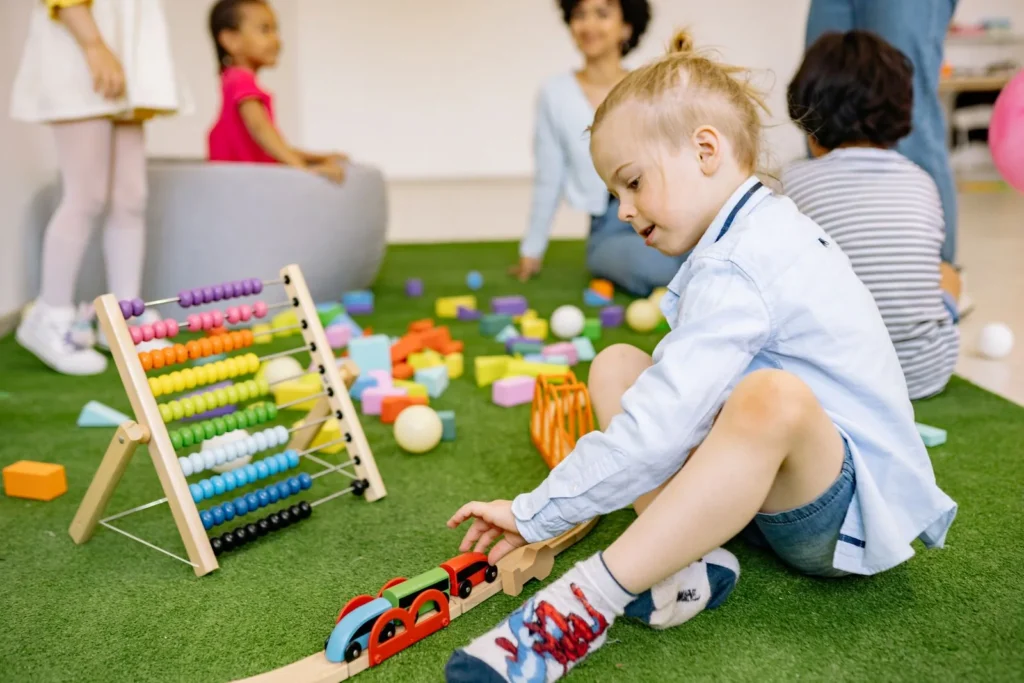
In our classrooms, the science and math your child meets every day arrive inside things they already want to do. Our Exploratorium™ is a hands-on discovery space where kids test, build, sort, and ask what happens next. Our iSTEAM projects start with inquiry, which is what the i stands for. Your child’s own question comes first, and the science, technology, engineering, art, and math grow out of chasing the answer, like a ramp that sends a toy car flying or a balance scale that settles which rock is heavier.
Come see a classroom where a preschooler’s questions get taken seriously all day long! Find a school near you and spend a morning with us.

Related Articles
-
“Let’s Find Out” Is the Best STEM Answer You Can Give Your Preschooler
-
10 Creative Strategies for Introducing New Foods to Picky Toddlers: Tips and Tricks

-
10 Earth Day Adventures for Preschoolers
-
7 Fast Yet Nutritious Toddler Breakfasts for Busy Parents

-
Achieving Work-Life Balance with Young Kids: Practical Tips for Busy Parents

Categories
- About Creative World (3)
- All About Water (4)
- Altamonte Springs (1)
- Animal Adventures (4)
- Apollo Beach (6)
- Apopka (5)
- Art (5)
- Avalon (2)
- Avalon Park (5)
- Away We Go (3)
- Back to school (4)
- Belton (4)
- Blogs to Share on Social Media (7)
- Bonita Springs (1)
- Brandon (2)
- Brrr... Cold! (2)
- Buggin' Out (2)
- Build It Up Theme (6)
- CampTastic (3)
- Chesapeake (3)
- Childhood Development (33)
- Children Book Recommendations (14)
- Children Quotes (1)
- Children Songs (1)
- Construction Theme (1)
- Contests (1)
- Creative World Curriculum (4)
- Creative World School (2)
- Crosscreek (4)
- CW Activity (2)
- CW Books (11)
- CW Celebrates (11)
- CW Character Traits (1)
- CW Educational Focus (4)
- CW Spotlight (1)
- Cypress Springs (3)
- Delicious Recipes (2)
- Did You Know? (1)
- Down To Earth (3)
- Early Education (19)
- Education (7)
- Estero (8)
- Fall Activities (14)
- Fall Festival (1)
- Fishhawk (3)
- Food (2)
- Franchise (1)
- Franklin Township (4)
- Friendship Theme (1)
- Fun National Holidays (19)
- Georgetown, TX (4)
- Health & Safety (5)
- In The Sky (2)
- In The Trees (4)
- iSTEAM (6)
- Katy, TX (5)
- Kindergarten (5)
- Land O' Lakes (3)
- Leander, TX (1)
- Lee's Summit (5)
- Liberty (1)
- Literacy (8)
- Loudoun County, VA (2)
- Mealtimes (1)
- Naples (4)
- New Schools (3)
- North Naples (4)
- Oakstead (4)
- Ooey Gooey (1)
- Orlando (5)
- Our Staff Recommends (2)
- Outdoor Activities (14)
- Oviedo (4)
- Parenting (63)
- Parenting Advice (62)
- People We Know (3)
- psychology (1)
- Rivercrest (1)
- Riverview (5)
- RiverWalk (1)
- School Events (3)
- School Readiness (5)
- Sensory Play (2)
- social-emotional (3)
- Space Topic (1)
- Special Events (17)
- St. Cloud (2)
- St. Cloud (5)
- Starkey Ranch (5)
- STEAM (5)
- Summer (3)
- Summer Activities (38)
- Tampa (6)
- That's Me! (2)
- Tips (3)
- To The Grocery Store (2)
- Try this with your kids! (4)
- Tuition (1)
- TX (1)
- UCF (6)
- Uncategorized (72)
- Vinings (2)
- water (1)
- We're SERIOUS about PLAY (2)
- Week of the Young Child (2)
- Wesley Chapel (2)
- Winter Activities (3)