
Early Math at Home: Counting and Patterns Without Flashcards
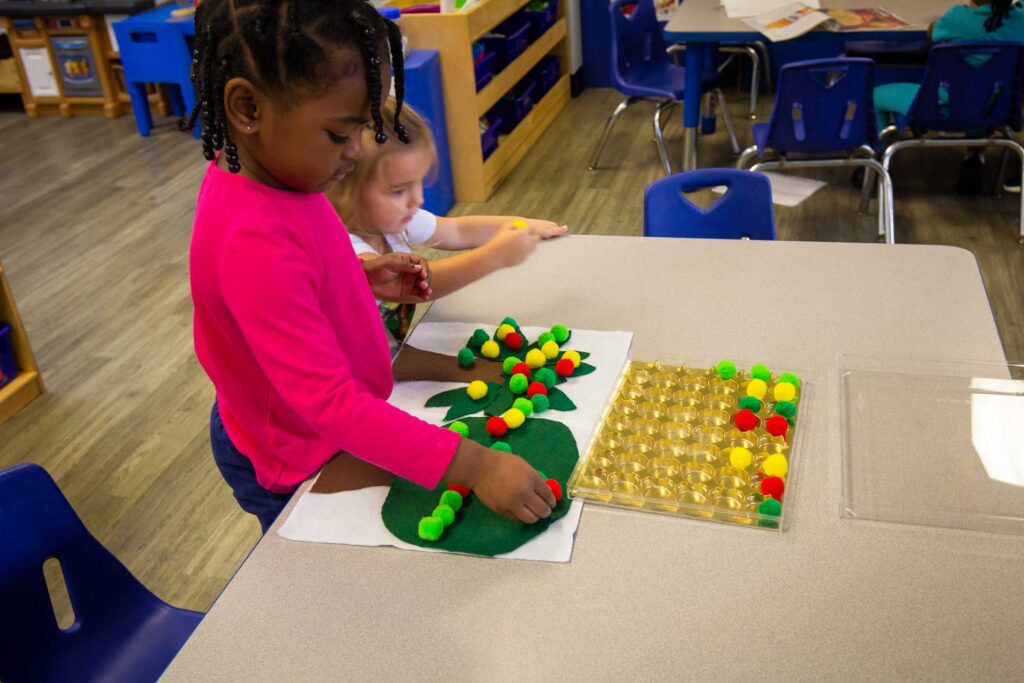
Creative world school Aug 21, 2026Your preschooler is already doing math, even if it never looks like a worksheet. They divvy up crackers so everybody gets the same number, and they notice the second their big sister got more grapes. They line up toy cars by size and count the stairs on the way up to bed.
Early math grows right out of that ordinary stuff you’re already doing together. A little attention is all it takes to turn counting crackers and spotting patterns into real number sense, without a flashcard in sight.
Turn Everyday Moments Into Counting Practice
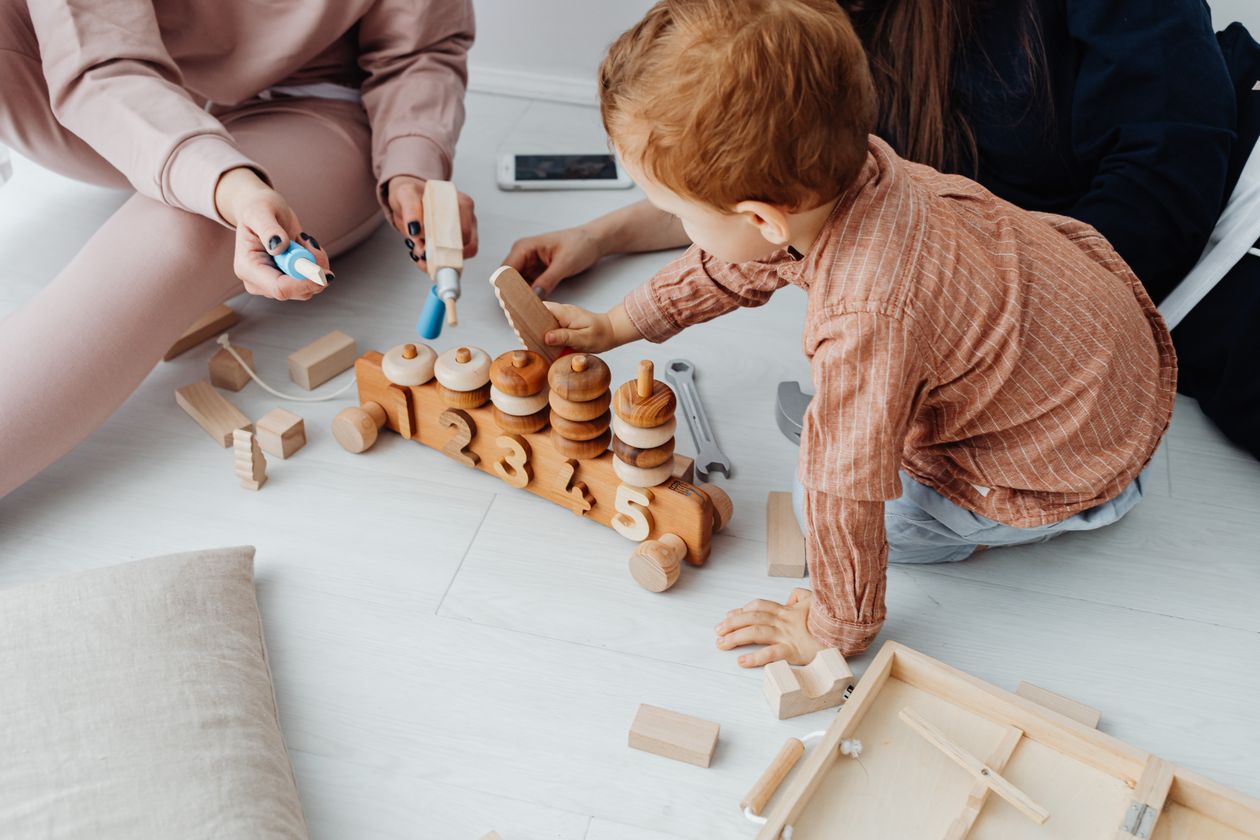
Counting out loud is the easiest place to start, and your day is full of openings for it. Count the steps up to the front door, the blueberries going onto the plate, or the minutes left until the timer beeps. What matters at this age is connecting each number word to one real object, the skill that makes counting actually mean something. Slow counting is good counting.
Once your preschooler can rattle off numbers, stretch it a little. Ask which pile has more. Line up a row of shoes and count them, then count again starting from the other end so they see the total stays the same. These early counting and pattern skills turn out to be some of the strongest predictors of how kids handle math years later, so the few minutes you spend on them really do add up.
In Mouse Count by Ellen Stoll Walsh, a hungry snake counts ten little mice into a jar one by one, until the mice outsmart him and count themselves right back out. The numbers climb to ten and tumble back down, so your kiddo hears counting work in both directions.
Patterns Are Everywhere Once You Look
Patterns are the other big piece of early math, and they’re hiding in plain sight. Think of the stripes on a shirt, the red-blue-red-blue of a beaded necklace, or the clap-clap-stomp of a silly routine you make up on the kitchen floor. When your preschooler figures out what comes next, they’re building the same thinking that later powers skip-counting and multiplication.
Make a pattern together and let your child extend it. Lay out a spoon, a fork, a spoon, a fork, and pause before the next one so they can fill it in. Sort the laundry into lights and darks. String cereal onto a shoelace in a color pattern they pick. Then mix it up on purpose and let them catch the mistake, since spotting a broken pattern is its own kind of thinking.
Pattern Fish by Trudy Harris turns pattern-spotting into a game, with bouncy rhymes that swim through one pattern after another, starting simple and growing as the book goes. The rhythm of the words does half the work, and your child can hunt for the patterns hidden in the fish, the background, and the borders.
Talk Math Out Loud Every Day
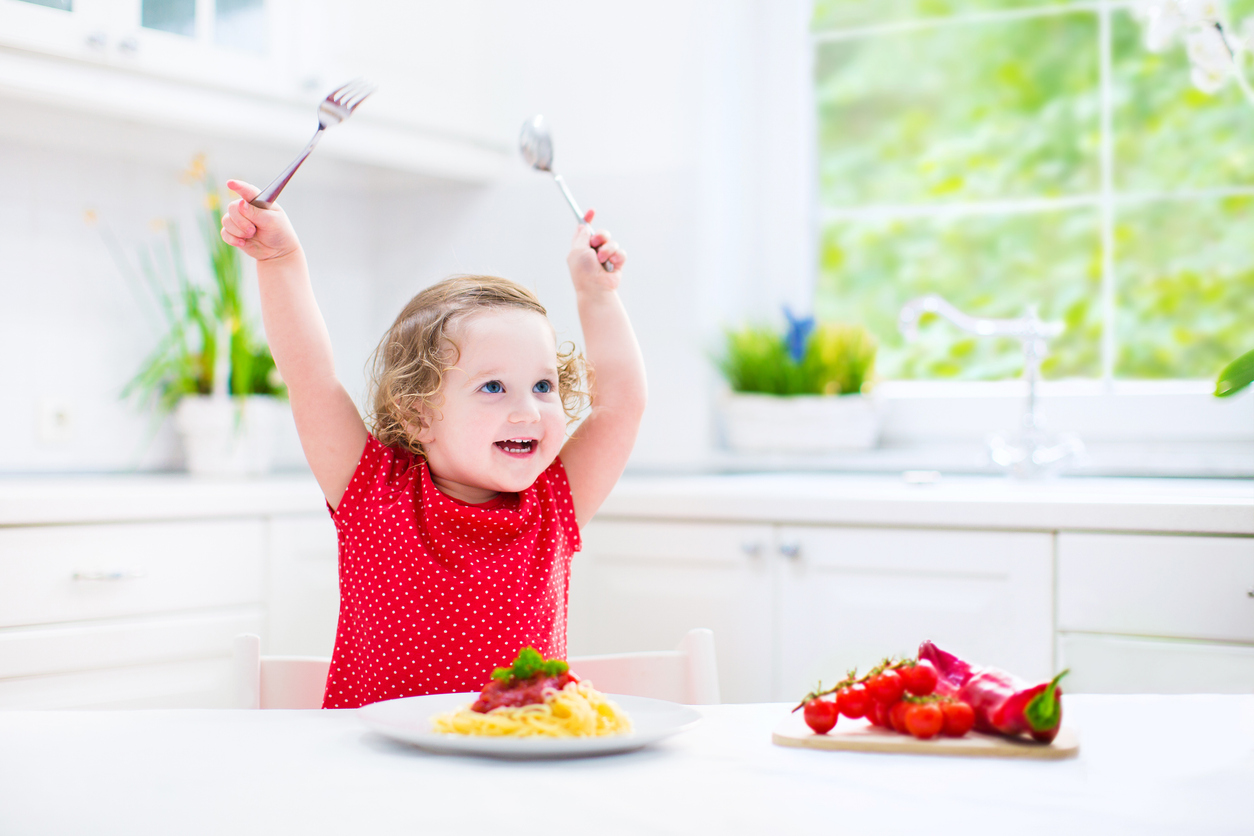
A lot of early math is really just language, so the more number words your preschooler hears, the more they have to work with. Narrate the math you already do without thinking. Mention that you need two more forks for the table, or that the cookie just broke into halves. Wonder out loud if the tall cup or the wide bowl holds more water, then pour it out and find out together!
Comparison words matter as much as numbers here. More and fewer, bigger and smaller, taller and shorter, first and last. Name shapes while you’re at it, like the round clock, the square window, and the triangle of a cut sandwich. These are the words that let a child describe what they notice, and they show up everywhere once you start listening for them. For a few more ways to fold learning into a regular day, we have a whole post on simple at-home inquiry activities.
Keep Early Math Playful
Relax about the pace. Flashcards and timed drills can make math feel like a test long before your child is ready for one, and pressure is the fastest way to make a preschooler shut down. Play works the other way around. It keeps them curious and willing to try, which is a big part of how play drives early learning.
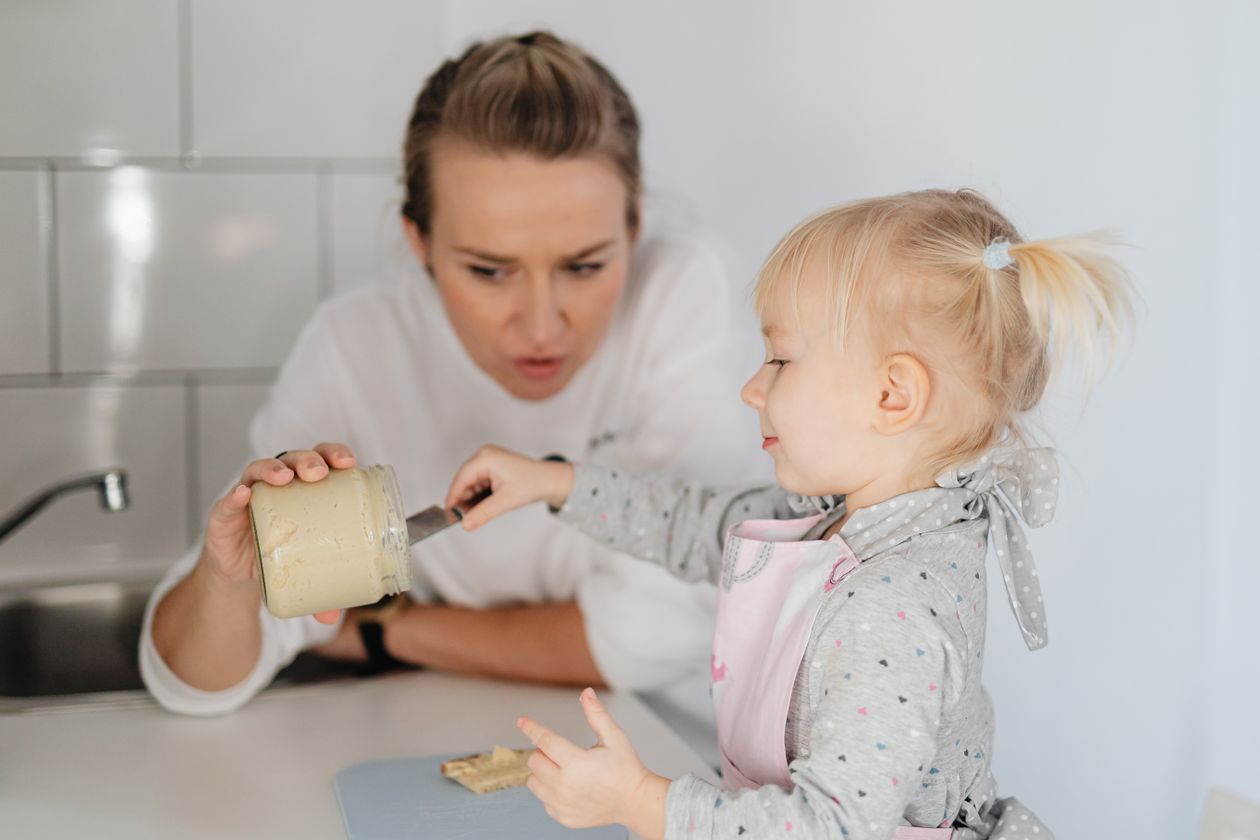
So follow your child’s lead. If they’re obsessed with dinosaurs, count the dinosaurs and sort them by size. If they love helping in the kitchen, let them measure and pour. Board games with a spinner or dice sneak counting and number recognition right into the fun. When they get something wrong, treat it like no big deal and keep going, since a kid who feels safe making mistakes is one who keeps thinking.
Keep the sessions short and let them end while it’s still fun. Five good minutes beats twenty forced ones every time!
Keep Their Math Curiosity Growing
All it takes is noticing the math your preschooler is already reaching for and saying it out loud alongside them.
That same hands-on, curious approach is what shapes our classrooms every day. At Creative World School, our inquiry-based curriculum lets children explore numbers, shapes, and patterns through play, with teachers right beside them asking the questions that keep little minds working. In our Exploratorium™ spaces, math is something kids build, pour, sort, and count with their own hands!
When you’re ready to see that in action, find a Creative World School near you and schedule a visit.

Related Articles
Categories
- About Creative World (3)
- All About Water (4)
- Altamonte Springs (1)
- Animal Adventures (4)
- Apollo Beach (6)
- Apopka (4)
- Art (5)
- Avalon (2)
- Avalon Park (5)
- Away We Go (3)
- Back to school (4)
- Belton (4)
- Blogs to Share on Social Media (7)
- Bonita Springs (1)
- Brandon (2)
- Brrr... Cold! (2)
- Buggin' Out (2)
- Build It Up Theme (6)
- CampTastic (3)
- Chesapeake (3)
- Childhood Development (33)
- Children Book Recommendations (14)
- Children Quotes (1)
- Children Songs (1)
- Construction Theme (1)
- Contests (1)
- Creative World Curriculum (4)
- Creative World School (2)
- Crosscreek (4)
- CW Activity (2)
- CW Books (11)
- CW Celebrates (11)
- CW Character Traits (1)
- CW Educational Focus (4)
- CW Spotlight (1)
- Cypress Springs (3)
- Delicious Recipes (2)
- Did You Know? (1)
- Down To Earth (3)
- Early Education (19)
- Education (7)
- Estero (8)
- Fall Activities (10)
- Fall Festival (1)
- Fishhawk (3)
- Food (2)
- Franchise (1)
- Franklin Township (4)
- Friendship Theme (1)
- Fun National Holidays (19)
- Georgetown, TX (3)
- Health & Safety (5)
- In The Sky (2)
- In The Trees (4)
- iSTEAM (5)
- Katy, TX (5)
- Kindergarten (5)
- Land O' Lakes (3)
- Leander, TX (1)
- Lee's Summit (5)
- Liberty (1)
- Literacy (8)
- Loudoun County, VA (2)
- Mealtimes (1)
- Naples (4)
- New Schools (3)
- North Naples (4)
- Oakstead (4)
- Ooey Gooey (1)
- Orlando (5)
- Our Staff Recommends (2)
- Outdoor Activities (14)
- Oviedo (4)
- Parenting (62)
- Parenting Advice (60)
- People We Know (3)
- psychology (1)
- Rivercrest (1)
- Riverview (4)
- RiverWalk (1)
- School Events (3)
- School Readiness (5)
- Sensory Play (2)
- social-emotional (3)
- Space Topic (1)
- Special Events (17)
- St. Cloud (5)
- St. Cloud (2)
- Starkey Ranch (5)
- STEAM (5)
- Summer (3)
- Summer Activities (38)
- Tampa (6)
- That's Me! (2)
- Tips (3)
- To The Grocery Store (2)
- Try this with your kids! (4)
- Tuition (1)
- TX (1)
- UCF (5)
- Uncategorized (72)
- Vinings (2)
- water (1)
- We're SERIOUS about PLAY (2)
- Week of the Young Child (2)
- Wesley Chapel (2)
- Winter Activities (3)