
How to Help Your Preschooler Sleep Through Summer’s Long Days
Creative world school Jul 3, 2026It’s late, and the sun’s still glowing on the horizon. Your preschooler is bouncing on the couch like they had three espressos. Bedtime, theoretically, was an hour ago.
Welcome to summer bedtimes! Summer schedule slip sneaks up. A late dinner here. A pool day that ran long there. Suddenly your preschooler is going to bed way later than they should, waking up cranky, and refusing to nap. By August you may be parenting a tiny gremlin who hasn’t seen a consistent hour all month.
Here’s how to keep summer fun without shaking up the routine.
How Much Sleep Preschoolers Need
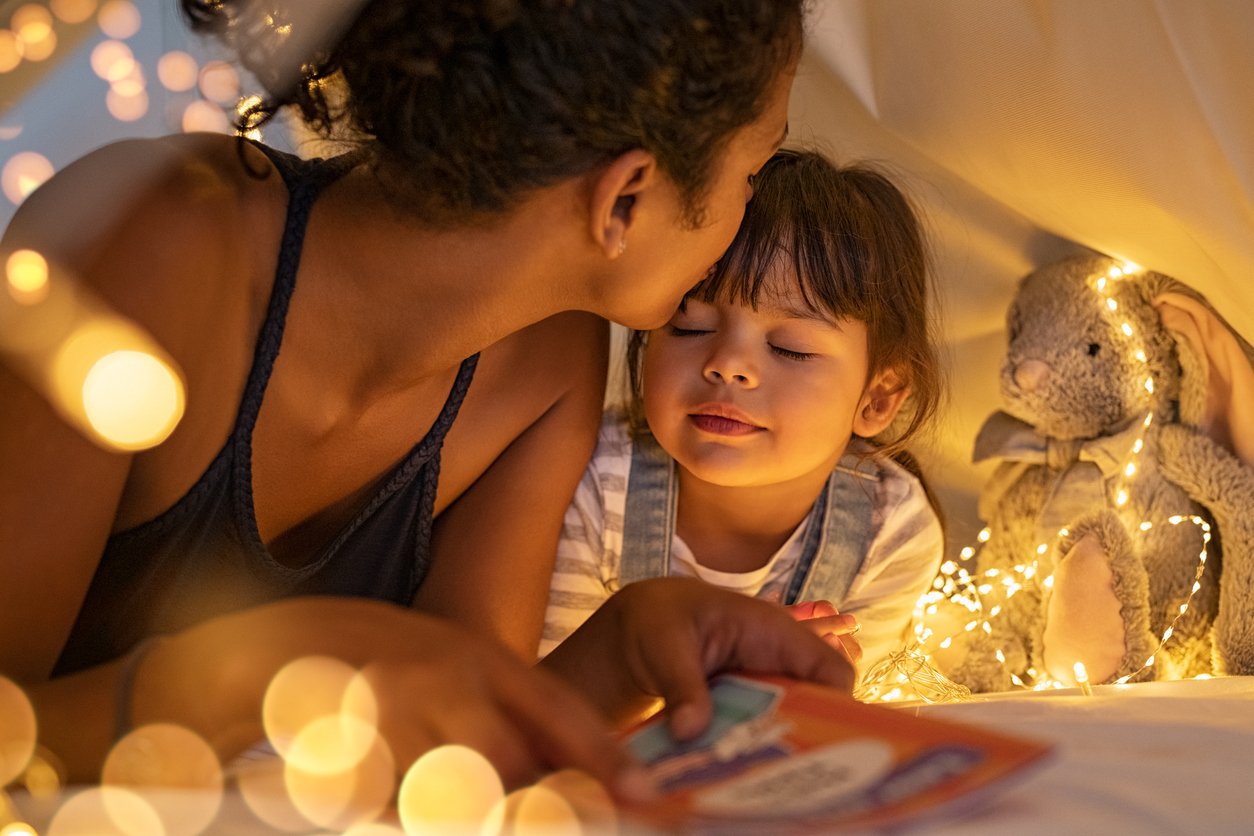
Preschoolers need a lot more sleep than parents tend to think. Children ages 3 to 5 should sleep 10 to 13 hours per 24-hour period, including naps, according to the American Academy of Pediatrics and the American Academy of Sleep Medicine. That’s a wide range, and somewhere around eleven or twelve hours is a realistic target for the kid in your house.
Kids who consistently get less than that show it everywhere. More tantrums, worse focus, and quicker meltdowns over small stuff. The summer dip in sleep is a real reason your preschooler may seem more emotional in July than they did in May. Our guide on building a fun preschool routine that sticks digs into how routines hold the day together.

Why Summer Bedtimes Get Off Track
Light is the biggest culprit. In June and July, the sun stays up much later than during the school year. Your preschooler’s brain is wired to associate light with awake time, so a sky that’s still glowing makes their body think it’s playtime. Add a backyard hangout, popsicles, and a sprinkler, and bedtime suddenly feels insulting to their summer plans.
Schedule shifts add up too. Camps run on different hours than preschool. Family visits push dinner later. Travel jacks everything up. Each disruption looks small on its own, but stacked together, you get a kid who’s two hours off their normal rhythm by mid-July. Early sunrises pull from the other end too, dragging kids awake before six. Kids can bounce back quickly once you reset the clock, and a couple of steady nights usually undo a wild week.
For a fun refresher on why exactly summer days are longer, check out this fun explainer!
A Realistic Summer Bedtime Routine
Let the school-year bedtime slide a little in July, and keep the sequence of events exactly the same. Bath, pajamas, story, lights down, in bed. Your preschooler tunes into the rhythm of the routine more than the time on the clock.
Aim for a bedtime window. A flexible summer stretch gives you room for late dinners and ice cream runs without the whole routine collapsing. Books help. Read The Going to Bed Book by Sandra Boynton for a quick rhyming wind-down, and Time for Bed by Mem Fox slows the room down with sleepy baby animals settling down one by one. Pair the routine with our tips on making nighttime reading more engaging for preschoolers.
If naps slip away in summer, that’s fine. Plenty of preschoolers drop the nap and sleep eleven hours straight at night. You’re just adjusting. Nudge bedtime a notch earlier to cover the hours the nap used to carry, and watch the afternoon mood to see how it’s going.
Handling Light, Noise, and Long Days
Black-out curtains are worth every penny. A quality one can take the bedroom from ‘stage lights’ to ‘cave,’ and that visual cue helps the body relax. Morning light matters just as much, so the same curtains buy you a later wake-up too. A cool room helps too. Crank the AC a notch lower before bed and your preschooler’s body has an easier time settling.
White noise can save you in summer if your neighborhood gets loud late at night. A small fan, a sound machine, or even a free white-noise app on an old phone will mask the sound of cicadas, fireworks two streets over, or older kids in the driveway. Anything predictable and steady helps a preschooler stay asleep.
If your kid gets a second wind right at sundown, they need extra wind-down before lights out. Move bath time earlier. Cut screens before the wind-down begins. Let the body slow down with you.

When to Loosen Up and When to Hold the Line
Summer’s whole gift is the slack in the schedule. Use it! Late nights for fireworks. Sleepovers at grandma’s. The occasional late bedtime when cousins are visiting. None of those need to throw off the routine on their own.
What does throw things off is letting “tonight is special” become every single night. The rhythm is what matters. Flex three nights and hold the line on four, and you stay mostly on track. Flex seven nights in a row, and you’re rebuilding from scratch in August. And if a week of visitors blows the plan up anyway, pick a normal night, restart the usual sequence, and hold it for three or four days. A good rule of thumb is “two flex nights, then a real reset.” Stay up late Saturday for fireworks. Sleep in Sunday morning. Then back to the regular schedule Sunday night. Most preschoolers handle that pattern, and you keep summer fun without losing August to a sleep-deprived gremlin.

When you’re looking for a school that values consistent rhythms and rest as much as you do, come visit Creative World School. Our classrooms are built around inquiry-based learning, our Exploratorium™ keeps kids active and engaged through the day so they actually wear themselves out, and our 3 E’s of Excellence™ curriculum builds Education, Exploration, and Enrichment into every day, so the rhythm stays predictable for your preschooler. Find a Creative World School near you and schedule a tour!

Related Articles
-
10 Creative Strategies for Introducing New Foods to Picky Toddlers: Tips and Tricks

-
10 Earth Day Adventures for Preschoolers
-
5 Vinings Spots That Make Summer With a Preschooler Easy

-
7 Fast Yet Nutritious Toddler Breakfasts for Busy Parents

-
Achieving Work-Life Balance with Young Kids: Practical Tips for Busy Parents

Categories
- About Creative World (3)
- All About Water (4)
- Altamonte Springs (1)
- Animal Adventures (4)
- Apollo Beach (6)
- Apopka (4)
- Art (5)
- Avalon (2)
- Avalon Park (5)
- Away We Go (3)
- Back to school (4)
- Belton (4)
- Blogs to Share on Social Media (7)
- Bonita Springs (1)
- Brandon (2)
- Brrr... Cold! (2)
- Buggin' Out (2)
- Build It Up Theme (6)
- CampTastic (3)
- Chesapeake (2)
- Childhood Development (33)
- Children Book Recommendations (13)
- Children Quotes (1)
- Children Songs (1)
- Construction Theme (1)
- Contests (1)
- Creative World Curriculum (4)
- Creative World School (2)
- Crosscreek (4)
- CW Activity (2)
- CW Books (11)
- CW Celebrates (10)
- CW Character Traits (1)
- CW Educational Focus (4)
- CW Spotlight (1)
- Cypress Springs (3)
- Delicious Recipes (2)
- Did You Know? (1)
- Down To Earth (3)
- Early Education (19)
- Education (7)
- Estero (8)
- Fall Activities (3)
- Fall Festival (1)
- Fishhawk (3)
- Food (2)
- Franchise (1)
- Franklin Township (3)
- Friendship Theme (1)
- Fun National Holidays (19)
- Georgetown, TX (2)
- Health & Safety (5)
- In The Sky (2)
- In The Trees (4)
- iSTEAM (1)
- Katy, TX (4)
- Kindergarten (5)
- Land O' Lakes (3)
- Leander, TX (1)
- Lee's Summit (5)
- Liberty (1)
- Literacy (8)
- Loudoun County, VA (1)
- Mealtimes (1)
- Naples (3)
- New Schools (1)
- North Naples (4)
- Oakstead (4)
- Ooey Gooey (1)
- Orlando (5)
- Our Staff Recommends (2)
- Outdoor Activities (13)
- Oviedo (3)
- Parenting (59)
- Parenting Advice (52)
- People We Know (3)
- psychology (1)
- Rivercrest (1)
- Riverview (4)
- RiverWalk (1)
- School Events (3)
- School Readiness (5)
- Sensory Play (2)
- social-emotional (3)
- Space Topic (1)
- Special Events (17)
- St. Cloud (5)
- St. Cloud (1)
- Starkey Ranch (5)
- STEAM (5)
- Summer (3)
- Summer Activities (38)
- Tampa (6)
- That's Me! (2)
- Tips (3)
- To The Grocery Store (2)
- Try this with your kids! (4)
- Tuition (1)
- TX (1)
- UCF (5)
- Uncategorized (74)
- Vinings (2)
- water (1)
- We're SERIOUS about PLAY (2)
- Week of the Young Child (2)
- Wesley Chapel (2)
- Winter Activities (3)