
What STEM Skills Look Like in a 4-Year-Old
Creative world school Oct 2, 2026Someone at a birthday party mentions their kid doing science experiments at home, and you spend the whole drive back wondering if yours is behind. If that’s you right now, you’re in good company, and the answer is a lot calmer than that party made it feel.
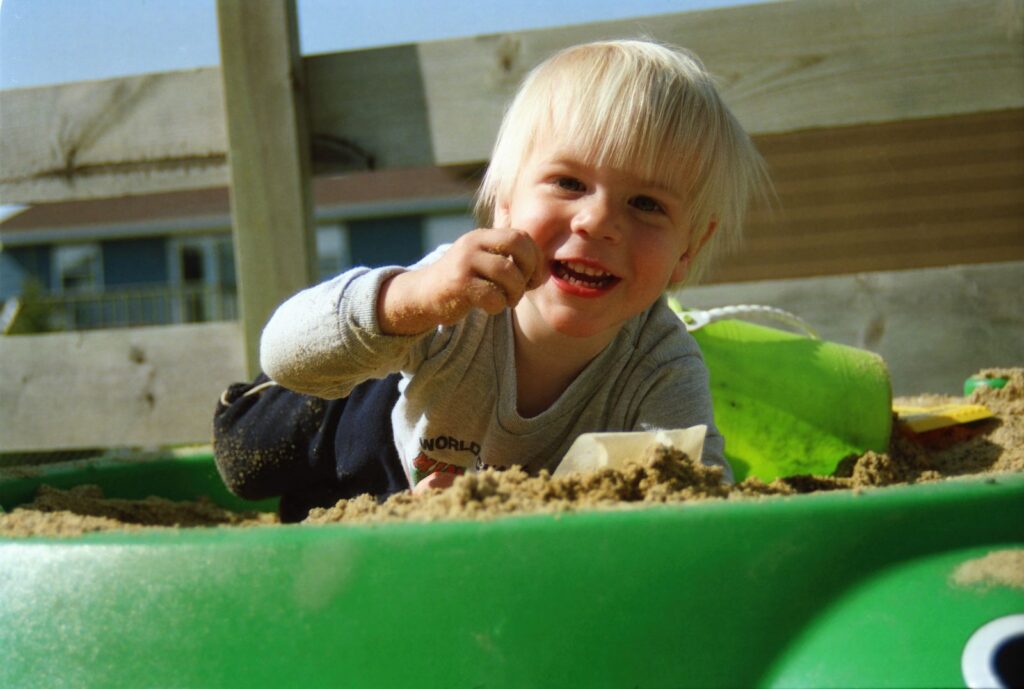
Around four, STEM mostly shows up as four everyday skills, which are comparing, sorting, predicting, and explaining. They come out during regular play with regular stuff, like the laundry basket, the bathtub, and the sandbox. Head Start’s federal learning framework lays these skills out as a progression that runs from about age three to age five, so your 4-year-old is somewhere in the middle of a long stretch with plenty of room on both sides!
Sorting and Comparing Skills at Age Four
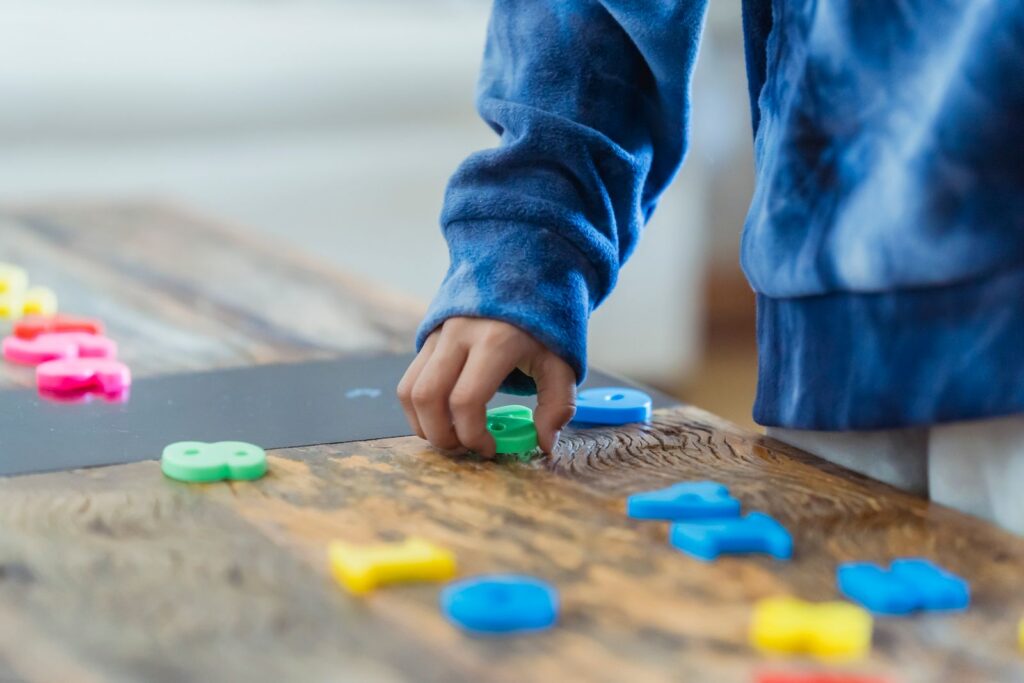
Putting things into groups is one of the earliest science skills to show up. A 3-year-old usually sorts by the most obvious thing available, like color. Between four and five, kids start sorting by trickier attributes like weight, sound, and texture, and they need less help from a grown-up to do it. Same skill, harder categories!
Comparing runs right alongside it. By about five, the framework expects kids to compare or line up as many as five objects by height or weight and use words like shortest, heavier, and biggest. At four, that usually still takes a little help from you, and the framework builds that help right into how it describes the age.
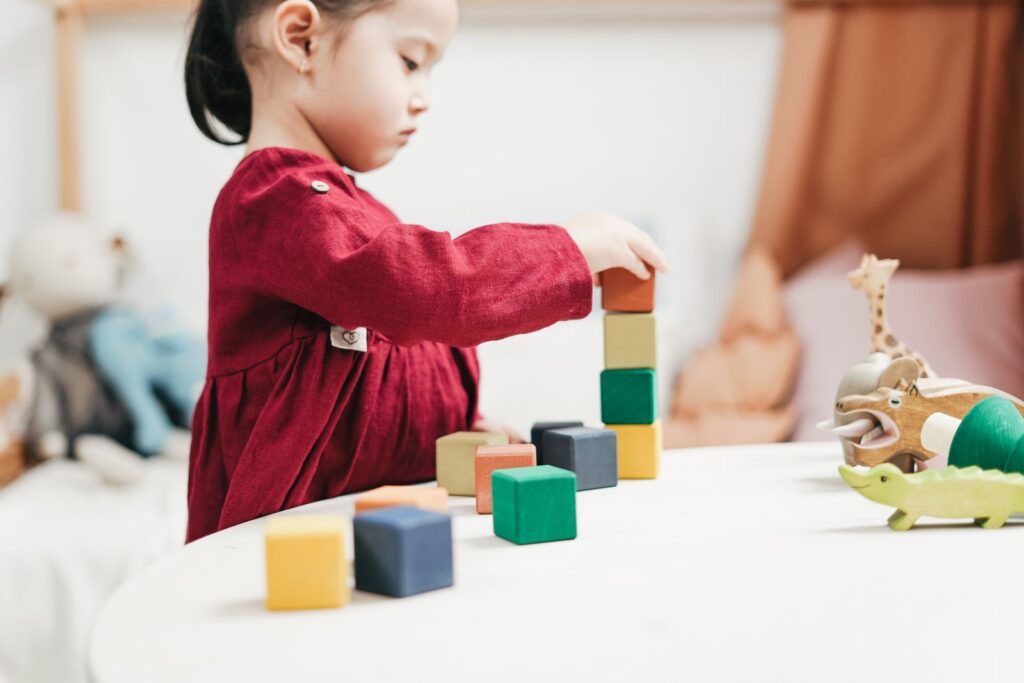
Counting and patterns belong to this family too, and they have their own home. If that’s the part you’re wondering about, our post on counting and patterns at home covers it properly. And if your kiddo spends most of their floor time stacking, block play is doing more of this work than it looks like.
How Preschoolers Learn to Make Predictions
Prediction is where four gets interesting! Younger preschoolers ask simple questions, treat you as the answer machine, and usually make their guesses with a grown-up’s help. The framework’s own example for that younger stage is a child saying the golf ball will be heavier than the ping pong ball. Between four and five, kids start using what they already know and have seen to make predictions more on their own, and they start looking past you for answers, to books and to other people who know things.
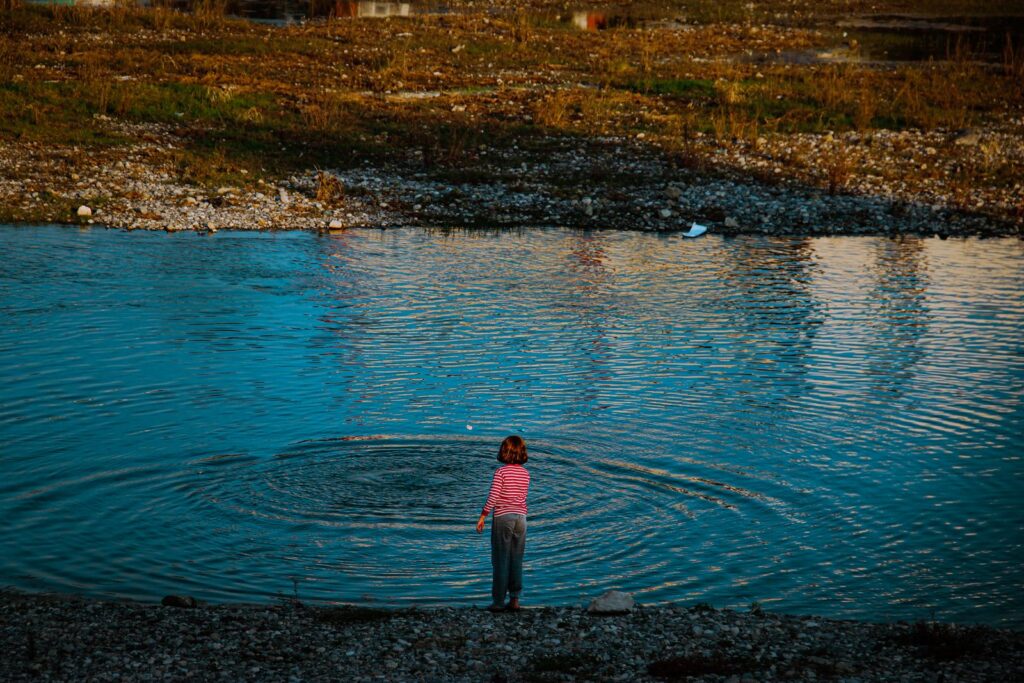
Nothing in there says the guess has to be right. A preschooler who insists the big rock will float is still predicting. They’re taking something they’ve seen before and trying it somewhere new, and the water does the correcting.
When Preschoolers Start Explaining Cause and Effect
Of the four skills, explaining tends to take the longest. A 3-year-old usually needs an adult walking them through what just happened. Between four and five, children start drawing their own conclusions and putting cause and effect into words, and with a grown-up’s help they start checking what happened against what they guessed would happen.
Expect it to come out sideways. “The bridge broke because it got too heavy” is a real explanation. So is a long, confident, completely wrong story about why the moon follows the car! Both show a child reaching for a reason, which is exactly what this skill looks like at this age.
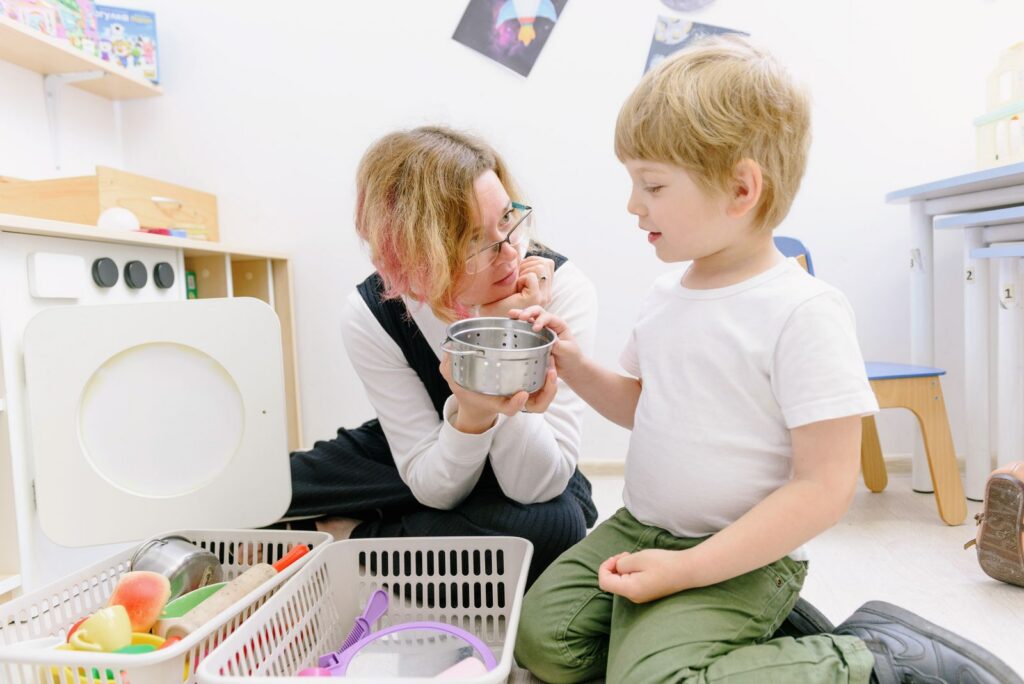
A lot of the explaining also runs through the hands. Measuring cups, eye droppers, magnifying glasses, and balance scales all show up in the framework as everyday preschool science tools, and working them is a fine motor question as much as a science one. A child still figuring out the dropper is busy with a motor skill, and that says very little about how the science thinking is going.
The Normal Range for Preschool STEM Skills Is Wide
NAEYC’s guidance on how young children grow says development happens at different rates from child to child and at uneven rates across different areas in the same child. Your preschooler can be well ahead on sorting and nowhere near it on explaining, and that’s an ordinary shape for four to take.
It moves day to day, too. The same guidance points out that a child might finish a puzzle one day and not the next, because young kids are still learning to hold their attention through distractions. It also says a little sliding backward is common right before a new skill settles in. NAEYC goes so far as to say “stages” has limited use here and suggests thinking in overlapping waves instead.
If something keeps nagging at you, talk to your child’s teacher or pediatrician. A good time is when something you’ve noticed has held steady for weeks, or when your gut just won’t let it go. A teacher sees your child in a group every day, next to a whole room of kids the same age, and that’s a view that’s hard to get at home. Bring what you’ve noticed, ask what they’ve noticed, and go from there.
Hands-On STEM for Preschoolers at Creative World School
Comparing, predicting, and explaining are the skills we build our days around at Creative World School. Our Exploratorium™ gives kids a hands-on space to test their ideas with real materials. Our iSTEAM curriculum starts with inquiry, which is what the i stands for, and lets the science, technology, engineering, art, and math grow out of the questions kids are asking. That might mean guessing which ramp sends a car farther, weighing rocks on a balance scale, or finding out which cup holds more sand.
If you’d rather see that than read about it, find a school near you and come see it for yourself. We’d love to meet your family!

Related Articles
-
“Let’s Find Out” Is the Best STEM Answer You Can Give Your Preschooler
-
10 Creative Strategies for Introducing New Foods to Picky Toddlers: Tips and Tricks

-
10 Earth Day Adventures for Preschoolers
-
7 Fast Yet Nutritious Toddler Breakfasts for Busy Parents

-
Achieving Work-Life Balance with Young Kids: Practical Tips for Busy Parents

Categories
- About Creative World (3)
- All About Water (4)
- Altamonte Springs (1)
- Animal Adventures (4)
- Apollo Beach (6)
- Apopka (5)
- Art (5)
- Avalon (2)
- Avalon Park (5)
- Away We Go (3)
- Back to school (4)
- Belton (4)
- Blogs to Share on Social Media (7)
- Bonita Springs (1)
- Brandon (2)
- Brrr... Cold! (2)
- Buggin' Out (2)
- Build It Up Theme (6)
- CampTastic (3)
- Chesapeake (3)
- Childhood Development (33)
- Children Book Recommendations (14)
- Children Quotes (1)
- Children Songs (1)
- Construction Theme (1)
- Contests (1)
- Creative World Curriculum (4)
- Creative World School (2)
- Crosscreek (4)
- CW Activity (2)
- CW Books (11)
- CW Celebrates (11)
- CW Character Traits (1)
- CW Educational Focus (4)
- CW Spotlight (1)
- Cypress Springs (3)
- Delicious Recipes (2)
- Did You Know? (1)
- Down To Earth (3)
- Early Education (19)
- Education (7)
- Estero (8)
- Fall Activities (14)
- Fall Festival (1)
- Fishhawk (3)
- Food (2)
- Franchise (1)
- Franklin Township (4)
- Friendship Theme (1)
- Fun National Holidays (19)
- Georgetown, TX (4)
- Health & Safety (5)
- In The Sky (2)
- In The Trees (4)
- iSTEAM (6)
- Katy, TX (5)
- Kindergarten (5)
- Land O' Lakes (3)
- Leander, TX (1)
- Lee's Summit (5)
- Liberty (1)
- Literacy (8)
- Loudoun County, VA (2)
- Mealtimes (1)
- Naples (4)
- New Schools (3)
- North Naples (4)
- Oakstead (4)
- Ooey Gooey (1)
- Orlando (5)
- Our Staff Recommends (2)
- Outdoor Activities (14)
- Oviedo (4)
- Parenting (63)
- Parenting Advice (62)
- People We Know (3)
- psychology (1)
- Rivercrest (1)
- Riverview (5)
- RiverWalk (1)
- School Events (3)
- School Readiness (5)
- Sensory Play (2)
- social-emotional (3)
- Space Topic (1)
- Special Events (17)
- St. Cloud (2)
- St. Cloud (5)
- Starkey Ranch (5)
- STEAM (5)
- Summer (3)
- Summer Activities (38)
- Tampa (6)
- That's Me! (2)
- Tips (3)
- To The Grocery Store (2)
- Try this with your kids! (4)
- Tuition (1)
- TX (1)
- UCF (6)
- Uncategorized (72)
- Vinings (2)
- water (1)
- We're SERIOUS about PLAY (2)
- Week of the Young Child (2)
- Wesley Chapel (2)
- Winter Activities (3)