
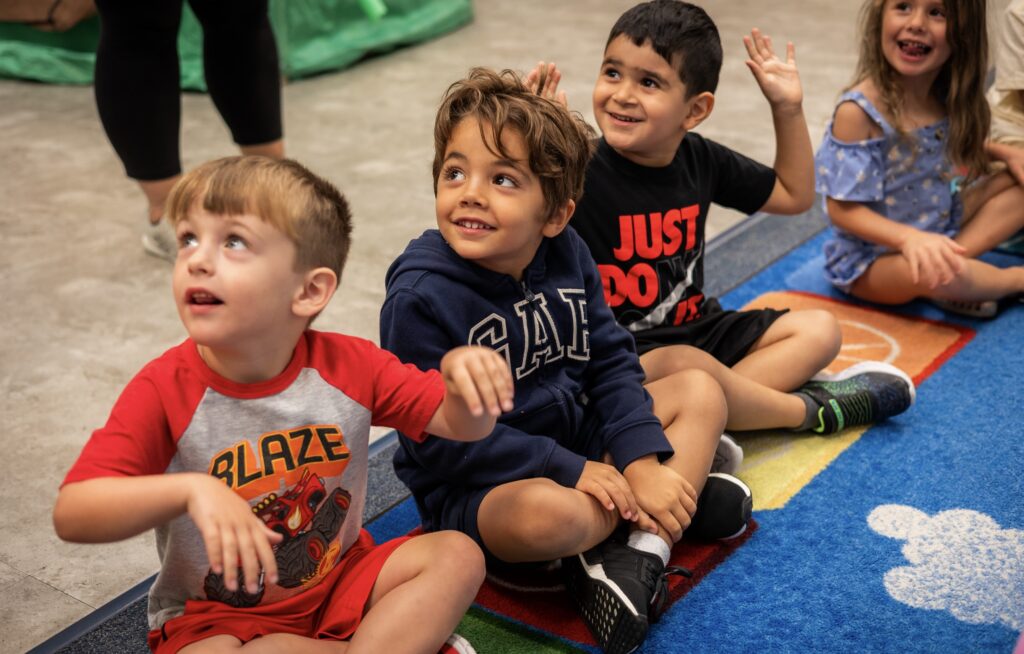
New Room, New Teacher, and a Preschooler Who’s Ready for Both
Creative world school Aug 19, 2026Your child spent ten months walking into the same room, hanging their backpack on the same hook, hugging the same teacher each morning. Then a letter comes home in August. They’re moving up!
And suddenly the kid who’s breezed through drop-off since October is crying in the parking lot. Despite what you’d assume, moving up is one of the biggest changes a preschooler goes through all year, and it catches the kids who sailed through the rest of it. Here’s what the switch feels like from their side, and what helps on either end of it.
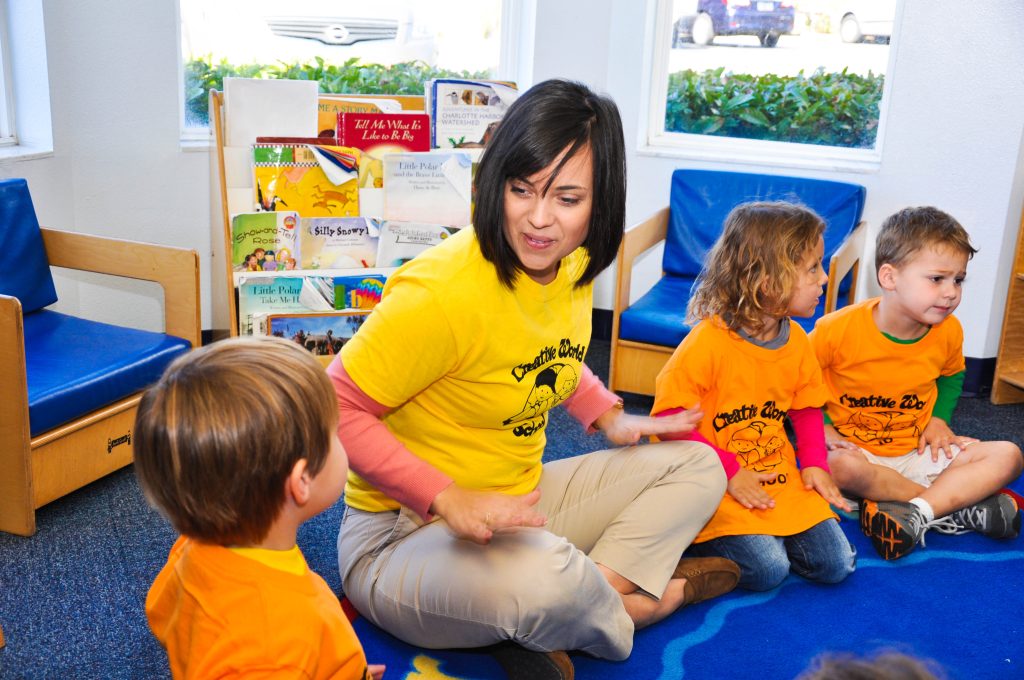
Why Moving Up a Classroom Feels So Big at 3 and 4
Your kiddo hears a lot more in “new room” than you do. Preschoolers build safety out of specifics. A particular cubby, a specific teacher who knows they like the blue cup, the spot on the rug where they always sit. Change all of that in one week and the day stops being predictable, which is what a 3-year-old leans on to feel brave.
The teacher piece matters most. Your child has spent a year learning how their teacher says their name, how she reacts when the block tower goes over, what her lap feels like on a hard morning. That relationship is real, so the goodbye is real too. It takes time to adjust to new people, new activities, and a new environment, which is exactly the work your child is doing.
The expectations jump too. Longer group times, more self-help tasks, a faster pace. Your kiddo is doing new thinking work and new feeling work in the same week.
Why Preschool Regression Happens and How Long It Lasts
Around week one, a lot of kids slide backward for a bit. That’s expected, and it passes. Potty accidents come back, naps get strange, and the child who dressed himself all spring suddenly needs help with socks. Some get clingy at bedtime, others get loud at dinner. When a preschooler spends all day holding it together in an unfamiliar room, that effort has to go somewhere, and it usually comes out on you at 5:30. Regression means your child is spending real energy on something hard.
Most families see it settle within two to four weeks. Try naming the feeling without amping up the emotion. “You miss Ms. Dana. That makes sense. You had her a long time.” Then move on to snack. Kids take their cue from you. Our post on recognizing early signs of emotional growth in toddlers has more on reading what you’re seeing.
In Ruby Finds a Worry by Tom Percival, Ruby picks up a small yellow worry that follows her everywhere and grows every time she ignores it. She can feel the thing but can’t name it, which is right where a preschooler sits after a room change.
What to Do in the Two Weeks Before the Classroom Move
Start early, keep it low-key.
Ask the school for specifics. The new teacher’s name, the new room, any schedule shift, which friends are moving up too. Say those names out loud at home so they stop sounding strange.
Ask for a visit. Most schools will let your child spend twenty minutes in the new room before the switch, and one visit beats two weeks of talking about it! Let them find the bathroom, the sink, and the reading corner with you right there.
Hold your routines steady. Bedtime, breakfast, the same goodbye at the door. Our guide to creating a consistent routine for preschoolers covers protecting those anchors while everything else shifts.
Pull Our Class is a Family by Shannon Olsen off the shelf a few nights before the switch. It frames a classroom as a group of people who look after each other, exactly the idea a nervous kid needs about a room of new faces.
How to Support Your Child in the New Room
Keep the handoff at the new door short and warm. A long lingering goodbye tells your child there’s something here worth worrying about.
Change your pickup question. “How was your day?” gets you nothing. Try “Who did you sit by at snack?” or “What’s in the new room that wasn’t in the old one?” Specific questions get specific answers.
Give it real time at home. Those back-and-forth exchanges between a young child and a caring adult shape brain architecture, according to Harvard’s Center on the Developing Child, and they steady a kid after a hard day. Ten unhurried minutes on the floor beat an hour of half-attention.
Send a note to the new teacher in week one. What calms your child, what sets them off, what they loved last year. She’ll want it, and it saves her a week of guessing. Expect friendships to lag. New rooms scramble the social map, and rebuilding takes a few weeks. Our post on helping your child make friends in preschool has ideas you can use tonight.
What a Great Preschool Does to Make Moving Up Easier
At Creative World School, we plan for this. Our teachers talk to each other about the children moving up, so your child’s new teacher knows the important things before day one. Every room has an Exploratorium™ at its center, so even a brand-new space carries the same invitation to dig in and ask questions.
Our 3 E’s of Excellence™ curriculum grows right along with your child, room by room, so each step forward builds on the one before it.
Want to see how we do it? Find a Creative World School near you and look around. We’d love to show you the room your child is heading into next!

Related Articles
-
10 Creative Strategies for Introducing New Foods to Picky Toddlers: Tips and Tricks

-
10 Earth Day Adventures for Preschoolers
-
7 Fast Yet Nutritious Toddler Breakfasts for Busy Parents

-
Achieving Work-Life Balance with Young Kids: Practical Tips for Busy Parents

-
An Unstructured Summer Helps Your Preschooler Grow

Categories
- About Creative World (3)
- All About Water (4)
- Altamonte Springs (1)
- Animal Adventures (4)
- Apollo Beach (6)
- Apopka (4)
- Art (5)
- Avalon (2)
- Avalon Park (5)
- Away We Go (3)
- Back to school (4)
- Belton (4)
- Blogs to Share on Social Media (7)
- Bonita Springs (1)
- Brandon (2)
- Brrr... Cold! (2)
- Buggin' Out (2)
- Build It Up Theme (6)
- CampTastic (3)
- Chesapeake (3)
- Childhood Development (33)
- Children Book Recommendations (14)
- Children Quotes (1)
- Children Songs (1)
- Construction Theme (1)
- Contests (1)
- Creative World Curriculum (4)
- Creative World School (2)
- Crosscreek (4)
- CW Activity (2)
- CW Books (11)
- CW Celebrates (10)
- CW Character Traits (1)
- CW Educational Focus (4)
- CW Spotlight (1)
- Cypress Springs (3)
- Delicious Recipes (2)
- Did You Know? (1)
- Down To Earth (3)
- Early Education (19)
- Education (7)
- Estero (8)
- Fall Activities (10)
- Fall Festival (1)
- Fishhawk (3)
- Food (2)
- Franchise (1)
- Franklin Township (4)
- Friendship Theme (1)
- Fun National Holidays (19)
- Georgetown, TX (3)
- Health & Safety (5)
- In The Sky (2)
- In The Trees (4)
- iSTEAM (5)
- Katy, TX (5)
- Kindergarten (5)
- Land O' Lakes (3)
- Leander, TX (1)
- Lee's Summit (5)
- Liberty (1)
- Literacy (8)
- Loudoun County, VA (2)
- Mealtimes (1)
- Naples (4)
- New Schools (3)
- North Naples (4)
- Oakstead (4)
- Ooey Gooey (1)
- Orlando (5)
- Our Staff Recommends (2)
- Outdoor Activities (14)
- Oviedo (4)
- Parenting (62)
- Parenting Advice (60)
- People We Know (3)
- psychology (1)
- Rivercrest (1)
- Riverview (4)
- RiverWalk (1)
- School Events (3)
- School Readiness (5)
- Sensory Play (2)
- social-emotional (3)
- Space Topic (1)
- Special Events (17)
- St. Cloud (1)
- St. Cloud (5)
- Starkey Ranch (5)
- STEAM (5)
- Summer (3)
- Summer Activities (38)
- Tampa (6)
- That's Me! (2)
- Tips (3)
- To The Grocery Store (2)
- Try this with your kids! (4)
- Tuition (1)
- TX (1)
- UCF (5)
- Uncategorized (72)
- Vinings (2)
- water (1)
- We're SERIOUS about PLAY (2)
- Week of the Young Child (2)
- Wesley Chapel (2)
- Winter Activities (3)