
How to See Past the Inquiry-Based Learning Buzzword on Your Next Preschool Tour
Creative world school Jul 24, 2026Every preschool website says it now. Inquiry-based, child-led, curiosity-driven, hands-on. Those words cost nothing to type up, which is why they’ve stopped helping you tell one school from another.
Our first Creative World School opened in 1970, and children’s questions have led the learning in every classroom we’ve run since. That’s 56 years of the real thing, so we know an imitation when we see one.
Inquiry is one of the easier claims to check in person, because a classroom can’t fake it for the length of a tour. The evidence is sitting right there in the furniture, on the walls, and in the ten seconds after a kid does something nobody planned for. Here’s what to watch and listen for.
Listen to Who Asks the Questions in the Classroom
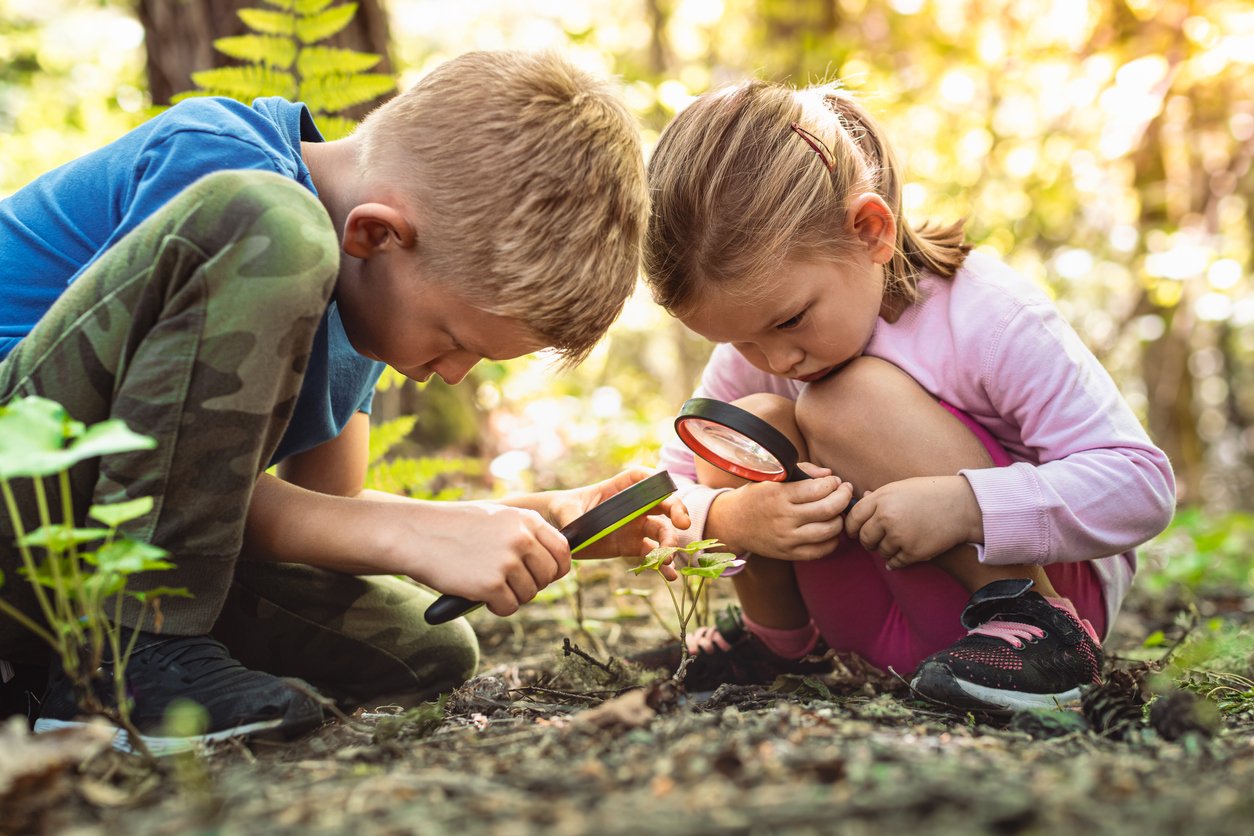
Stand in a classroom for two minutes and count who asks more, the adults or the kids. In a real inquiry-led room it’s the kids, and it isn’t close!
Then listen to the shape of the teacher’s questions. “What color is this?” and “How many bears do you see?” are fine, but they’re quiz questions with one right answer the teacher already knows. Listen for “What do you think will happen if we move it over here?” or “Why did it do that?” Then notice what comes next. Does the teacher wait? Three or four seconds of silence while a preschooler works out an answer is one of the strongest signals in the building.
This part of classroom quality is also the part preschools score worst on. Across dozens of observation studies, classrooms averaged 2.7 out of 7 on the measure that scores thinking, feedback, and rich language. Scores for warmth and safety run much higher. So bring a few questions worth asking on a preschool tour, and ask the teacher standing in the room rather than the director walking you through it.
What Classroom Walls Tell You About Real Learning
Twenty identical paper snowmen mean an adult cut the shapes and the children glued where they were told. That’s a craft. It’s lovely, and it tells you nothing about inquiry.
Walls in an inquiry classroom look a little messy. Drawings don’t match each other. There are photos of kids in the middle of doing something instead of posed at the end. Somewhere there’s a chart with children’s guesses written in their own words, a few of them wrong, and the teacher wrote them down anyway because the wrong guess is the interesting part.
NAEYC tells families that strong teachers show learning by collecting children’s drawings and photographing the things they make, so ask what’s on the wall right now and how long it’s been up. If every single thing on display was finished in one sitting last Thursday, questions aren’t living very long in that room.
Watch How Teachers Respond When a Child Goes Off-Script
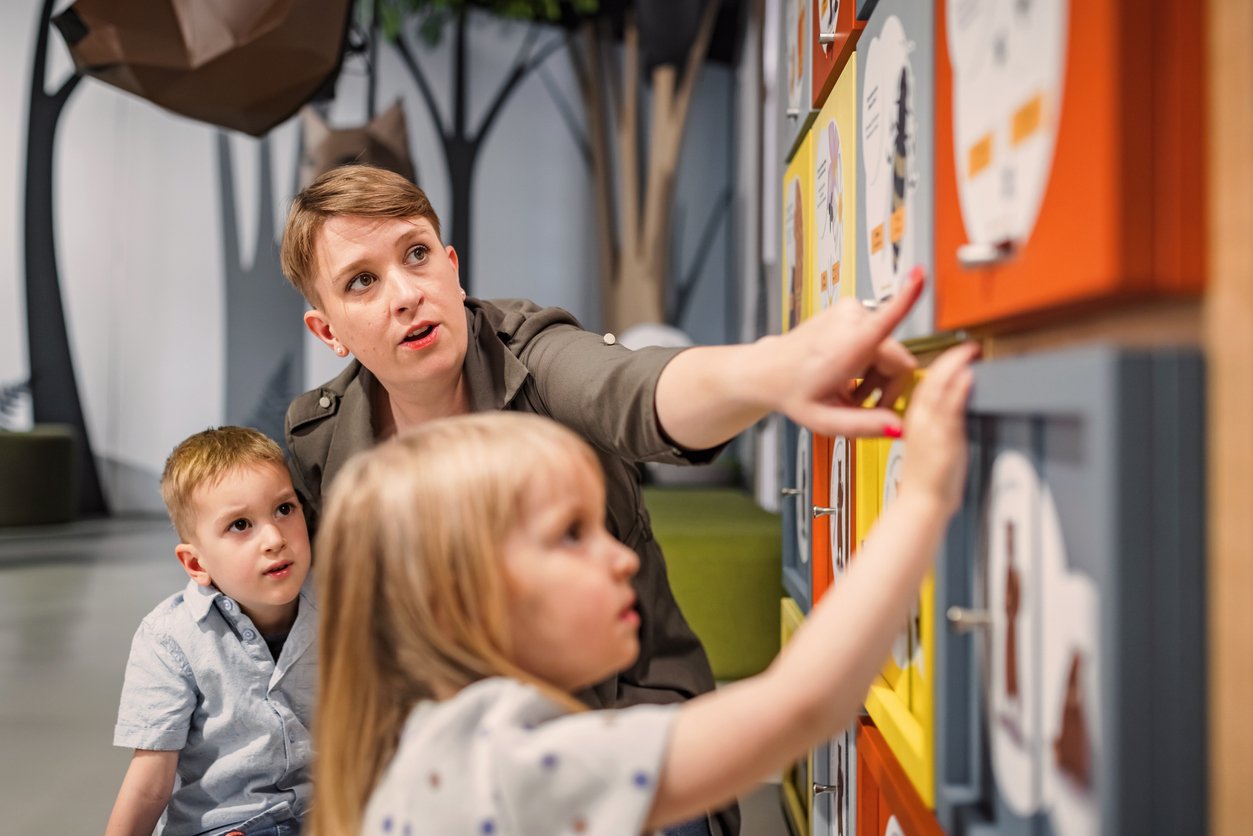
This is the moment worth waiting for, and a short tour usually hands you one. A child does something the lesson didn’t call for. They stack the counting bears instead of counting them, or ask why the class fish sleeps with its eyes open right in the middle of a letter activity.
Watch the teacher’s face. Steering a kid back to the plan is a legitimate move and sometimes the correct one! But if every detour gets folded back into the schedule, the schedule is running that room.
In a program actually built on inquiry, some detours get picked up. The bear tower turns into a question about how tall it can get before it topples. The fish goes on a list of things to find out this week, which is what real thinking work looks like at this age. So ask your guide for one example of a project that started with something a child said. A school doing this work will have a story ready, right down to the kid’s question. A vague answer about following children’s interests tells you something too.
The Most Magnificent Thing by Ashley Spires follows a girl who builds the same invention over and over, gets furious, quits, and comes back to it. Read it at home during the weeks you’re touring and you’ll have a shared picture of the kind of stuck-and-trying-again you’re hoping to see in a classroom.
Check the Classroom Furniture and the Daily Schedule
Furniture tells you what a room expects children to do all day. Rows of small desks pointed one direction expect children to sit and face that direction. Look instead for tables kids gather around, low open shelves they can reach without asking permission, and materials stored where a short person can see and choose them. That’s a room built for children to start things on their own.
Then check the clock. Ask how long the longest stretch of open work time runs. If the day moves in 15-minute blocks, nobody is finishing an investigation. NAEYC asks that programs give children enough time to get deeply involved in what they’re doing, and the answer you really want is a story about a project that ran across several days.
Those two details will tell you more than any curriculum page. For the rest of the visit, a closer look at what makes a preschool curriculum high-quality covers the parts a tour won’t show you.

After 56 years, inquiry-based learning is still the reason our classrooms at Creative World School don’t have desks. Every one of our schools has an Exploratorium™, a hands-on discovery room where children test their own ideas, and our 3 E’s of Excellence™ curriculum shapes the day around Education, Exploration, and Enrichment. Come find out what our kids are asking about this week. Find a school near you and book a tour!

Related Articles

Categories
- About Creative World (3)
- All About Water (4)
- Altamonte Springs (1)
- Animal Adventures (4)
- Apollo Beach (6)
- Apopka (4)
- Art (5)
- Avalon (2)
- Avalon Park (5)
- Away We Go (3)
- Back to school (4)
- Belton (4)
- Blogs to Share on Social Media (7)
- Bonita Springs (1)
- Brandon (2)
- Brrr... Cold! (2)
- Buggin' Out (2)
- Build It Up Theme (6)
- CampTastic (3)
- Chesapeake (3)
- Childhood Development (33)
- Children Book Recommendations (14)
- Children Quotes (1)
- Children Songs (1)
- Construction Theme (1)
- Contests (1)
- Creative World Curriculum (4)
- Creative World School (2)
- Crosscreek (4)
- CW Activity (2)
- CW Books (11)
- CW Celebrates (10)
- CW Character Traits (1)
- CW Educational Focus (4)
- CW Spotlight (1)
- Cypress Springs (3)
- Delicious Recipes (2)
- Did You Know? (1)
- Down To Earth (3)
- Early Education (19)
- Education (7)
- Estero (8)
- Fall Activities (10)
- Fall Festival (1)
- Fishhawk (3)
- Food (2)
- Franchise (1)
- Franklin Township (4)
- Friendship Theme (1)
- Fun National Holidays (19)
- Georgetown, TX (3)
- Health & Safety (5)
- In The Sky (2)
- In The Trees (4)
- iSTEAM (5)
- Katy, TX (5)
- Kindergarten (5)
- Land O' Lakes (3)
- Leander, TX (1)
- Lee's Summit (5)
- Liberty (1)
- Literacy (8)
- Loudoun County, VA (2)
- Mealtimes (1)
- Naples (4)
- New Schools (3)
- North Naples (4)
- Oakstead (4)
- Ooey Gooey (1)
- Orlando (5)
- Our Staff Recommends (2)
- Outdoor Activities (14)
- Oviedo (4)
- Parenting (62)
- Parenting Advice (60)
- People We Know (3)
- psychology (1)
- Rivercrest (1)
- Riverview (4)
- RiverWalk (1)
- School Events (3)
- School Readiness (5)
- Sensory Play (2)
- social-emotional (3)
- Space Topic (1)
- Special Events (17)
- St. Cloud (1)
- St. Cloud (5)
- Starkey Ranch (5)
- STEAM (5)
- Summer (3)
- Summer Activities (38)
- Tampa (6)
- That's Me! (2)
- Tips (3)
- To The Grocery Store (2)
- Try this with your kids! (4)
- Tuition (1)
- TX (1)
- UCF (5)
- Uncategorized (72)
- Vinings (2)
- water (1)
- We're SERIOUS about PLAY (2)
- Week of the Young Child (2)
- Wesley Chapel (2)
- Winter Activities (3)