
How to Pick a STEM Toy Your Preschooler Keeps Coming Back To
Creative world school Oct 27, 2026The toy aisle in October gets loud fast. Half the boxes carry a word that sounds like it belongs on a report card, and the ones promising building or experiments usually cost the most. It’s fair to want to know what that money is buying.
Short answer first. A STEM toy can be terrific, and the word on the box tells you almost nothing about that. What matters is how many different things your child can do with what’s inside. That’s something you can size up in about ten seconds, standing in the store.
What the STEM Label on a Toy Does and Doesn’t Tell You
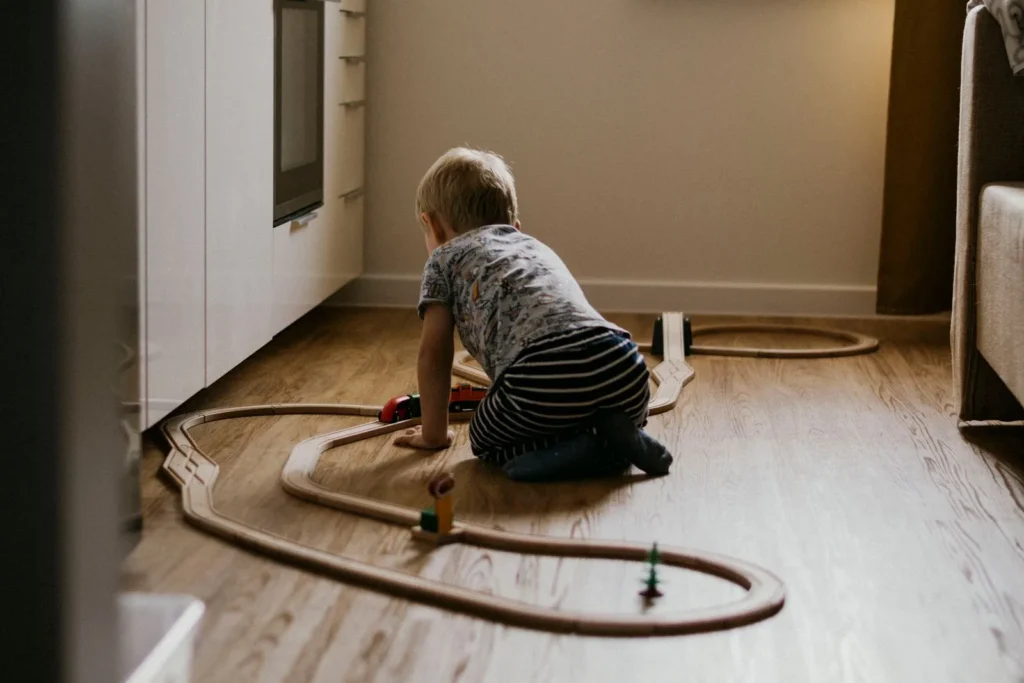
The same word shows up on a set of wooden gears and on a plastic gadget that plays a jingle when your child presses the right shape. One has your child building, testing, and starting over. The other has your child pressing a button. The label doesn’t sort them for you.
The American Academy of Pediatrics is blunt about this. Its toy guidance tells parents to use caution when you see “educational” on the label. Letters and shapes, the pediatricians point out, are only one part of being ready for school. The rest includes impulse control, handling big feelings, and creative, flexible thinking, which is exactly what unstructured play builds.
So read the letters on the box the way you’d read “all natural” on a snack. It’s nice if it’s true, but check for yourself.
What the Research Says About Open-Ended Toys and Preschool STEM
The research here is fairly clear, and none of it depends on price.
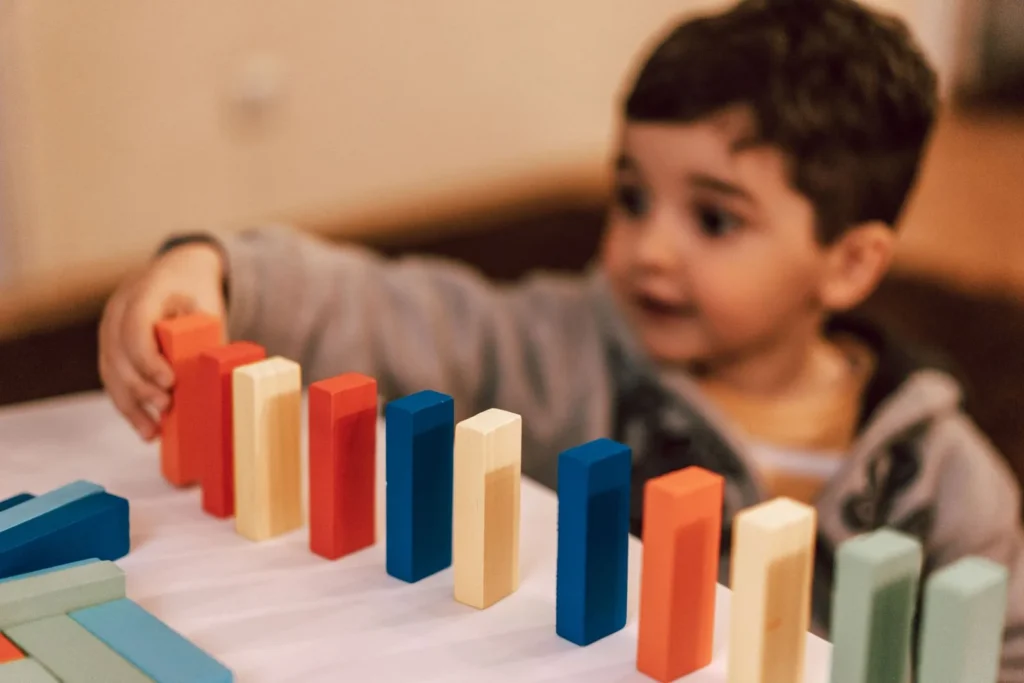
In a 2025 study, researchers put loose parts and single-purpose toys head to head with 60 children who averaged just under five years old. Each child played twice, once with a pile of loose parts like cardboard, pipes, buttons, and sticks, and once with toys built to do one thing. The kids showed more early STEM behavior with the loose parts, and the thing they did most often was build a structure.
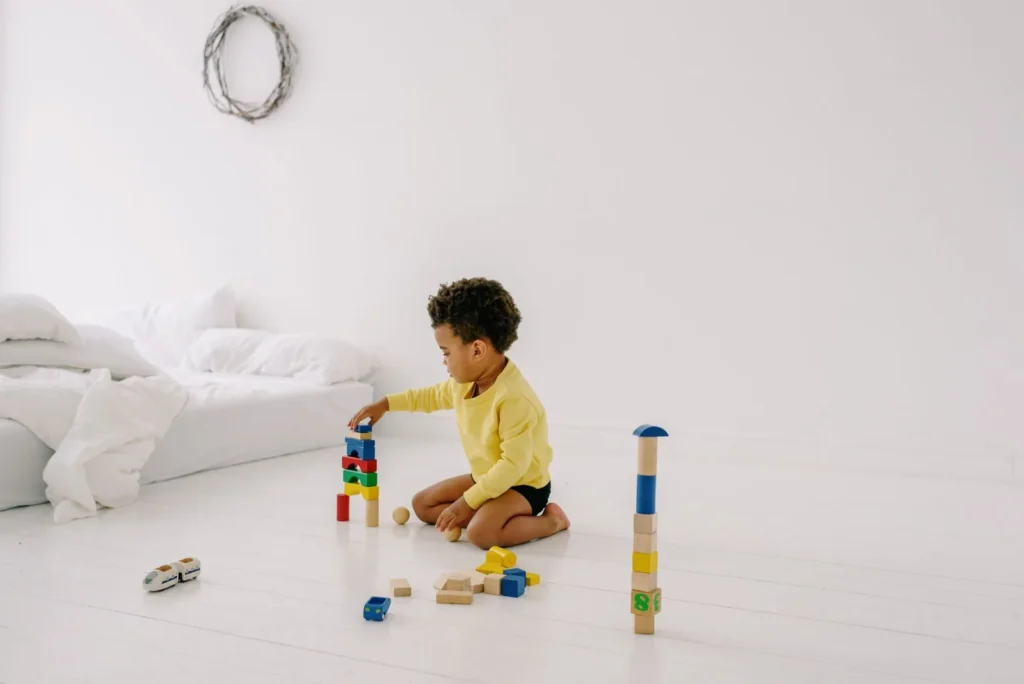
This is why the plain stuff keeps earning its shelf space, and a lot of the best of it may already be in your house. A bin of blocks does this work, which is a big part of why block play builds so many early skills at once. So does a stack of paper and a fat box of markers, where open-ended art hands the whole decision to your child.
How Many Ways Can Your Preschooler Use It?
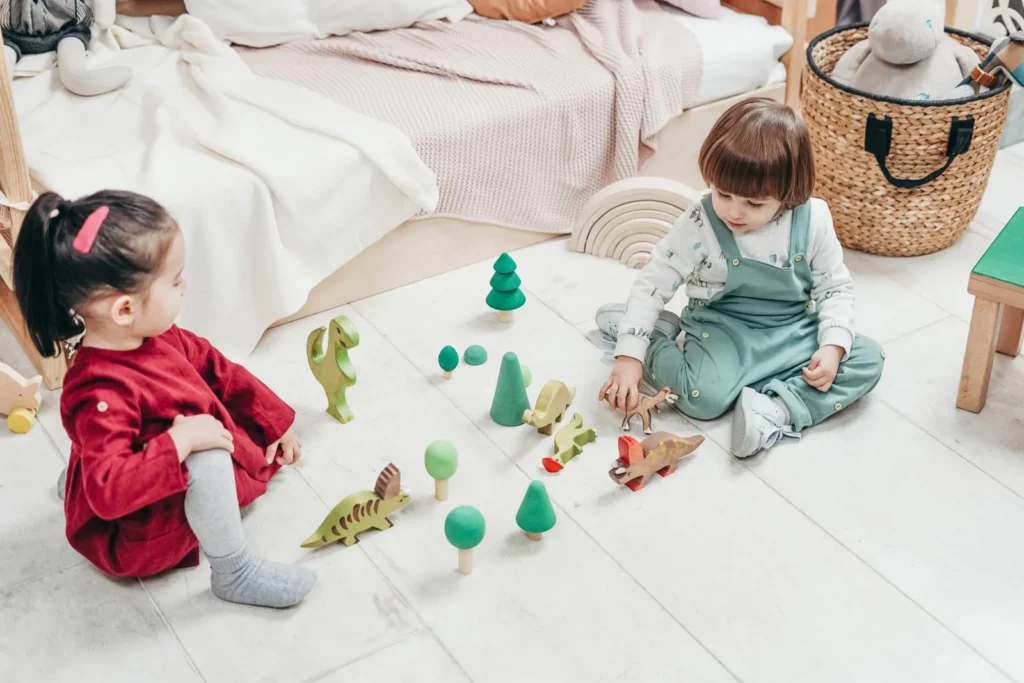
Try this in the store. Pick up the box and name five different things a child could do with what’s inside. If five come easily, it’s a good buy. If you stall out at two, you’re holding a one-trick toy, and one-trick toys get played with hard for a week and then live at the bottom of the bin.
Lots of toys pass with room to spare. A set of magnetic tiles turns into a garage, a fence, a rocket, and a ramp! A bag of wooden shapes becomes a tower, a road, a family of characters, and a pattern to copy. Even a cheap kitchen scale can fill an afternoon of weighing a rock against a spoon against an apple while your child works out what heavy really means.
The ones that usually stall are toys that run one fixed sequence, kits that build a single model with nowhere to go afterward, and puzzles with one solution your child memorized on the second try. Plenty of those are fun! They’re just finished a lot sooner than the price would suggest.
Check the age range on the box, too. A toy sized for a much older child gets abandoned in frustration, and one your preschooler mastered a year ago gets abandoned out of boredom. The sweet spot is the toy they can almost do.
Fewer Toys Out at Once Means Deeper Play
The second half of this has nothing to do with what you buy. It’s about how much is out on the floor at once.
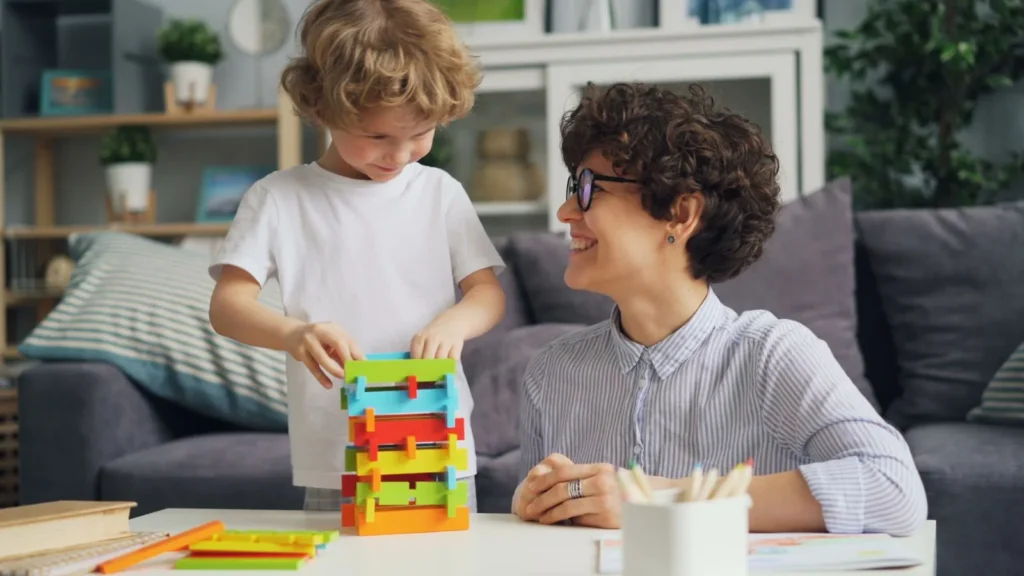
When researchers gave toddlers four toys to play with instead of sixteen, the children played longer with each one and found more ways to use it. That study looked at toddlers rather than preschoolers, so treat it as a direction more than a hard rule, but it’s a clear one.
This comes in handy in December. When a pile of new things arrives at once, open a few and put the rest in a closet, then rotate something in every few weeks. The toy your child walked past in week one can turn into the favorite by week six, because by then it’s the interesting thing in the room. The new stuff stretches across the whole winter instead of one wild Saturday, and on the in-between days, simple at-home inquiry activities keep the questions coming.
Ready to See STEM Play in a Real Classroom?
The best answer to the toy question tends to be the cheapest one. A child with time, room to make a mess, and a grownup paying attention gets more out of an afternoon than most things with a price tag. At Creative World School, that’s the thinking behind our Exploratorium™, a hands-on discovery space where children get real materials and chase their own questions.
Our iSTEAM curriculum starts with inquiry, a fancy word for letting a child’s own question steer things, and the science, technology, engineering, art, and math ride along as ramps get rebuilt, colors get mixed, and towers get tested until they topple. See it in action at a school near you!

Related Articles
-
“Let’s Find Out” Is the Best STEM Answer You Can Give Your Preschooler
-
10 Creative Strategies for Introducing New Foods to Picky Toddlers: Tips and Tricks

-
10 Earth Day Adventures for Preschoolers
-
7 Fast Yet Nutritious Toddler Breakfasts for Busy Parents

-
Achieving Work-Life Balance with Young Kids: Practical Tips for Busy Parents

Categories
- About Creative World (3)
- All About Water (4)
- Altamonte Springs (1)
- Animal Adventures (4)
- Apollo Beach (6)
- Apopka (5)
- Art (5)
- Avalon (2)
- Avalon Park (5)
- Away We Go (3)
- Back to school (4)
- Belton (4)
- Blogs to Share on Social Media (7)
- Bonita Springs (1)
- Brandon (2)
- Brrr... Cold! (2)
- Buggin' Out (2)
- Build It Up Theme (6)
- CampTastic (3)
- Chesapeake (3)
- Childhood Development (33)
- Children Book Recommendations (14)
- Children Quotes (1)
- Children Songs (1)
- Construction Theme (1)
- Contests (1)
- Creative World Curriculum (4)
- Creative World School (2)
- Crosscreek (4)
- CW Activity (2)
- CW Books (11)
- CW Celebrates (11)
- CW Character Traits (1)
- CW Educational Focus (4)
- CW Spotlight (1)
- Cypress Springs (3)
- Delicious Recipes (2)
- Did You Know? (1)
- Down To Earth (3)
- Early Education (19)
- Education (7)
- Estero (8)
- Fall Activities (17)
- Fall Festival (1)
- Fishhawk (4)
- Food (2)
- Franchise (1)
- Franklin Township (4)
- Friendship Theme (1)
- Fun National Holidays (19)
- Georgetown, TX (4)
- Health & Safety (5)
- In The Sky (2)
- In The Trees (4)
- iSTEAM (8)
- Katy, TX (5)
- Kindergarten (5)
- Land O' Lakes (3)
- Leander, TX (2)
- Lee's Summit (5)
- Liberty (1)
- Literacy (8)
- Loudoun County, VA (2)
- Mealtimes (1)
- Naples (4)
- New Schools (3)
- North Naples (4)
- Oakstead (4)
- Ooey Gooey (1)
- Orlando (5)
- Our Staff Recommends (2)
- Outdoor Activities (14)
- Oviedo (4)
- Parenting (65)
- Parenting Advice (66)
- People We Know (3)
- psychology (1)
- Rivercrest (1)
- Riverview (5)
- RiverWalk (1)
- School Events (3)
- School Readiness (5)
- Sensory Play (2)
- social-emotional (3)
- Space Topic (1)
- Special Events (17)
- St. Cloud (5)
- St. Cloud (2)
- Starkey Ranch (6)
- STEAM (5)
- Summer (3)
- Summer Activities (38)
- Tampa (6)
- That's Me! (2)
- Tips (3)
- To The Grocery Store (2)
- Try this with your kids! (4)
- Tuition (1)
- TX (1)
- UCF (6)
- Uncategorized (72)
- Vinings (2)
- water (1)
- We're SERIOUS about PLAY (2)
- Week of the Young Child (2)
- Wesley Chapel (2)
- Winter Activities (3)