
Proven Ways to Stretch Your Preschooler’s Focus
Creative world school Aug 7, 2026You hand your preschooler a brand-new puzzle. They dump the pieces, push two together, then wander off before you’ve even sat down. Sound familiar? If you’ve ever wondered why your kid can’t seem to stay with anything for long, you’re in good company.
A short attention span is exactly right for this age. A preschooler’s focus is still under construction, and it stretches a little longer every year. There’s plenty you can do at home to help it along, and most of it happens through everyday play!
What’s Normal for a Preschooler’s Attention Span
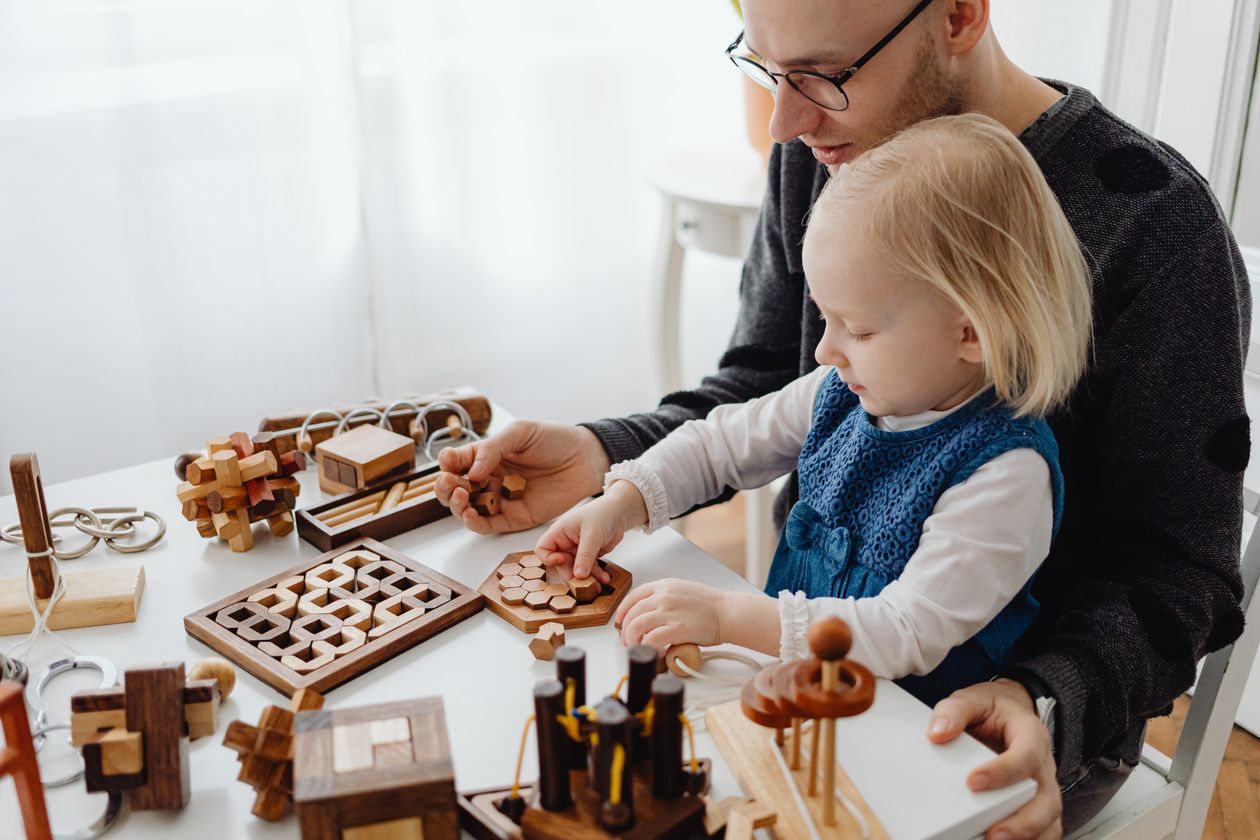
Little kids aren’t built to sit and concentrate for long stretches, and that’s completely normal. A common guideline child therapists point to is a few minutes of focus per year of age, so a 3-year-old might stay with one activity for about five minutes and a 5-year-old closer to ten.
That number jumps around a lot, though, and interest is the reason. The same child who drifts away from a puzzle in two minutes will dig in the sandbox for half an hour! When something grabs them, they focus way past the average. When it bores them, they’re done in seconds. A young brain is simply deciding what’s worth its energy, and a so-so puzzle rarely wins.
Pushing a preschooler to concentrate longer than they’re ready for usually backfires and ends in frustration for everyone involved. Meeting them where they are works much better. On the hard days, remember that a child who won’t sit through one activity may be pouring their full, deep attention into something else entirely.
How Screens Change the Way Kids Focus
Screens deserve their own mention, because they pull on attention differently than a puzzle or a pile of blocks. A show or an app changes constantly, with quick cuts, bright color, and a new thing every few seconds. Your child doesn’t have to work to stay interested, because the screen does that job for them. That’s the opposite of the slow, self-driven focus you’re trying to grow.
That’s why the American Academy of Pediatrics suggests keeping maximum screen time to about an hour a day of good programming for kids 2 to 5. A show while you make dinner is a normal part of life, and balance is what counts. The more of your child’s day goes to hands-on play, the more practice their focus gets. One easy win is to turn off background TV, since even a show nobody’s watching pulls a preschooler’s eyes away from whatever they’re doing.
Everyday Ways to Help Focus Grow
You can build focus into an ordinary day without much effort. Start by following your child’s lead. When they’re already deep in something, hold back from jumping in, narrating, or handing them the next toy. Letting them stay with one thing, uninterrupted, is the whole exercise.
Cut the clutter, too. A floor covered in twenty toys pulls a preschooler in twenty directions. Put most of them away and leave out two or three. Fewer choices make it easier to settle into one. Try to let your child finish what they start, even when it’s slow or messy, so they get the feel of seeing something through.
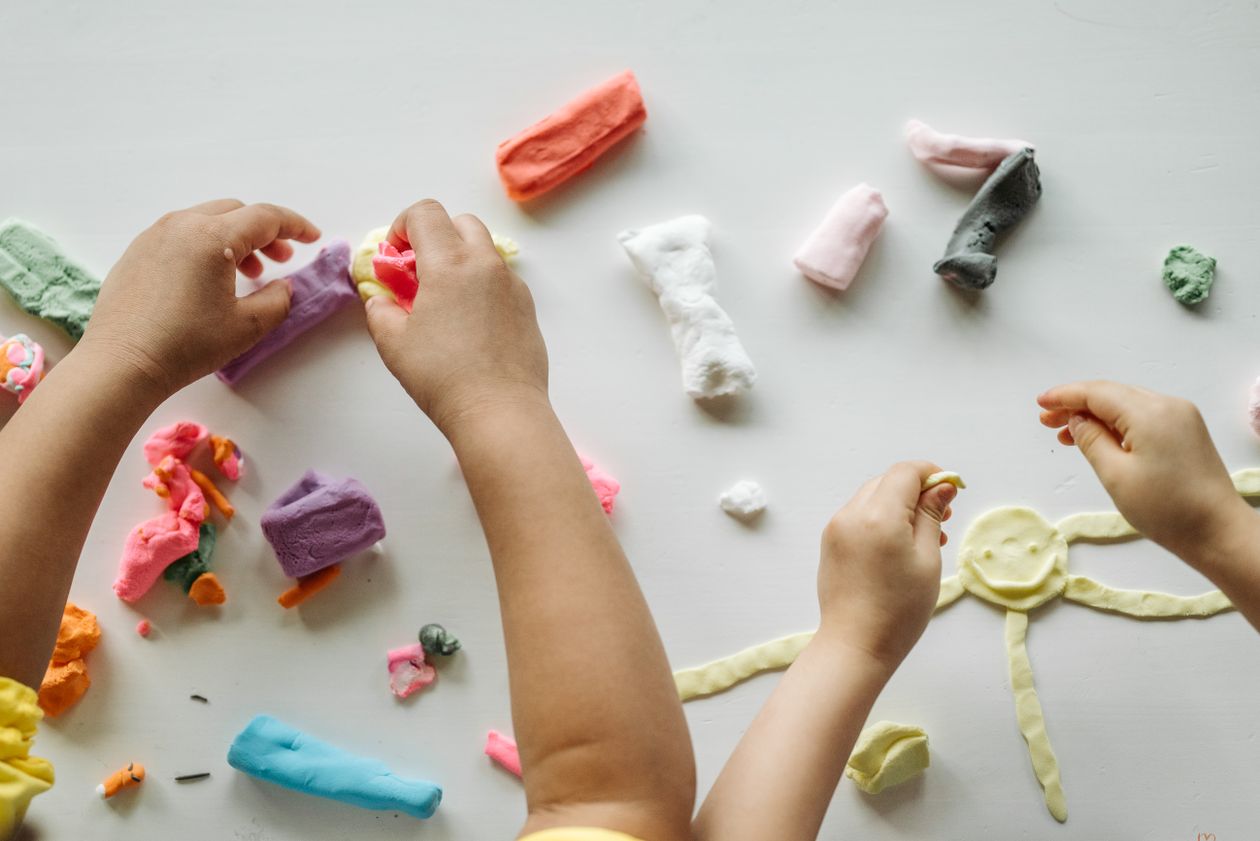
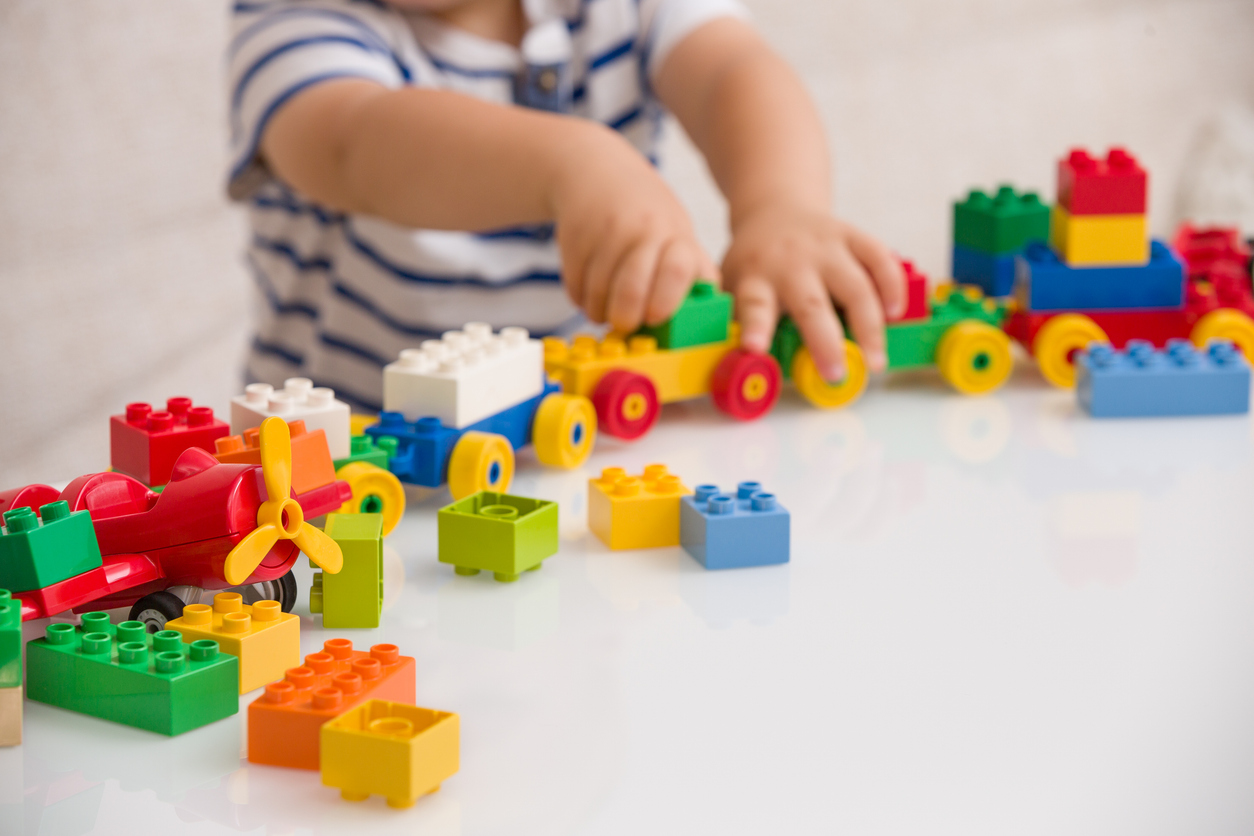
Certain activities naturally pull kids in and hold them there. Puzzles, building with blocks, threading big beads, sorting buttons by color, and helping out in the kitchen all give little hands a clear job and a reason to keep going. Rotate a few of these in, and your preschooler will often settle in longer than they would with a toy that does all the work for them.
The basics matter more than any clever activity. A rested, fed child focuses far better than a tired, hungry one, so protect sleep and snacks before you worry about attention. Give them a calm corner to play in, without a lot of noise and bustle around them. And when your child does stick with something, say what you noticed. A simple “you worked on that puzzle for a long time” tells them that focus is worth being proud of.
Stories help here too. In Jabari Tries by Gaia Cornwall, Jabari builds a flying machine that keeps crashing, gets frustrated, then takes a deep breath and tries again with his little sister’s help until it finally flies. Pushing through a frustrating project like that is exactly the kind of focus you’re helping your preschooler build. Read it together the next time a project falls apart.
Focus Is a Skill We Practice Every Day
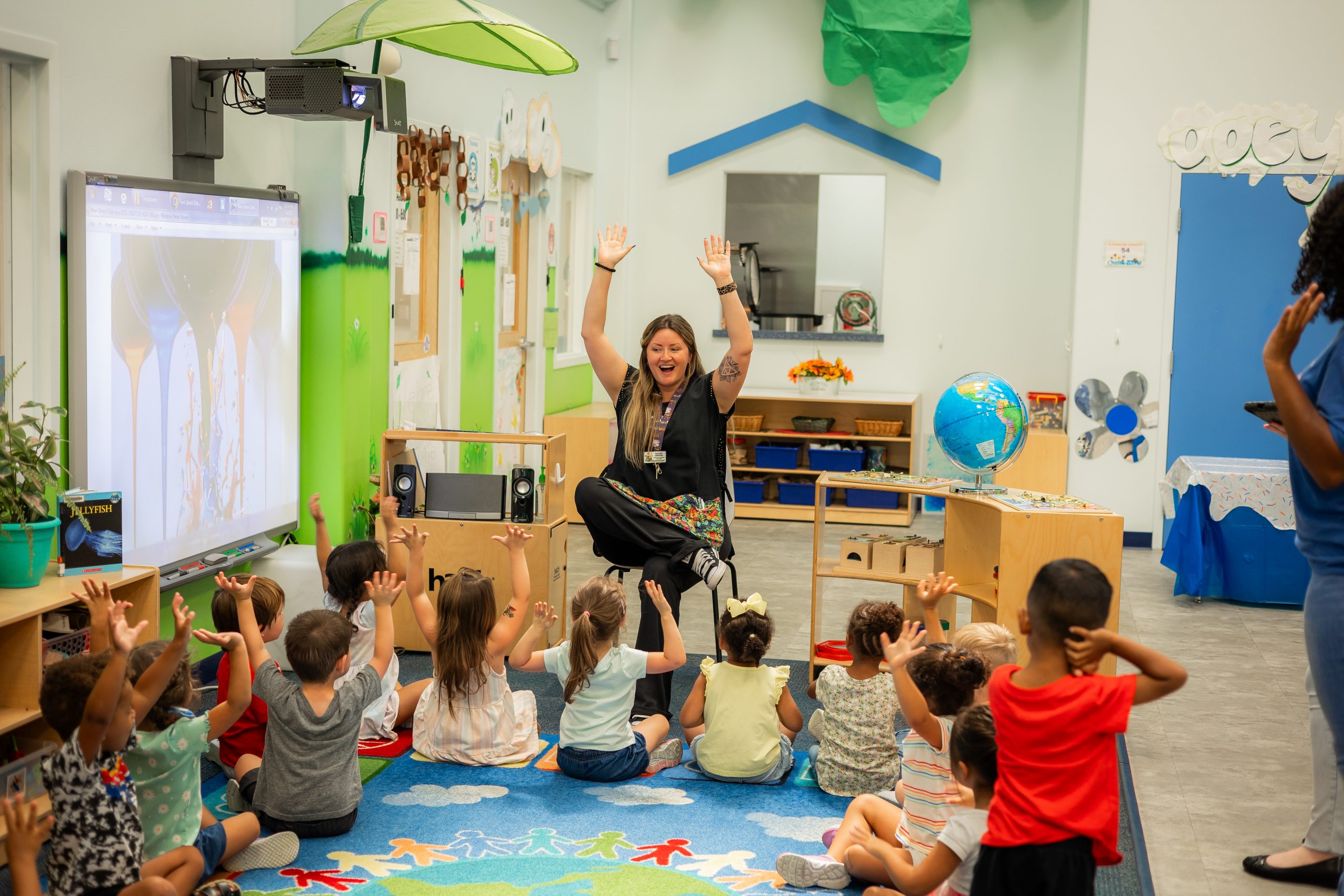
At Creative World School, helping a child stay with an idea is part of how our classrooms run. Our inquiry-based learning lets children chase a question as far as it takes them, with teachers guiding at eye level instead of rushing them to the next thing. In our Exploratorium™, kids get long, hands-on stretches to build, sort, pour, and test, the kind of deep play that grows attention all on its own.
Our 3 E’s of Excellence™ approach, with Education, Exploration, and Enrichment, is built around that kind of focused discovery. Find a Creative World School near you and book a visit to see it in action.

Related Articles


Categories
- About Creative World (3)
- All About Water (4)
- Altamonte Springs (1)
- Animal Adventures (4)
- Apollo Beach (6)
- Apopka (4)
- Art (5)
- Avalon (2)
- Avalon Park (5)
- Away We Go (3)
- Back to school (4)
- Belton (4)
- Blogs to Share on Social Media (7)
- Bonita Springs (1)
- Brandon (2)
- Brrr... Cold! (2)
- Buggin' Out (2)
- Build It Up Theme (6)
- CampTastic (3)
- Chesapeake (3)
- Childhood Development (33)
- Children Book Recommendations (14)
- Children Quotes (1)
- Children Songs (1)
- Construction Theme (1)
- Contests (1)
- Creative World Curriculum (4)
- Creative World School (2)
- Crosscreek (4)
- CW Activity (2)
- CW Books (11)
- CW Celebrates (10)
- CW Character Traits (1)
- CW Educational Focus (4)
- CW Spotlight (1)
- Cypress Springs (3)
- Delicious Recipes (2)
- Did You Know? (1)
- Down To Earth (3)
- Early Education (19)
- Education (7)
- Estero (8)
- Fall Activities (7)
- Fall Festival (1)
- Fishhawk (3)
- Food (2)
- Franchise (1)
- Franklin Township (3)
- Friendship Theme (1)
- Fun National Holidays (19)
- Georgetown, TX (2)
- Health & Safety (5)
- In The Sky (2)
- In The Trees (4)
- iSTEAM (3)
- Katy, TX (4)
- Kindergarten (5)
- Land O' Lakes (3)
- Leander, TX (1)
- Lee's Summit (5)
- Liberty (1)
- Literacy (8)
- Loudoun County, VA (2)
- Mealtimes (1)
- Naples (4)
- New Schools (3)
- North Naples (4)
- Oakstead (4)
- Ooey Gooey (1)
- Orlando (5)
- Our Staff Recommends (2)
- Outdoor Activities (13)
- Oviedo (3)
- Parenting (60)
- Parenting Advice (56)
- People We Know (3)
- psychology (1)
- Rivercrest (1)
- Riverview (4)
- RiverWalk (1)
- School Events (3)
- School Readiness (5)
- Sensory Play (2)
- social-emotional (3)
- Space Topic (1)
- Special Events (17)
- St. Cloud (1)
- St. Cloud (5)
- Starkey Ranch (5)
- STEAM (5)
- Summer (3)
- Summer Activities (38)
- Tampa (6)
- That's Me! (2)
- Tips (3)
- To The Grocery Store (2)
- Try this with your kids! (4)
- Tuition (1)
- TX (1)
- UCF (5)
- Uncategorized (74)
- Vinings (2)
- water (1)
- We're SERIOUS about PLAY (2)
- Week of the Young Child (2)
- Wesley Chapel (2)
- Winter Activities (3)