
Yes, Your Preschooler Can Learn to Listen the First Time
Creative world school Aug 21, 2026You ask your preschooler to grab their shoes, and thirty seconds later the shoes haven’t moved while an epic block tower goes up in the living room. Most parents know that moment well. Some days it can feel like your words sail right past those little ears!
Take a breath, because listening is a skill, the same way catching a ball or holding a crayon is a skill. Little kids build it bit by bit, with practice and a whole lot of repetition. A few small changes to the way you ask can make this week noticeably smoother.
Following Directions Is a Skill Your Preschooler Is Still Building
A preschooler’s brain does something hard every time you give a direction. Your child has to hear the words, understand them, hold them in their head, and then carry them out while a hundred more interesting things compete for attention. That’s a big job for a small person, and it grows slowly across the preschool years.
Age matters more than most of us expect. The CDC suggests giving your child instructions with two or three steps around age 3, something like “Go to your room and get your shoes and coat.” A 2-year-old does best with a single step at a time, and even a 5-year-old can lose the thread of a five-part request. So when your kiddo finishes half of what you asked, there’s a good chance the request simply overflowed what their memory can hold right now.
Missed directions are also part of the package at this age. Every preschooler tunes out sometimes, so a rough afternoon says nothing about your child or your parenting. Progress with little kids looks like more follow-through over weeks and months, with plenty of wobbly days mixed in along the way.
That gap between hearing and doing is exactly what Howard B. Wigglebottom Learns to Listen by Howard Binkow is about. Howard is a cheerful bunny who keeps landing in trouble at school until he figures out how to stop, look, and really hear what’s being said. The story also hands your family an easy shorthand for the kitchen, because “let’s listen like Howard” says a lot in four words.
How to Give Directions Your Preschooler Can Follow
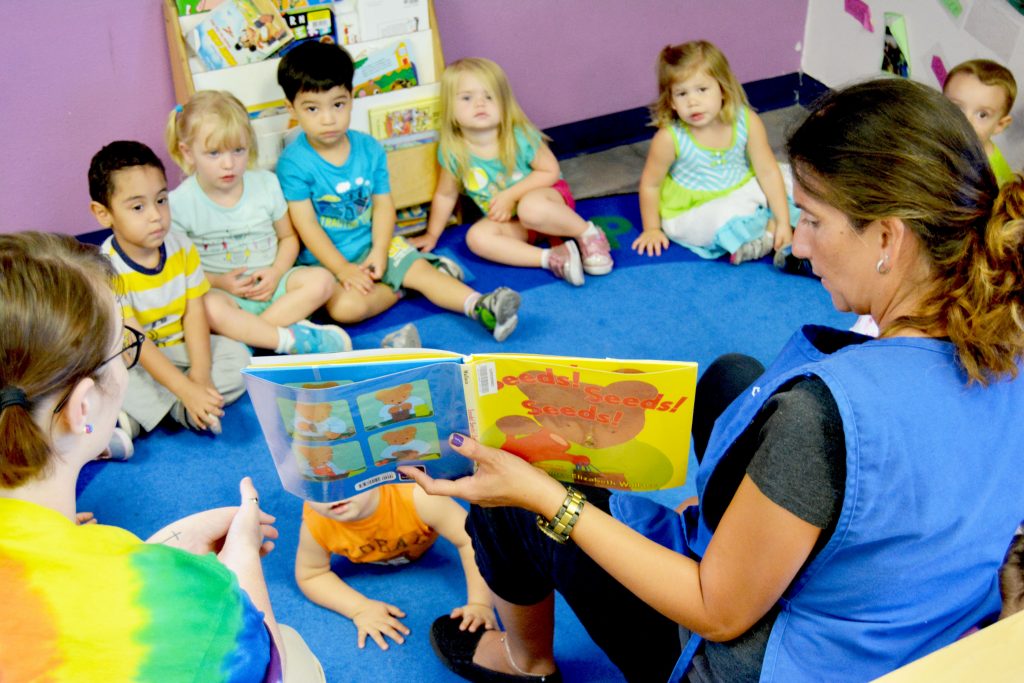
Get your child’s attention before you give the direction. Walk over, crouch down to eye level, and say their name. A request shouted from the kitchen has to beat out the TV, the dog, and a really good block tower. Up close and face to face, you’re the most interesting thing in the room.
Then keep it small and clear. The CDC’s parenting guidance recommends giving one direction at a time in a calm, firm voice, and telling your child exactly the behavior you expect. “Put the blocks in the basket” beats “clean up this mess,” because your child can see the finish line. Name the action you want to see, so “walking feet inside the house” gets the job that “stop running” leaves unfinished. Gestures give little ears a helping hand as well. Point to the blocks, then point to the basket, and your child gets to see the plan as well as hear it.
Choices help too! “Pajamas first or teeth first?” still gets everyone to bed on time, and it hands your preschooler a say in how the trip goes. And when your child does follow through, catch them doing it. A high five and a specific “you put every single block away!” teaches more than a dozen reminders ever will, which is the heart of positive reinforcement.
Turn Listening Practice Into a Game
Preschoolers practice hardest when it feels like play. Simon Says is a listening workout dressed up as a giggle-fest, and you can tilt it toward real life with rounds like “Simon says put your cup in the sink.” Try a two-step treasure hunt, where “look under the couch, then check behind the door” leads to a hidden sticker. Silly directions earn their keep too, since “hop to the bathroom like a bunny, then brush your teeth” gets the job done with a laugh.
Old playground favorites work here as well. Red Light, Green Light asks small feet to act on words in a split second, and freeze dance does the same thing with music. Let your child take a turn as the caller in any of these games! Giving the directions is its own kind of listening practice, because your kiddo has to think about what makes a direction easy to follow.
Games like these stretch the same attention muscles your child uses for puzzles, pretend play, and everything else that holds a preschooler’s attention far longer than a screen does. They also slide right into a morning routine that could probably use a little more laughing and a little less hurrying.
Save one round of practice for bedtime. In Interrupting Chicken by David Ezra Stein, a little red chicken promises Papa she won’t jump into his bedtime stories, then leaps in anyway, page after page. It’s a Caldecott Honor winner that gets big laughs from this age group, and it opens an easy chat about letting someone finish talking before we answer.
More Ways to Grow Your Preschooler’s Listening Skills
At Creative World School, we build listening into the whole day. Our teachers guide at eye level, asking questions and following your child’s ideas through our inquiry-based iSTEAM curriculum, and our Exploratorium™ keeps little hands busy mixing, pouring, and testing while those listening muscles grow. Ready to see it in person? We’d love to show your family around!

Related Articles



Categories
- About Creative World (3)
- All About Water (4)
- Altamonte Springs (1)
- Animal Adventures (4)
- Apollo Beach (6)
- Apopka (4)
- Art (5)
- Avalon (2)
- Avalon Park (5)
- Away We Go (3)
- Back to school (4)
- Belton (4)
- Blogs to Share on Social Media (7)
- Bonita Springs (1)
- Brandon (2)
- Brrr... Cold! (2)
- Buggin' Out (2)
- Build It Up Theme (6)
- CampTastic (3)
- Chesapeake (3)
- Childhood Development (33)
- Children Book Recommendations (14)
- Children Quotes (1)
- Children Songs (1)
- Construction Theme (1)
- Contests (1)
- Creative World Curriculum (4)
- Creative World School (2)
- Crosscreek (4)
- CW Activity (2)
- CW Books (11)
- CW Celebrates (11)
- CW Character Traits (1)
- CW Educational Focus (4)
- CW Spotlight (1)
- Cypress Springs (3)
- Delicious Recipes (2)
- Did You Know? (1)
- Down To Earth (3)
- Early Education (19)
- Education (7)
- Estero (8)
- Fall Activities (10)
- Fall Festival (1)
- Fishhawk (3)
- Food (2)
- Franchise (1)
- Franklin Township (4)
- Friendship Theme (1)
- Fun National Holidays (19)
- Georgetown, TX (3)
- Health & Safety (5)
- In The Sky (2)
- In The Trees (4)
- iSTEAM (5)
- Katy, TX (5)
- Kindergarten (5)
- Land O' Lakes (3)
- Leander, TX (1)
- Lee's Summit (5)
- Liberty (1)
- Literacy (8)
- Loudoun County, VA (2)
- Mealtimes (1)
- Naples (4)
- New Schools (3)
- North Naples (4)
- Oakstead (4)
- Ooey Gooey (1)
- Orlando (5)
- Our Staff Recommends (2)
- Outdoor Activities (14)
- Oviedo (4)
- Parenting (62)
- Parenting Advice (60)
- People We Know (3)
- psychology (1)
- Rivercrest (1)
- Riverview (4)
- RiverWalk (1)
- School Events (3)
- School Readiness (5)
- Sensory Play (2)
- social-emotional (3)
- Space Topic (1)
- Special Events (17)
- St. Cloud (2)
- St. Cloud (5)
- Starkey Ranch (5)
- STEAM (5)
- Summer (3)
- Summer Activities (38)
- Tampa (6)
- That's Me! (2)
- Tips (3)
- To The Grocery Store (2)
- Try this with your kids! (4)
- Tuition (1)
- TX (1)
- UCF (5)
- Uncategorized (72)
- Vinings (2)
- water (1)
- We're SERIOUS about PLAY (2)
- Week of the Young Child (2)
- Wesley Chapel (2)
- Winter Activities (3)