
Pre-Writing Skills: Helping Your Preschooler Build a Good Pencil Grip
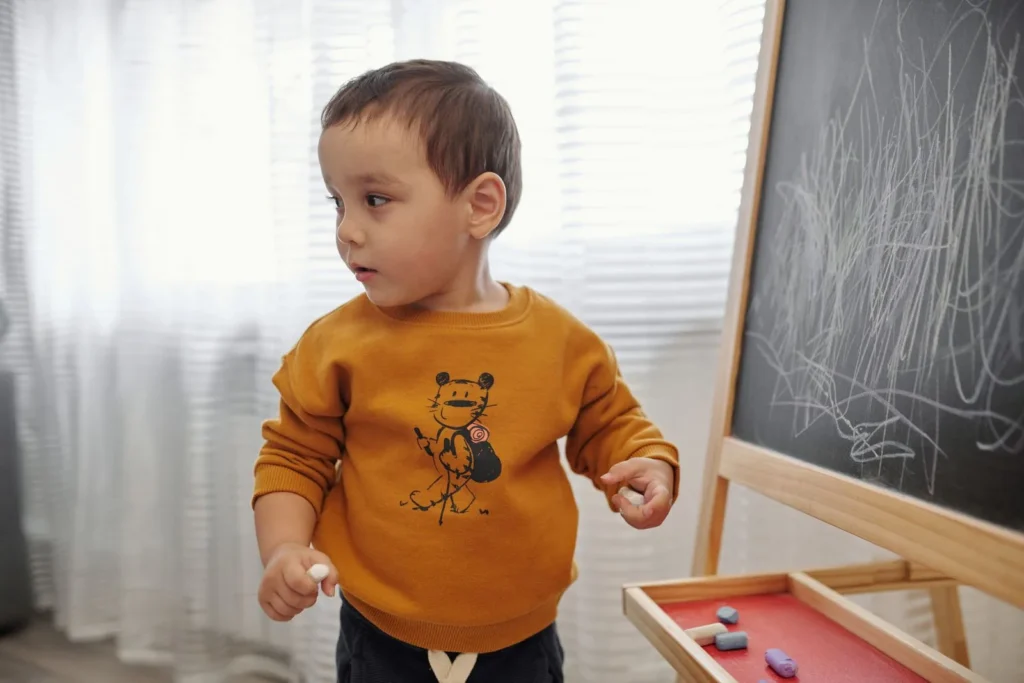
Creative world school Oct 20, 2026Hand your preschooler a crayon and watch what their fingers do. A lot of little kids grab it in a full fist, like they’re holding a drumstick, and start banging color across the page. That fist grip is completely normal! It’s the first step in a long process that ends, a few years down the road, with a comfortable grip and real handwriting.
Pre-writing skills are everything that comes before letters, like hand strength, finger control, and the coordination to draw a line and steer it where you want it to go. Get those pieces in place and writing comes much easier later on. Below are simple, playful ways to help your preschooler build toward a good pencil grip, starting with a crayon and a little patience.
A Good Pencil Grip Develops in Stages
A good pencil grip shows up slowly, in stages, as your child’s hands get stronger and more coordinated over a few years of play.
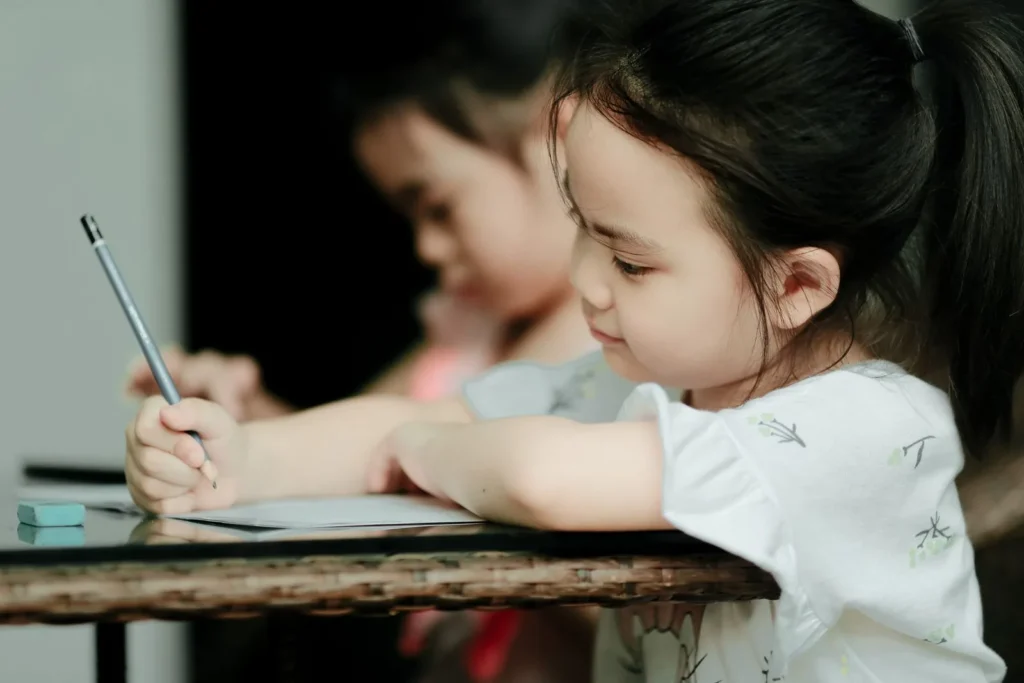
The youngest kids hold a crayon in a closed fist and move their whole arm to draw. Somewhere around age three or four, most start using their fingers, resting the crayon against the thumb and first two fingers. The more mature grip, where the fingers do the steering and the arm stays still, often keeps developing into the kindergarten years. Some kids get there sooner and some later, and that whole range is normal.
Most children hold a crayon or pencil between their fingers and thumb instead of in a fist by age 4, according to the CDC’s developmental milestones. So if your 3-year-old is still fisting the crayon, they’re right on schedule. Pushing a formal grip before the small hand muscles are ready usually just makes drawing feel like a chore. Give it time and lots of drawing, and the grip follows.
Build Hand Strength Before Handwriting
Before a preschooler can control a pencil, they need strong little hands, and the best hand-strengtheners are plain old play.
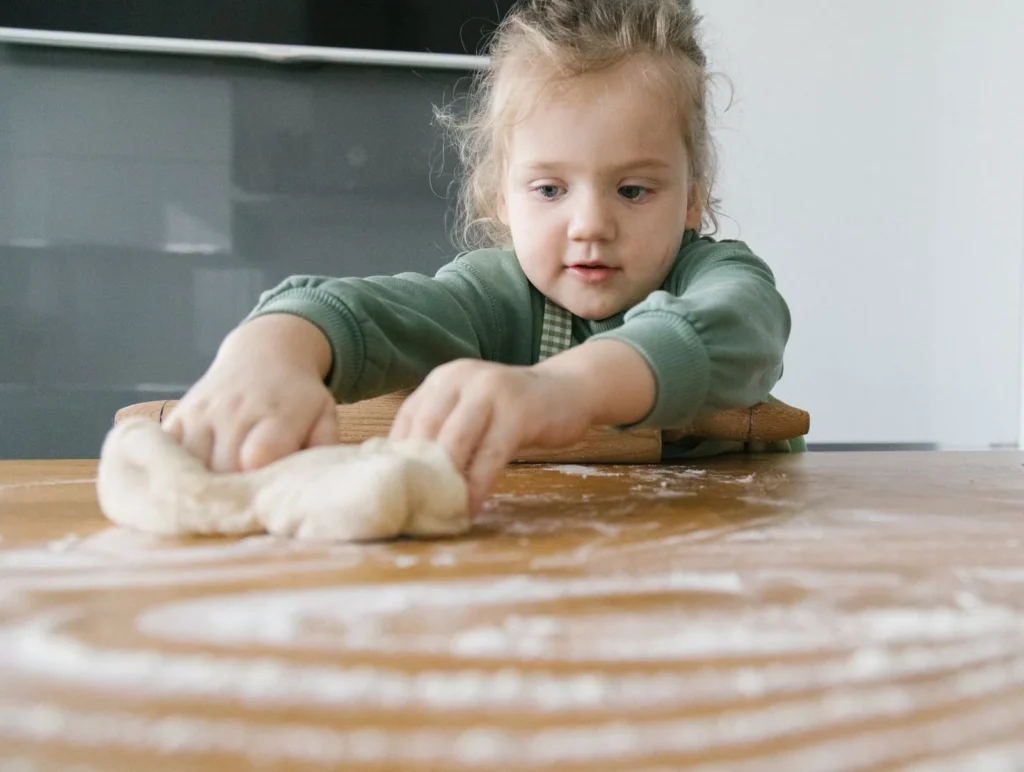
Playdough is a classic for a reason. Rolling it, pinching it, and squishing it works the exact muscles a pencil grip leans on. Tearing paper into little bits for a collage does the same, and so does picking up pom-poms with kid-sized tongs, pulling building bricks apart, threading beads onto a shoelace, and squeezing a spray bottle to water the plants. Our list of fun ways to boost fine motor skills has more ideas.
Fine motor and gross motor skills both matter for a growing preschooler, and the small-muscle work slips easily into a regular day. Hand your kiddo the salad tongs at dinner. Let them peel their own clementine. Dropping coins into a piggy bank, working their own zipper, and snapping the lids onto food containers all count too. Every squeeze and pinch builds the grip from the inside out!
Drawing Beats Worksheets for Pre-Writing Skills
Your first instinct might be to print a stack of tracing sheets. Hold off on those for now. A preschooler learns far more from drawing big, messy, and often.
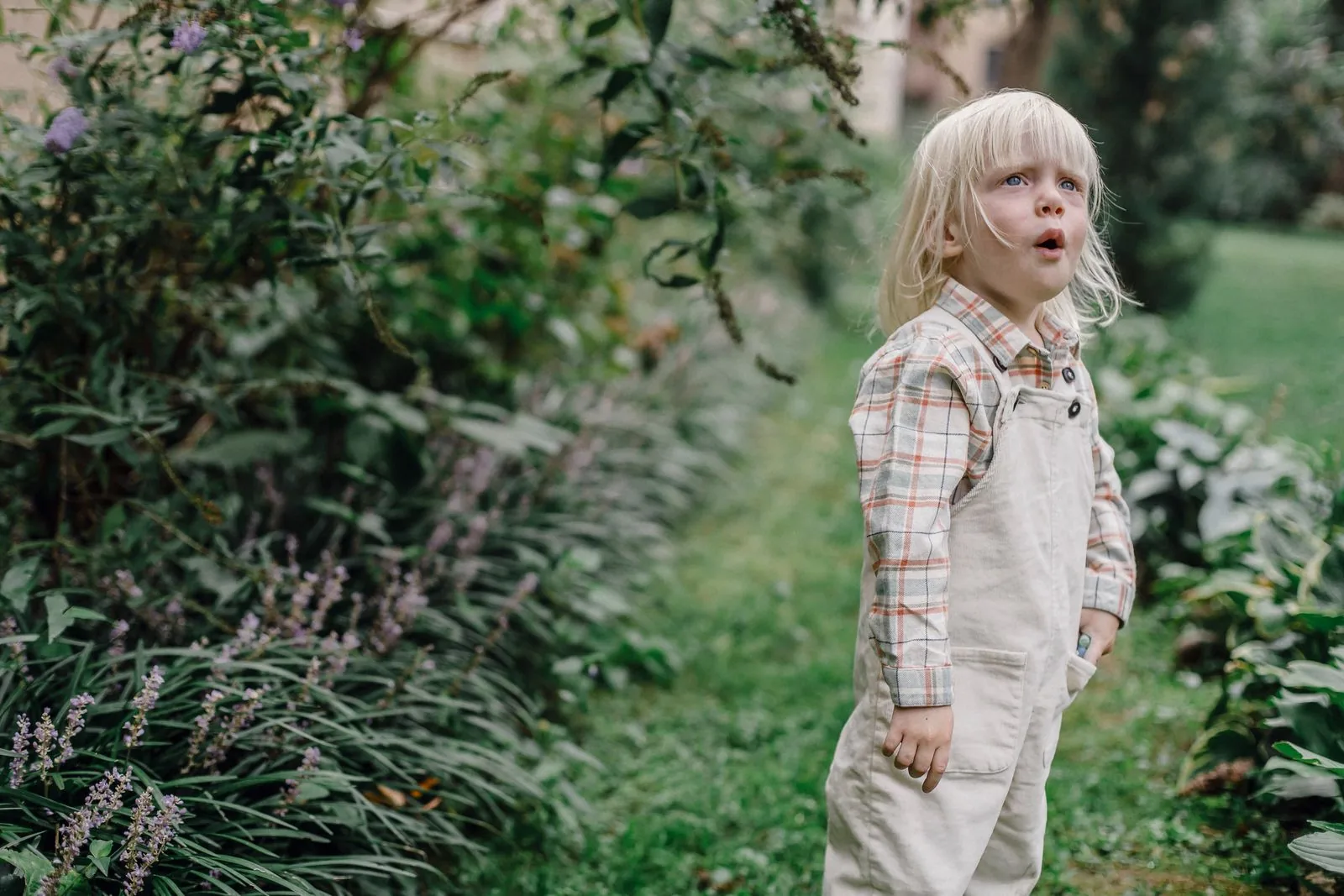
Tape a large sheet of paper to the wall or the side of the fridge and let your child draw standing up. A vertical surface puts the wrist in a strong position and builds shoulder stability while they work. Chunky sidewalk chalk, fat crayons, and washable markers are all easier for small hands to manage than a skinny pencil. Try breaking crayons into short stubs, too. A stubby crayon is too small to hold in a fist, so it nudges those fingers into a pinch on its own.
Hand your child a fat crayon and read Harold and the Purple Crayon by Crockett Johnson together that same week. Harold draws his whole world with one purple crayon, a moon, a path, a boat, a long winding walk, and suddenly a blank page looks like somewhere to go.
Why Scribbling Counts as Pre-Writing Practice
It’s tempting to hover and correct. Move the fingers, fix the grip, ask for a real picture instead of a scribble. Resist. Constant correcting turns drawing into a test, and a preschooler who feels tested starts leaving the crayons in the bin.
Those scribbles are doing real work. A loop, a zigzag, and a line that crosses another line are the very shapes letters are built from. Art builds the small hand muscles and the planning skills behind writing, all while your child thinks they’re just making a mess. Praise the effort and the color choices, draw your own picture next to theirs, and let the page be whatever it turns out to be.
The day your kiddo crumples up a drawing because it doesn’t look right is the day to pull out Ish by Peter H. Reynolds. Ramon stops drawing after his big brother laughs at his work, until his little sister shows him that a vase can look vase-ish and still be worth hanging on the wall. Every pre-writer needs that nudge to keep going.
Building Pre-Writing Skills at Creative World School
In our classrooms, the small-muscle work behind a strong pencil grip runs through the whole day. Art easels, building toys, and sensory tables keep little hands busy, and our Exploratorium™ gives kids a whole space to dig in, pour, sort, and build. It’s all organized around our 3 E’s, Education, Exploration, and Enrichment, so the pinching and squeezing that gets a hand ready to write happens inside play kids pick for themselves.
If you’d like to see how hands-on learning gets your child ready to write, come visit. We’d love to show you around!

Related Articles

Categories
- About Creative World (3)
- All About Water (4)
- Altamonte Springs (1)
- Animal Adventures (4)
- Apollo Beach (6)
- Apopka (5)
- Art (5)
- Avalon (2)
- Avalon Park (5)
- Away We Go (3)
- Back to school (4)
- Belton (4)
- Blogs to Share on Social Media (7)
- Bonita Springs (1)
- Brandon (2)
- Brrr... Cold! (2)
- Buggin' Out (2)
- Build It Up Theme (6)
- CampTastic (3)
- Chesapeake (3)
- Childhood Development (33)
- Children Book Recommendations (14)
- Children Quotes (1)
- Children Songs (1)
- Construction Theme (1)
- Contests (1)
- Creative World Curriculum (4)
- Creative World School (2)
- Crosscreek (4)
- CW Activity (2)
- CW Books (11)
- CW Celebrates (11)
- CW Character Traits (1)
- CW Educational Focus (4)
- CW Spotlight (1)
- Cypress Springs (3)
- Delicious Recipes (2)
- Did You Know? (1)
- Down To Earth (3)
- Early Education (19)
- Education (7)
- Estero (8)
- Fall Activities (17)
- Fall Festival (1)
- Fishhawk (4)
- Food (2)
- Franchise (1)
- Franklin Township (4)
- Friendship Theme (1)
- Fun National Holidays (19)
- Georgetown, TX (4)
- Health & Safety (5)
- In The Sky (2)
- In The Trees (4)
- iSTEAM (8)
- Katy, TX (5)
- Kindergarten (5)
- Land O' Lakes (3)
- Leander, TX (2)
- Lee's Summit (5)
- Liberty (1)
- Literacy (8)
- Loudoun County, VA (2)
- Mealtimes (1)
- Naples (4)
- New Schools (3)
- North Naples (4)
- Oakstead (4)
- Ooey Gooey (1)
- Orlando (5)
- Our Staff Recommends (2)
- Outdoor Activities (14)
- Oviedo (4)
- Parenting (65)
- Parenting Advice (66)
- People We Know (3)
- psychology (1)
- Rivercrest (1)
- Riverview (5)
- RiverWalk (1)
- School Events (3)
- School Readiness (5)
- Sensory Play (2)
- social-emotional (3)
- Space Topic (1)
- Special Events (17)
- St. Cloud (5)
- St. Cloud (2)
- Starkey Ranch (6)
- STEAM (5)
- Summer (3)
- Summer Activities (38)
- Tampa (6)
- That's Me! (2)
- Tips (3)
- To The Grocery Store (2)
- Try this with your kids! (4)
- Tuition (1)
- TX (1)
- UCF (6)
- Uncategorized (72)
- Vinings (2)
- water (1)
- We're SERIOUS about PLAY (2)
- Week of the Young Child (2)
- Wesley Chapel (2)
- Winter Activities (3)