
What Curious Preschoolers Learn When Teachers Follow Their Questions
Creative world school Jan 23, 2026Every preschooler has a hundred questions, and they all seem to come before breakfast. From “Why is the moon out?” to “Can worms swim?” kids are wired to wonder. That curiosity is where learning really begins.
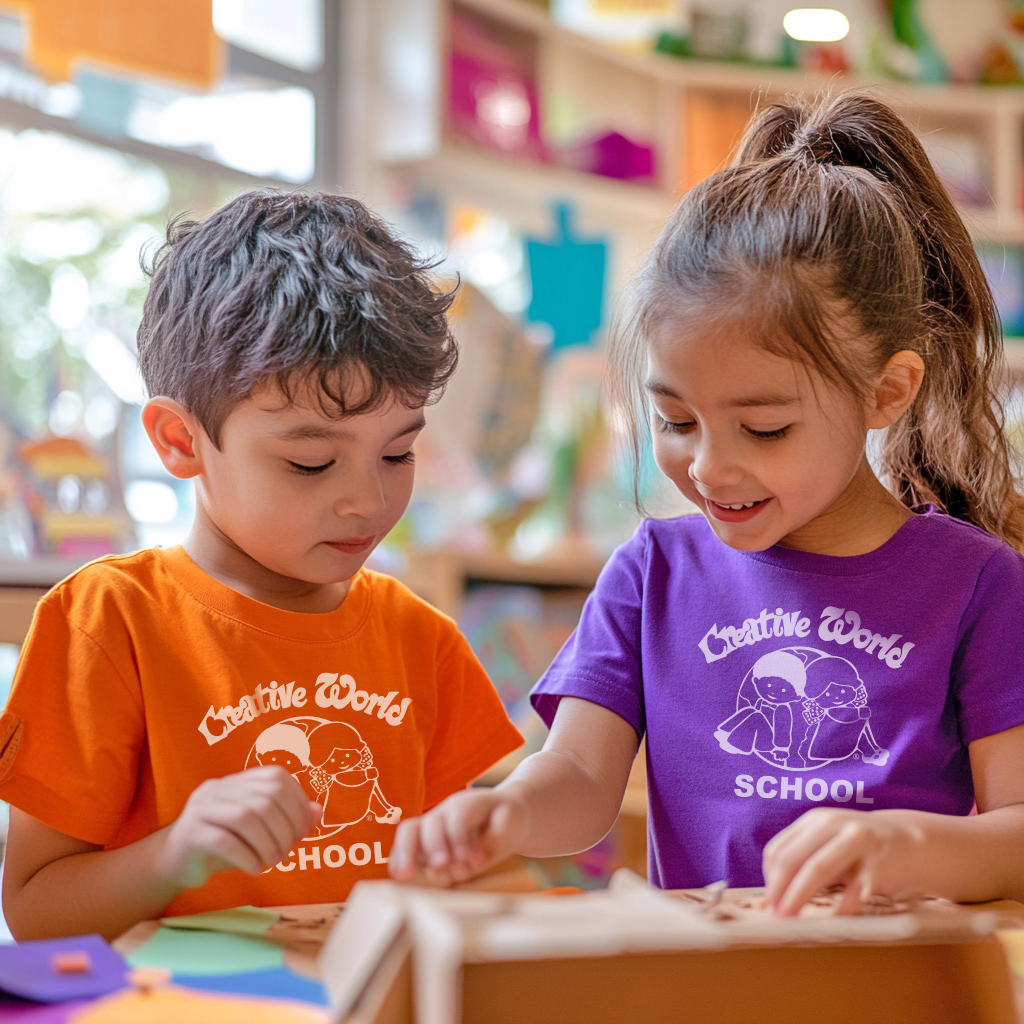
At Creative World School, teachers use that natural spark to guide learning in a thoughtful, playful way. Through inquiry-based learning, children get to ask their own questions, test out their ideas, and explore topics that matter to them. The teacher’s job is to help shape the experience so that children grow in confidence, problem-solving, and creativity while still having a whole lot of fun.
Keep reading to learn how this works, what it looks like in action, and how teachers use everyday questions to build strong early learners.
Following the Questions
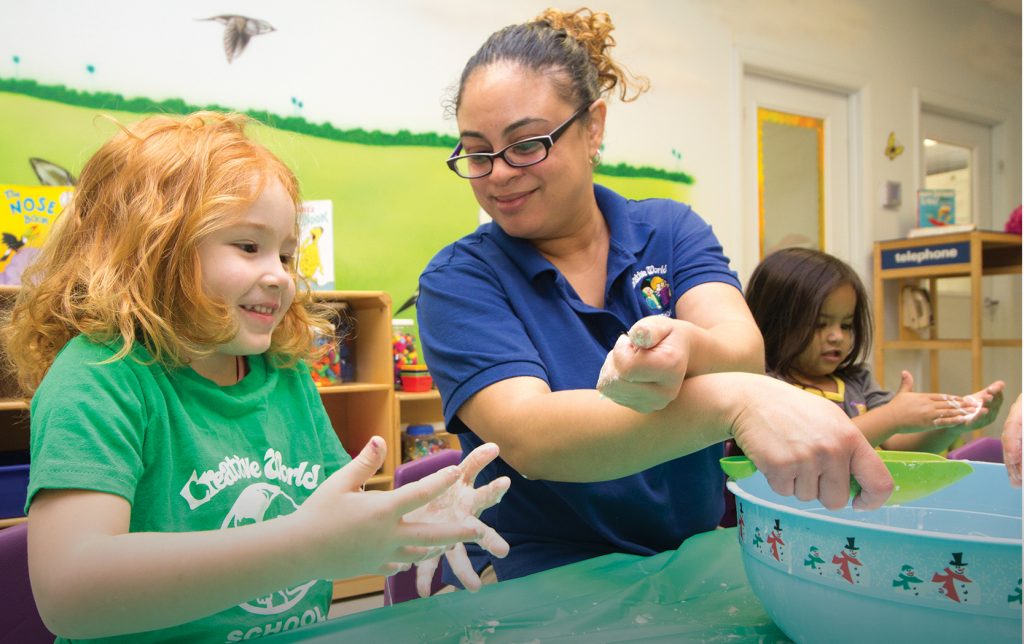
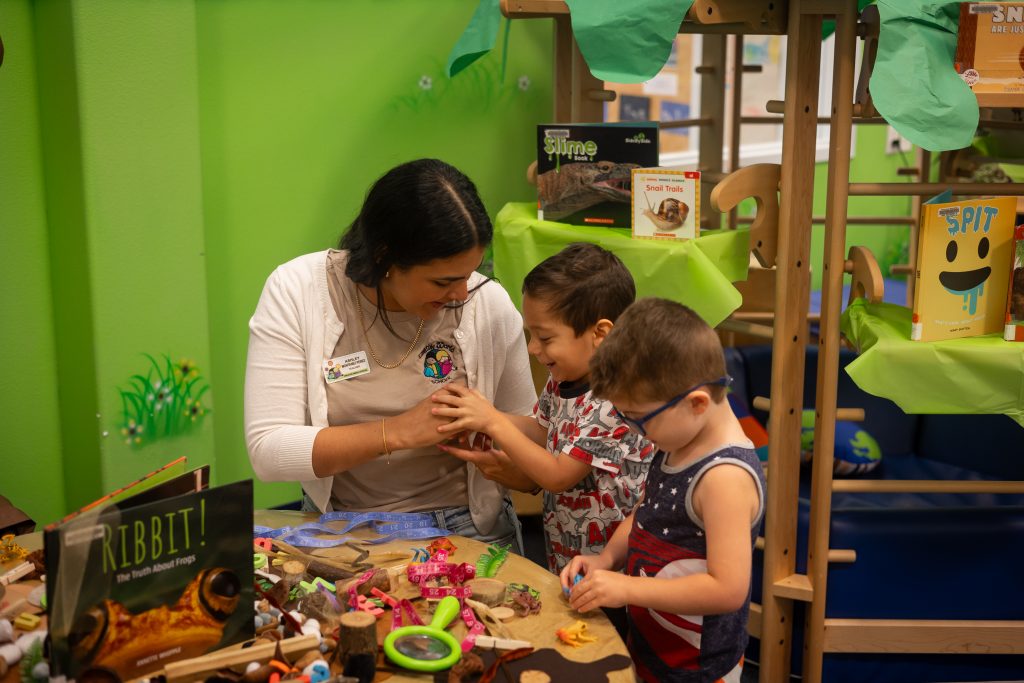
So what does inquiry-based learning mean? It’s a teaching approach that follows your child’s curiosity. Instead of sticking to rigid lesson plans, teachers build learning experiences around the questions children ask and the things they’re drawn to. When a child notices something interesting or wonders how something works, the teacher helps them explore that idea in a hands-on, meaningful way. Research consistently shows that active, hands-on learning where children are doing and investigating leads to significantly better knowledge retention than passive methods like listening to a lecture. This kind of active learning leads to stronger understanding, better problem-solving, and deeper engagement. In classrooms that use inquiry-based methods, students have shown marked improvement in academic performance and significantly increased engagement, all by following the questions that matter most to them.
If a child asks, “Where do worms live?” the teacher might grab a shovel and say, “Let’s go look.” That question can grow into a worm habitat, a class book about soil animals, or a group story about worm superheroes. The learning is meaningful because it starts with something the child truly wants to figure out.
Teachers create environments where kids feel comfortable asking questions, sharing ideas, and making mistakes. They set out interesting materials, invite kids to wonder out loud, and give just enough guidance to keep the spark going.

The Teacher’s Role in Inquiry-Based Learning
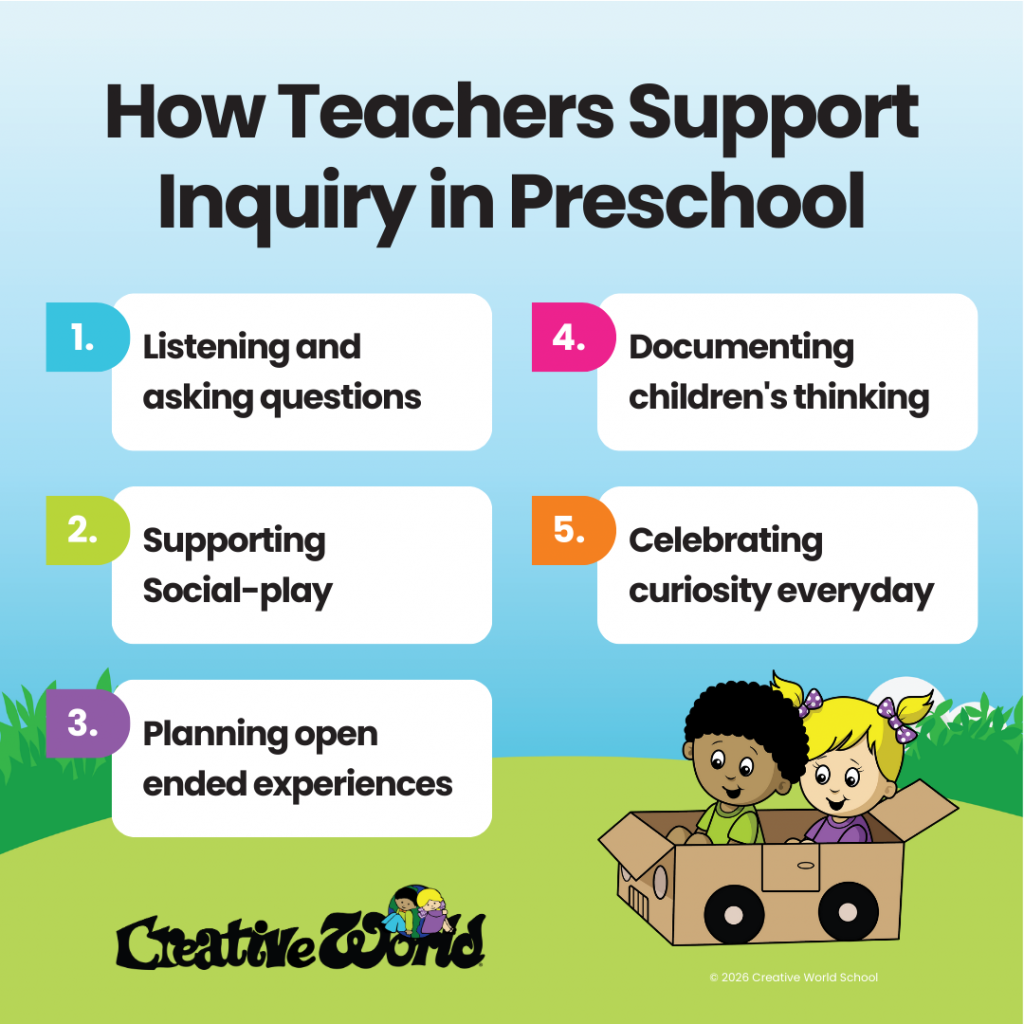
Preschool teachers at Creative World are more than instructors—they’re guides, listeners, and co-explorers. They help children take the lead while staying close enough to support and challenge them.
This is where our 3 E’s come in: Education, Exploration, and Enrichment. Teachers weave these three parts together every day. They help children build skills, follow their curiosity, and dive deeper into big ideas through hands-on experiences.
A teacher might notice a group of kids building ramps and rolling cars down a slope. Instead of just cheering them on, she might ask, “What would happen if the ramp was higher?” That question pushes the play into an experiment, which then leads into early science and math concepts just from a few blocks and a toy car.
Learning Through Playful Discovery
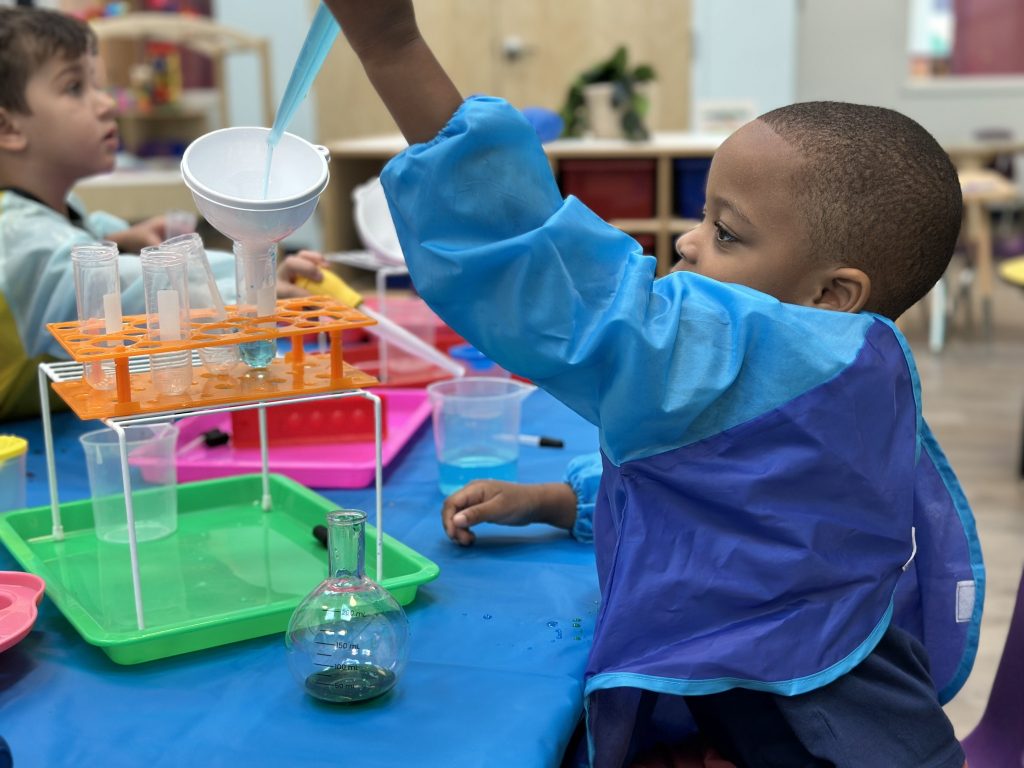
Inquiry-based learning works because it taps into what children are already doing. Play is the vehicle for learning, and teachers ride along as copilots. When kids explore, test, sort, stack, build, and pretend, they’re building real skills. Teachers notice these moments and turn them into deeper learning by asking good questions, adding new materials, or suggesting ways to think about what’s happening.
Instead of saying, “Let’s talk about balance,” a teacher might say, “Your tower is leaning. What can you do to help it stay up?” That small shift keeps kids in the driver’s seat, while still guiding them toward important concepts like cause and effect or trial and error.
This kind of learning builds patience, curiosity, and confidence. Kids learn that they can try something, fix it, try again, and keep going. And that sticks with them.
Teachers Are Trained to Guide, Not Take Over
Inquiry works best when teachers know how to support it. That’s why our educators receive ongoing training and guidance in this approach.
They learn how to observe children’s play and plan learning experiences based on what they see. They learn how to guide conversations, introduce new words, and support critical thinking without stepping in too quickly or doing the work for the child.
This balance is what makes inquiry powerful. The teacher is always nearby, helping a child take the next step, reflect on their work, or look at something in a new way. That support helps children feel confident, seen, and valued in their learning.
What You’ll See in an Inquiry-Based Classroom
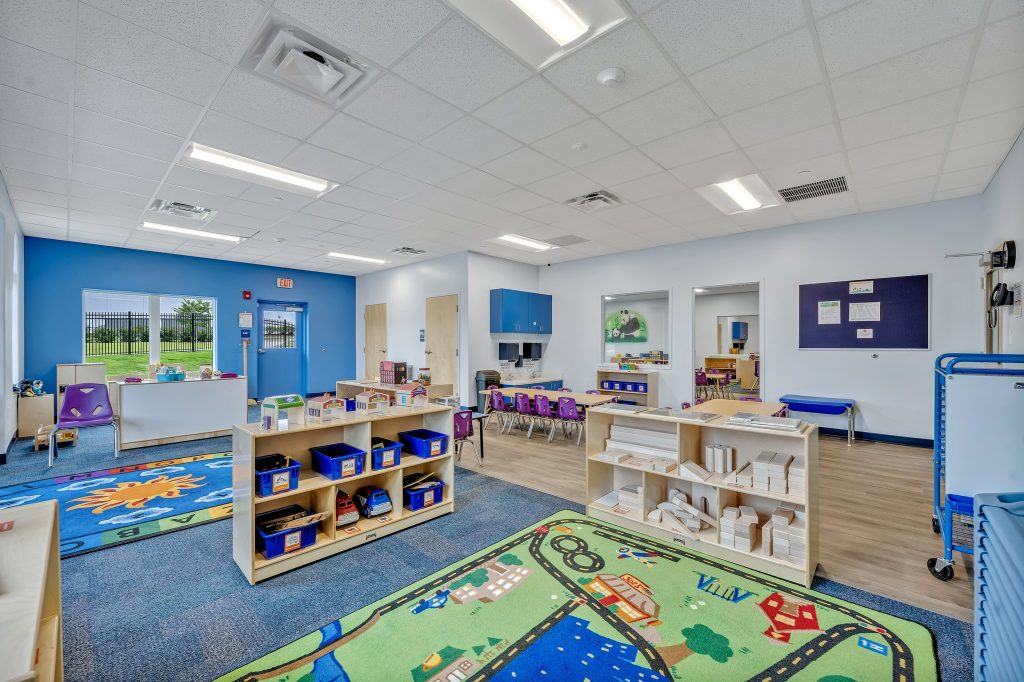
Inquiry doesn’t look like a standard lesson plan. You might see ramps and balls, art projects with natural materials, or a stack of picture books next to a pile of cardboard boxes. You’ll see children working together to test ideas, teachers crouching nearby taking notes, and learning walls filled with drawings, thoughts, and questions from the class.
You’ll also see real joy. Kids light up when they feel like their ideas matter, and inquiry creates that feeling every single day.
High-Quality Learning Driven by Your Child’s Questions
Every child is full of incredible curiosity. At Creative World School, our teachers are experts at recognizing those everyday wonders and skillfully turning them into meaningful, impactful learning.
Our high-quality curriculum is intentionally designed to ensure preschoolers build the essential skills that truly prepare them for kindergarten and beyond: the confidence to ask thoughtful questions, the mental tools to solve complex problems, and the resilience to innovate and try again. With a caring, professional teacher by their side, every single moment becomes a powerful chance for genuine growth.
Want to see what this looks like in action? Schedule a tour at your nearest Creative World School and step into a classroom where curiosity leads the way.

Related Articles

Categories
- About Creative World (3)
- All About Water (4)
- Altamonte Springs (1)
- Animal Adventures (4)
- Apollo Beach (6)
- Apopka (4)
- Art (5)
- Avalon (2)
- Avalon Park (5)
- Away We Go (3)
- Back to school (4)
- Belton (4)
- Blogs to Share on Social Media (7)
- Bonita Springs (1)
- Brandon (2)
- Brrr... Cold! (2)
- Buggin' Out (2)
- Build It Up Theme (6)
- CampTastic (3)
- Chesapeake (2)
- Childhood Development (33)
- Children Book Recommendations (13)
- Children Quotes (1)
- Children Songs (1)
- Construction Theme (1)
- Contests (1)
- Creative World Curriculum (4)
- Creative World School (2)
- Crosscreek (4)
- CW Activity (2)
- CW Books (11)
- CW Celebrates (10)
- CW Character Traits (1)
- CW Educational Focus (4)
- CW Spotlight (1)
- Cypress Springs (3)
- Delicious Recipes (2)
- Did You Know? (1)
- Down To Earth (3)
- Early Education (19)
- Education (7)
- Estero (8)
- Fall Activities (3)
- Fall Festival (1)
- Fishhawk (3)
- Food (2)
- Franchise (1)
- Franklin Township (3)
- Friendship Theme (1)
- Fun National Holidays (19)
- Georgetown, TX (2)
- Health & Safety (5)
- In The Sky (2)
- In The Trees (4)
- iSTEAM (1)
- Katy, TX (4)
- Kindergarten (5)
- Land O' Lakes (3)
- Leander, TX (1)
- Lee's Summit (5)
- Liberty (1)
- Literacy (8)
- Loudoun County, VA (1)
- Mealtimes (1)
- Naples (3)
- New Schools (1)
- North Naples (4)
- Oakstead (4)
- Ooey Gooey (1)
- Orlando (5)
- Our Staff Recommends (2)
- Outdoor Activities (13)
- Oviedo (3)
- Parenting (59)
- Parenting Advice (52)
- People We Know (3)
- psychology (1)
- Rivercrest (1)
- Riverview (4)
- RiverWalk (1)
- School Events (3)
- School Readiness (5)
- Sensory Play (2)
- social-emotional (3)
- Space Topic (1)
- Special Events (17)
- St. Cloud (5)
- St. Cloud (1)
- Starkey Ranch (5)
- STEAM (5)
- Summer (3)
- Summer Activities (38)
- Tampa (6)
- That's Me! (2)
- Tips (3)
- To The Grocery Store (2)
- Try this with your kids! (4)
- Tuition (1)
- TX (1)
- UCF (5)
- Uncategorized (74)
- Vinings (2)
- water (1)
- We're SERIOUS about PLAY (2)
- Week of the Young Child (2)
- Wesley Chapel (2)
- Winter Activities (3)