
How to Tell If a Preschool’s STEM Program Is Real
Creative world school Oct 30, 2026“STEM” shows up on a lot of preschool websites now. Some of those programs are the real thing, and some are a logo. The difference is easy to spot once you know where to look.
A real preschool STEM program has four things you can see or ask about. The materials sit where small hands can reach them, and they look used. The teachers ask more questions than they answer. There’s a record somewhere of what the kids guessed and what they found out. And children get time to try something, watch it flop, and try again. Below is how to check each one, plus three things that get called STEM and shouldn’t.
Preschool STEM Materials Your Child Can Reach and Handle
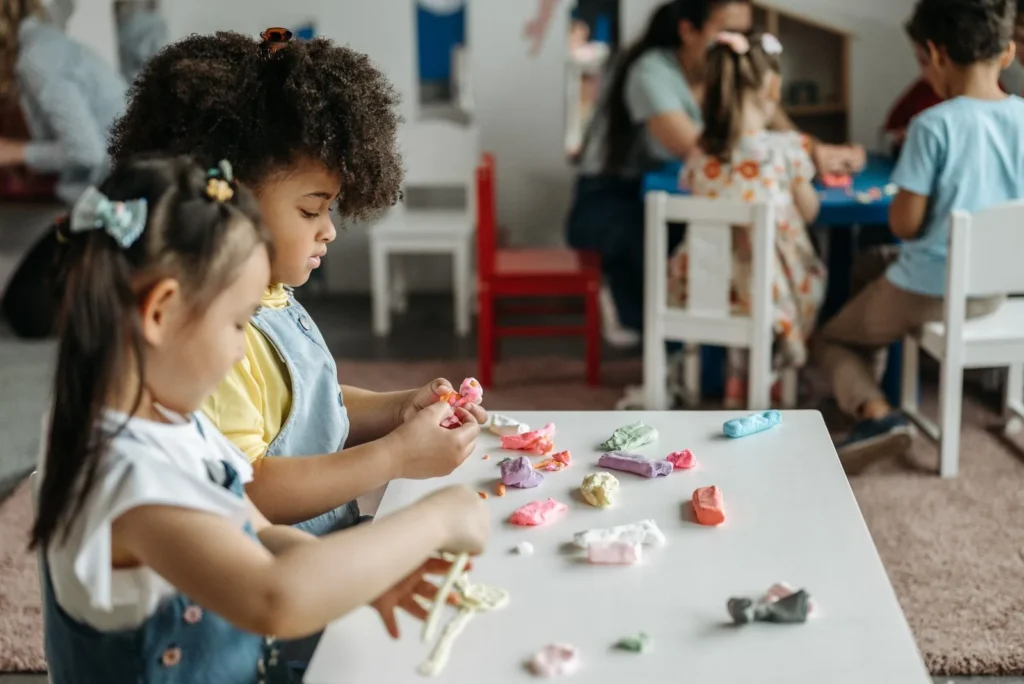
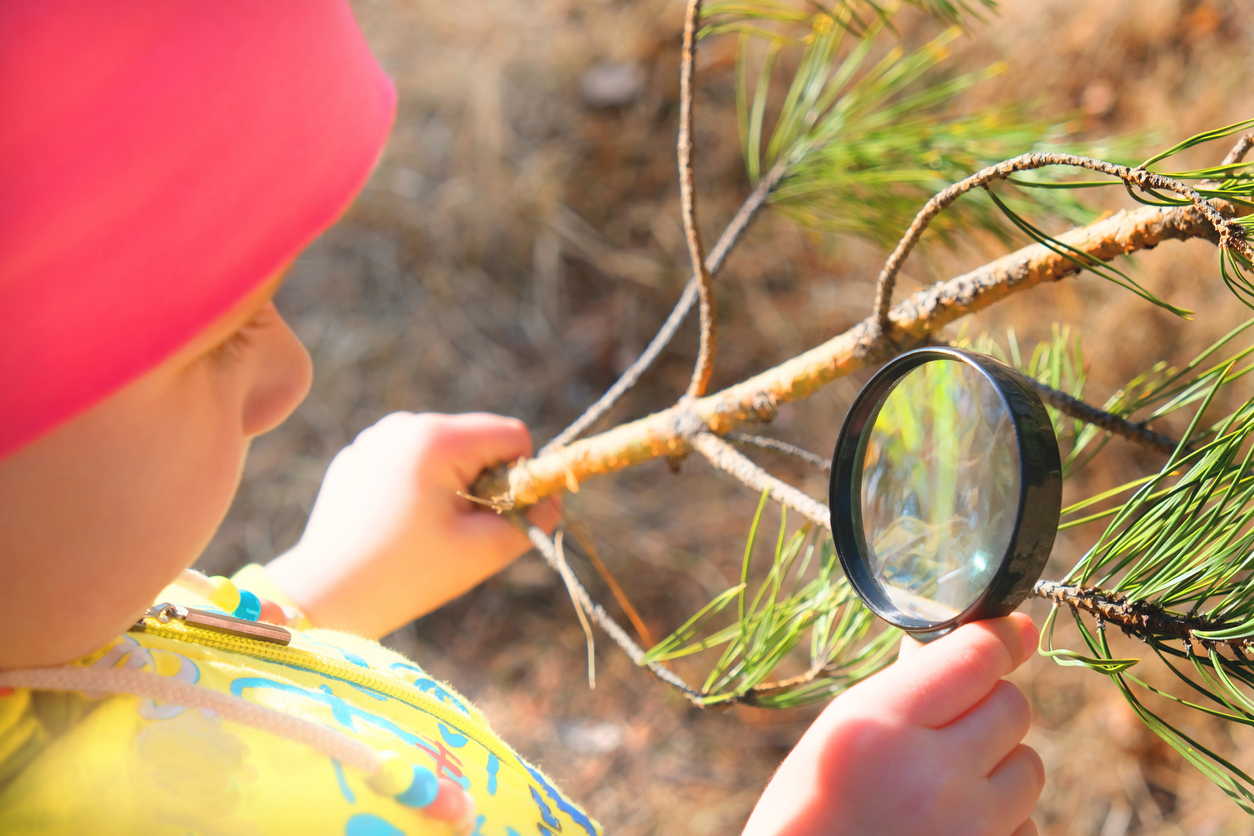
Real STEM materials in a preschool room are the ones a 3-year-old can grab without asking. Think ramps and balls, a balance scale with a basket of rocks beside it, magnifiers, funnels, a water table, and cardboard and tape. None of it needs a brand name, and most of it looks a little beat up, because it gets used every day!
That wear is the signal. Shiny materials on a high shelf come down for a photo and go back up. NAEYC lists classrooms where teachers control every activity and children never get to explore the materials on their own as a warning sign, and a STEM shelf nobody is allowed to touch is the same problem with a science label stuck on it.
Then listen to the adult in the room. A teacher in a real STEM moment asks “what do you think will happen if we move it?” more than they explain what a lever does. Counting who asks the questions is the fastest tell on any tour, and our post on seeing past the inquiry-based learning buzzword walks through that count.
Ask to See a Prediction That Turned Out Wrong
Real science has a before and an after. The kids guess, then they check. So ask the teacher for one thing the class predicted this month and what they found out. A real program can answer right away, because the predictions are on chart paper next to the bean cups or in a photo the teacher snapped.
The wrong guesses matter more than the right ones. A chart that says “we thought the ice by the window would melt last, and it melted first” shows kids thinking out loud and a teacher who wrote it down. That’s what the National Science Teaching Association means when it says good early science lets children revisit their own observations and predictions from day to day instead of finishing a topic in one afternoon.
If the answer is a curriculum binder, keep asking. A real program can name a kid and a guess.

Real Preschool STEM Gives Kids Time to Try Again
The ramp almost never works the first time, and that’s half the fun! A marble rolls off the edge, and a child with enough time rebuilds the ramp a little differently and watches again. That loop of trying, failing, and changing one thing is the heart of STEM at this age, and it needs more minutes than a packed schedule gives it. The same NSTA statement says adults underestimate how long a young child can stay with a science exploration, so a short STEM block often says more about the schedule than the kids.
Ask what happens when a child’s design flops. Listen for a teacher who hands it back and asks what they’d change, instead of fixing it for them. The Early Childhood STEM Working Group’s policy report says the adults’ job is to encourage children to keep going when their designs fail. A kid who gets five tries learns something a kid with one turn never gets to.
Three Red Flags in a Preschool STEM Program
First, the branded kit. A big plastic STEM set with the logo facing out, parked on the top shelf with every piece still in its tray, is a display. Ask when it last came down. If nobody can tell you, it’s decoration.
Second, worksheets. A page where children circle the heavier object is a pencil task with a science picture on it. NAEYC puts worksheets, flashcards, and toys that only work one way on its list of warning signs, and the warning holds no matter what’s printed at the top of the page.
Third, screens. A tablet app with a rocket on it gets called technology, and sometimes the whole STEM program. For a preschooler, technology means tools. The same working group counts a pencil or a wooden block as technology for a young child, and a program with only the digital half skipped the part a 3-year-old can hold.
None of these makes a school a bad one, and you can ask about them kindly. Add them to our ten essential questions for a preschool tour, and try a few at-home inquiry activities first so you know the real version when you see it.

See Real Preschool STEM in Action on a Tour
Every sign of a real preschool STEM program is something we’d be glad to show you at Creative World School. Our Exploratorium™ is a hands-on discovery space where kids build, test, and try again, and one of its stations is Project iSTEAM. The small i stands for inquiry, the kids’ own questions, and the science, technology, engineering, art, and math are where those questions lead, from guessing which boat will sink to a block tower that finally stays up.

Related Articles
-
“Let’s Find Out” Is the Best STEM Answer You Can Give Your Preschooler
-
10 Creative Strategies for Introducing New Foods to Picky Toddlers: Tips and Tricks

-
10 Earth Day Adventures for Preschoolers
-
7 Fast Yet Nutritious Toddler Breakfasts for Busy Parents

-
Achieving Work-Life Balance with Young Kids: Practical Tips for Busy Parents

Categories
- About Creative World (3)
- All About Water (4)
- Altamonte Springs (1)
- Animal Adventures (4)
- Apollo Beach (6)
- Apopka (5)
- Art (5)
- Avalon (2)
- Avalon Park (5)
- Away We Go (3)
- Back to school (4)
- Belton (4)
- Blogs to Share on Social Media (7)
- Bonita Springs (1)
- Brandon (3)
- Brrr... Cold! (2)
- Buggin' Out (2)
- Build It Up Theme (6)
- CampTastic (3)
- Chesapeake (3)
- Childhood Development (33)
- Children Book Recommendations (14)
- Children Quotes (1)
- Children Songs (1)
- Construction Theme (1)
- Contests (1)
- Creative World Curriculum (4)
- Creative World School (2)
- Crosscreek (4)
- CW Activity (2)
- CW Books (11)
- CW Celebrates (11)
- CW Character Traits (1)
- CW Educational Focus (4)
- CW Spotlight (1)
- Cypress Springs (3)
- Delicious Recipes (2)
- Did You Know? (1)
- Down To Earth (3)
- Early Education (19)
- Education (7)
- Estero (8)
- Fall Activities (21)
- Fall Festival (1)
- Fishhawk (4)
- Food (2)
- Franchise (1)
- Franklin Township (5)
- Friendship Theme (1)
- Fun National Holidays (19)
- Georgetown, TX (4)
- Health & Safety (5)
- In The Sky (2)
- In The Trees (4)
- iSTEAM (9)
- Katy, TX (5)
- Kindergarten (5)
- Land O' Lakes (3)
- Leander, TX (3)
- Lee's Summit (6)
- Liberty (1)
- Literacy (8)
- Loudoun County, VA (2)
- Mealtimes (1)
- Naples (4)
- New Schools (4)
- North Naples (4)
- Oakstead (5)
- Ooey Gooey (1)
- Orlando (5)
- Our Staff Recommends (2)
- Outdoor Activities (14)
- Oviedo (4)
- Parenting (67)
- Parenting Advice (70)
- People We Know (3)
- psychology (1)
- Rivercrest (1)
- Riverview (5)
- RiverWalk (1)
- School Events (3)
- School Readiness (5)
- Sensory Play (2)
- social-emotional (3)
- Space Topic (1)
- Special Events (17)
- St. Cloud (2)
- St. Cloud (5)
- Starkey Ranch (6)
- STEAM (5)
- Summer (3)
- Summer Activities (38)
- Tampa (7)
- That's Me! (2)
- Tips (3)
- To The Grocery Store (2)
- Try this with your kids! (4)
- Tuition (1)
- TX (1)
- UCF (6)
- Uncategorized (68)
- Vinings (2)
- water (1)
- We're SERIOUS about PLAY (2)
- Week of the Young Child (2)
- Wesley Chapel (2)
- Winter Activities (3)