
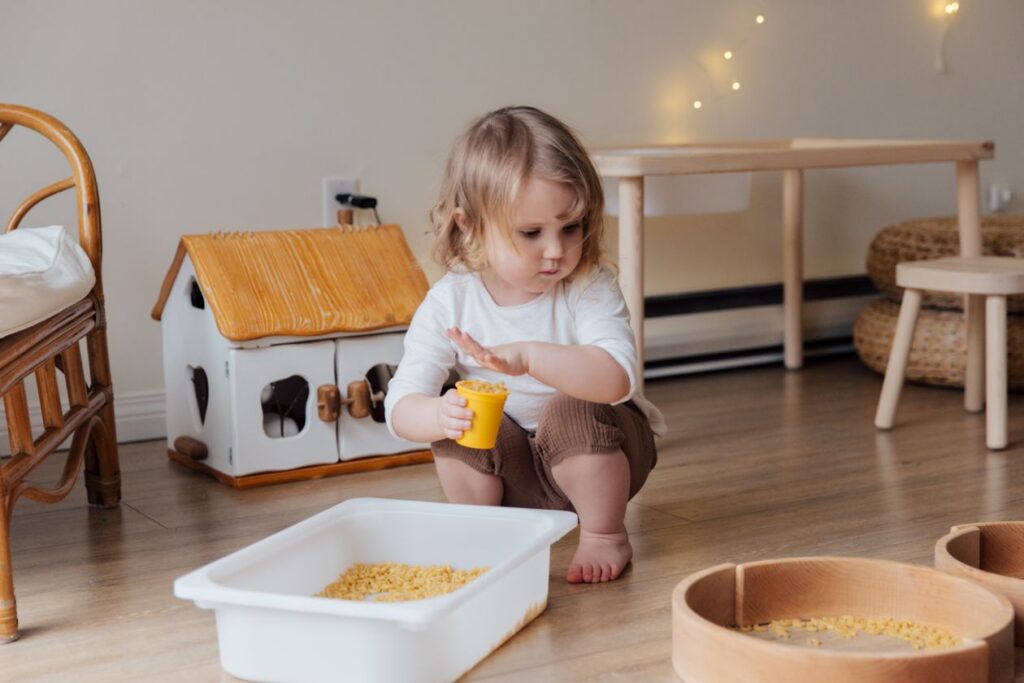
Your Preschooler’s Best STEM Materials Are Already in Your House
Creative world school Sep 18, 2026Your preschooler shows an interest in science, and somewhere in the back of your mind a small voice says you should probably buy something. A kit. A set with goggles on the box. Something that looks official.
The answer is yes, you can do real STEM at home without spending a dollar. The cups and spoons and cardboard already sitting in your house will carry your child further than most boxed sets will, and it comes down to who gets to decide what happens next.
What Counts as STEM Material in Your House
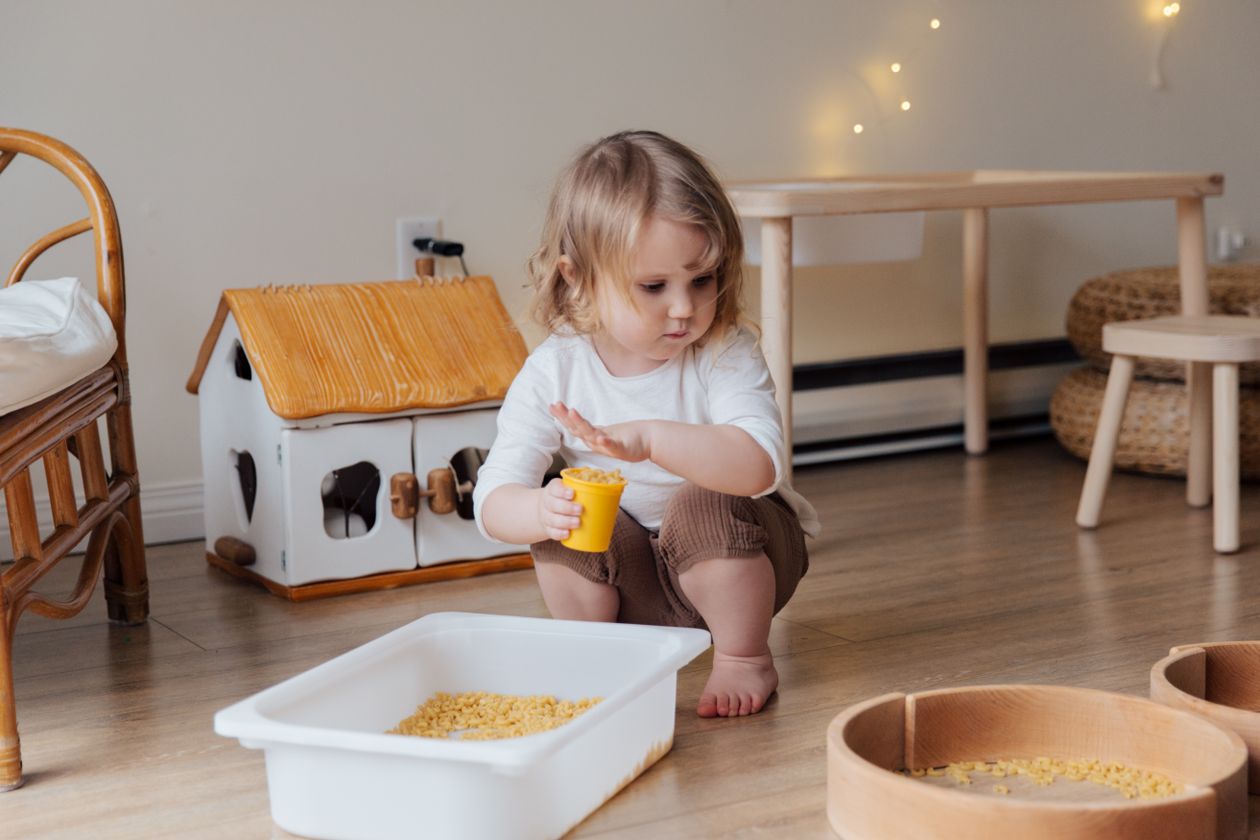
Look around your kitchen for a few seconds. Measuring cups, a colander, a set of baking gloves, a stack of plastic lids, and a bowl of water can make a whole afternoon of pouring, sorting, sinking, and floating.
The American Psychological Association covers this in its guide to unstructured play, where psychologists point out that pots and pans that turn into instruments and couch cushions that turn into a fort do as much for a child as a shelf of toys. The child is the one doing the inventing.
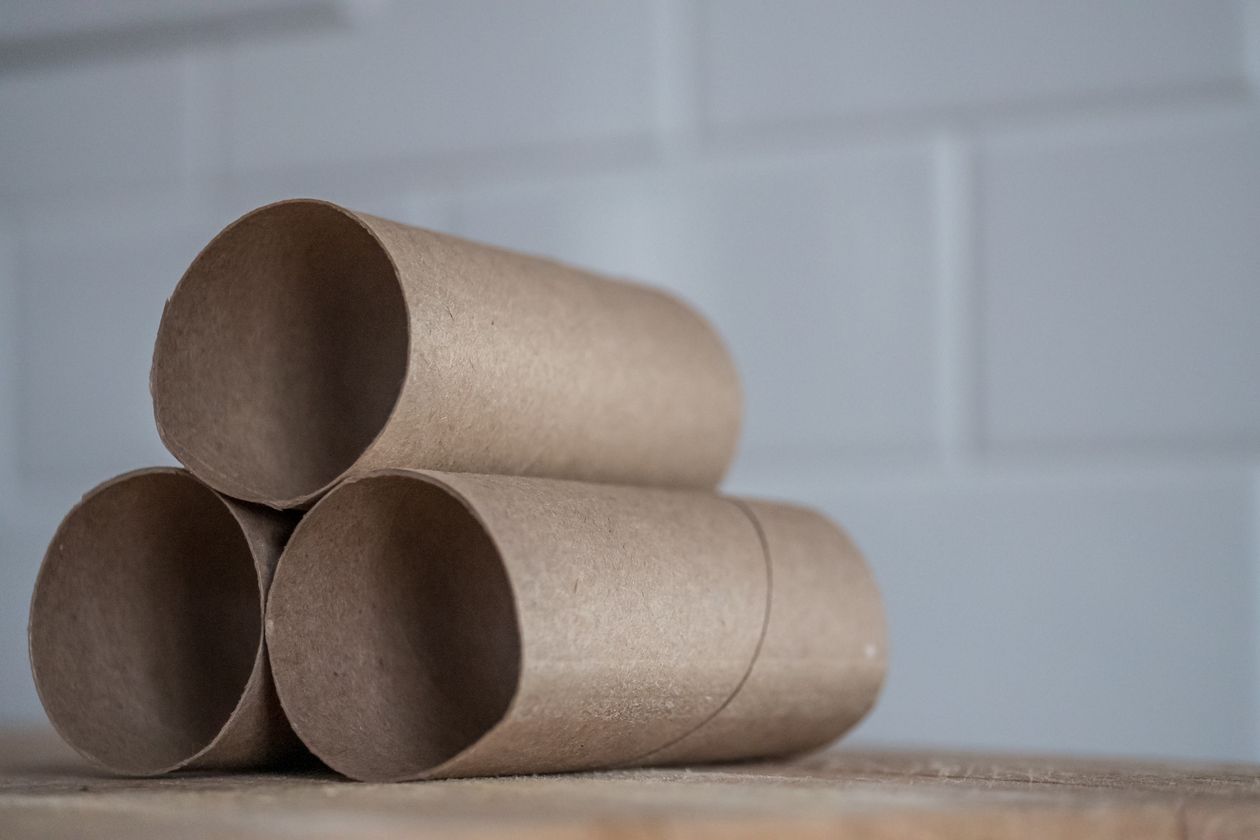
The recycling bin is the other half of your supply closet. Cardboard tubes, egg cartons, a shoebox, bottle caps. The yard does even more of the work, since rocks, sticks, and puddles are their own kind of classroom. None of it looks like science equipment, and your kiddo will still spend twenty minutes finding out which tube the marble rolls through fastest. Remember to keep all supplies kid-friendly and choking hazard-free.
Open-Ended Materials Let Your Preschooler Decide What Happens Next
A cardboard box doesn’t come with instructions, and that’s what makes it perfect for STEM. Your child has to decide what it is. A boat on Monday, a garage on Tuesday, a cave by Thursday. Every one of those decisions is a small stack of real thinking. What shape do I need? Will this hold? What happens if it gets wet?
Exploration is the part you can’t buy. A toy built to do one thing tends to get used one way. A shoebox and a roll of tape get used a hundred ways, and each of those ways is your kid running a small test on what the world allows.
In The Squiggle by Carole Lexa Schaefer, a girl spots a piece of string on the sidewalk and turns it into fireworks, then a thundercloud, then the moon, all before the walk ends. Same string the whole time! What keeps changing is what she decides it is.
Boxed STEM Kits
Store-bought kits can be excellent, but they have their limits. Kits are built to work on the first try, and that reliability is half the fun. It skips the stretch where something flops and your child has to sit with why. Ask what else the baking soda could do and there’s somewhere to go. Run straight down the instructions, though, and it’s usually a one-afternoon thing. A colander and a handful of pipe cleaners keep going for weeks because nobody ever told your kid what it was supposed to be for. Sometimes to truly think outside of the box, it’s best to avoid one altogether.
Erika Christakis spends a whole book on this in The Importance of Being Little, arguing that much of what looks educational for young children does less for them than the plain everyday stuff it replaced.
Open-ended materials hand the steering wheel to a three-year-old, and that level of imagination is worth protecting.
Your Best STEM Tool Is the Question You Ask
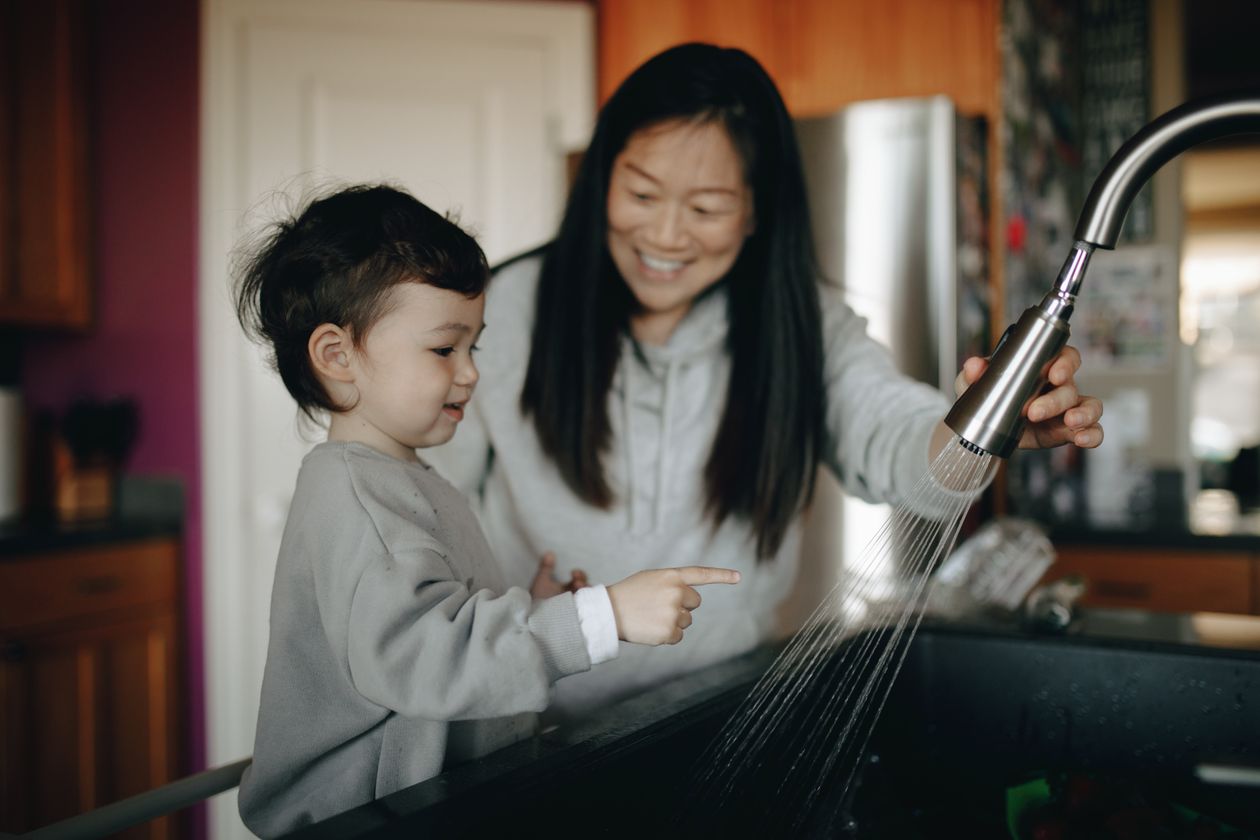
The supplies matter less than what you say while your preschooler is using them. Try asking what they think will happen before they pour. When the tower comes down, see if they can tell you which block gave out first. Point at two things on the counter and let them guess which one sinks.
The strongest questions are usually the ones you’re curious about too. When your child wants to know why the paper towel soaked up the spill and the foil pushed it around, saying you’re not sure and then trying it again together beats any answer you could hand over. Those questions cost nothing, and they turn a bowl of water into an experiment!
Keep your own hands mostly still while this is going on. When a grown-up takes over the pouring, the thinking goes with it.
What Hands-On Preschool STEM Looks Like in Our Classrooms
The wondering your preschooler brings to a colander and a bowl of water is the same thing we build our days around at Creative World School. Our Exploratorium™ is a hands-on discovery space where that kind of messing around gets real room in the day, and the whole thing runs on our 3 E’s, Education, Exploration, and Enrichment. Education is the skills and language work, Exploration is the open-ended digging your child leads, and Enrichment is the art, music, cooking, and building that grows out of it. When you’re ready to see what that looks like on an ordinary Tuesday, find one of our schools near you and come take a look!

Related Articles
-
“Let’s Find Out” Is the Best STEM Answer You Can Give Your Preschooler
-
10 Creative Strategies for Introducing New Foods to Picky Toddlers: Tips and Tricks

-
10 Earth Day Adventures for Preschoolers
-
7 Fast Yet Nutritious Toddler Breakfasts for Busy Parents

-
Achieving Work-Life Balance with Young Kids: Practical Tips for Busy Parents

Categories
- About Creative World (3)
- All About Water (4)
- Altamonte Springs (1)
- Animal Adventures (4)
- Apollo Beach (6)
- Apopka (5)
- Art (5)
- Avalon (2)
- Avalon Park (5)
- Away We Go (3)
- Back to school (4)
- Belton (4)
- Blogs to Share on Social Media (7)
- Bonita Springs (1)
- Brandon (2)
- Brrr... Cold! (2)
- Buggin' Out (2)
- Build It Up Theme (6)
- CampTastic (3)
- Chesapeake (3)
- Childhood Development (33)
- Children Book Recommendations (14)
- Children Quotes (1)
- Children Songs (1)
- Construction Theme (1)
- Contests (1)
- Creative World Curriculum (4)
- Creative World School (2)
- Crosscreek (4)
- CW Activity (2)
- CW Books (11)
- CW Celebrates (11)
- CW Character Traits (1)
- CW Educational Focus (4)
- CW Spotlight (1)
- Cypress Springs (3)
- Delicious Recipes (2)
- Did You Know? (1)
- Down To Earth (3)
- Early Education (19)
- Education (7)
- Estero (8)
- Fall Activities (14)
- Fall Festival (1)
- Fishhawk (3)
- Food (2)
- Franchise (1)
- Franklin Township (4)
- Friendship Theme (1)
- Fun National Holidays (19)
- Georgetown, TX (4)
- Health & Safety (5)
- In The Sky (2)
- In The Trees (4)
- iSTEAM (6)
- Katy, TX (5)
- Kindergarten (5)
- Land O' Lakes (3)
- Leander, TX (1)
- Lee's Summit (5)
- Liberty (1)
- Literacy (8)
- Loudoun County, VA (2)
- Mealtimes (1)
- Naples (4)
- New Schools (3)
- North Naples (4)
- Oakstead (4)
- Ooey Gooey (1)
- Orlando (5)
- Our Staff Recommends (2)
- Outdoor Activities (14)
- Oviedo (4)
- Parenting (63)
- Parenting Advice (62)
- People We Know (3)
- psychology (1)
- Rivercrest (1)
- Riverview (5)
- RiverWalk (1)
- School Events (3)
- School Readiness (5)
- Sensory Play (2)
- social-emotional (3)
- Space Topic (1)
- Special Events (17)
- St. Cloud (5)
- St. Cloud (2)
- Starkey Ranch (5)
- STEAM (5)
- Summer (3)
- Summer Activities (38)
- Tampa (6)
- That's Me! (2)
- Tips (3)
- To The Grocery Store (2)
- Try this with your kids! (4)
- Tuition (1)
- TX (1)
- UCF (6)
- Uncategorized (72)
- Vinings (2)
- water (1)
- We're SERIOUS about PLAY (2)
- Week of the Young Child (2)
- Wesley Chapel (2)
- Winter Activities (3)