
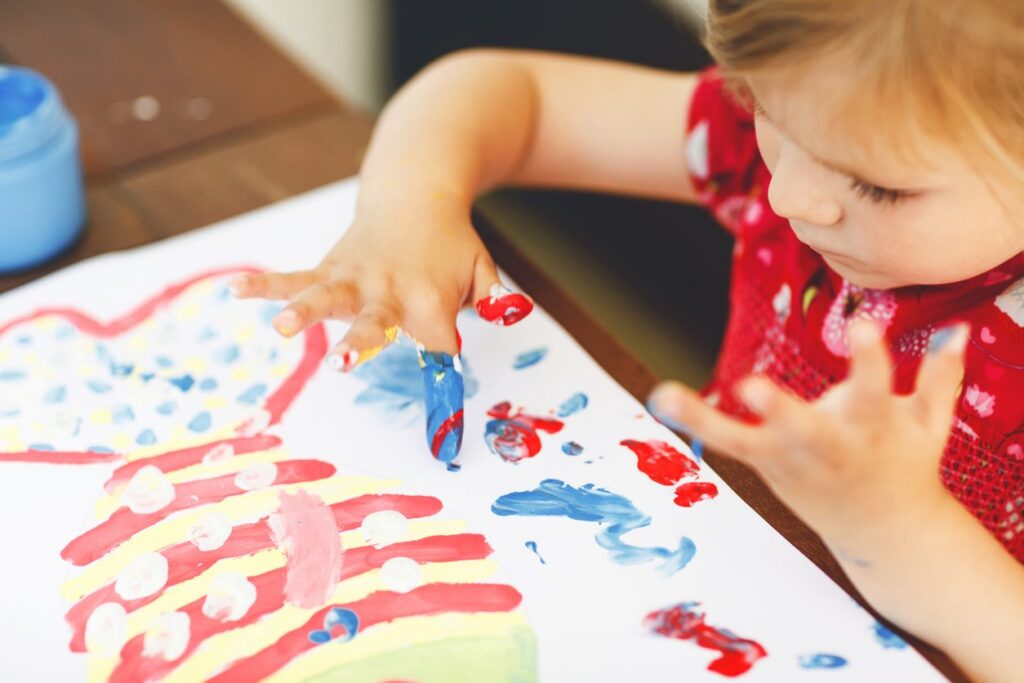
What Twenty Minutes and One Crayon Build in Your Preschooler
Creative world school Jul 31, 2026Your kiddo has been at the kitchen table for eleven minutes with one green crayon and a sheet of printer paper. Nobody has asked for a snack. Nobody is climbing anything.
August 2 is National Coloring Book Day, and it’s a good excuse to look hard at the art supply most of us treat as twenty minutes of peace before dinner. There’s real work happening on that paper. Hand strength, finger control, focus, and some early reasoning about color and pattern all get built while your child fills in a shape.
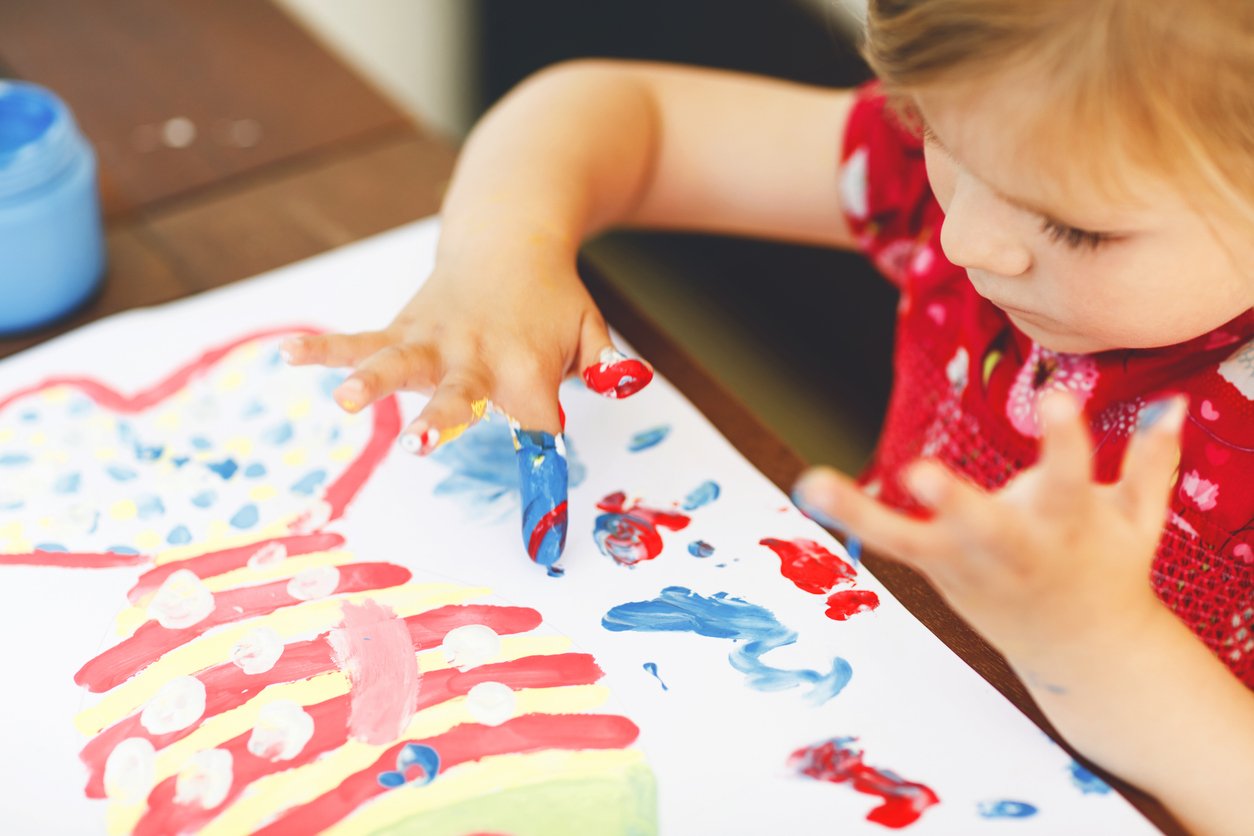
What Coloring Builds in Your Preschooler’s Hands
Every mark on the page is a small workout for muscles your child will need for a pencil later. By age 3, kids can trade the fist grip for something closer to an adult’s, thumb on one side and fingers on the other, according to the American Academy of Pediatrics. Holding a crayon or pencil between the fingers and thumb shows up again on the CDC’s list of things most children do by age 4.
That grip doesn’t arrive on its own. It gets built through repetition, and coloring is one of the few things a preschooler will repeat happily for twenty minutes without being asked. Pressing hard enough to fill in a shape builds hand strength, while easing off near the edge is what teaches control. Every swap to a new crayon works the pinch-and-release motion that turns up later in buttons, zippers, and safety scissors.
We went deeper on the muscles involved in how art builds fine motor skills in preschoolers.
Why Coloring Calms Kids Down and Stretches Their Focus
Ask a preschool teacher what they hand a wound-up group after outdoor time, and coloring comes up fast. NAEYC, the big early childhood education association, names relaxation, focus, and a feeling of success among what children get out of open-ended art.
Attention at this age is short by design. A preschooler who stays with one drawing for fifteen minutes is practicing something real, and it’s the same muscle that makes circle time work and, later, makes a kindergarten worksheet possible. Coloring stretches it without anybody announcing that it’s being stretched. If settling down is hard for your kiddo, keep paper and crayons somewhere they can reach on their own and see how the rough afternoons go.
In Ish by Peter H. Reynolds, a boy quits drawing after his brother laughs at his vase, then finds out his little sister has been saving every picture he crumpled up. It’s the right story for a kid who has started erasing things.
For more of what holds a preschooler’s attention without a screen, we rounded up our favorites in a post on screen-free activities.
Color and Pattern Reasoning Starts on the Page
Every page is a stack of small decisions. Which color goes where, what a purple dog would look like, what happens when green goes on top of blue. NAEYC lists comparing, predicting, and planning among the thinking skills children use during open-ended art, and you can hear all three when a preschooler narrates a drawing out loud.
Patterns turn up on their own around this age. Kids start ringing a shape with alternating colors, or repeating a row of dots along one edge, without anybody teaching them to do it. When you spot one, point at it and let them tell you what comes next.
Try asking why they picked the color they picked. The answers are usually better than the question!
Easy Coloring Ideas That Beat a Coloring Book
A coloring book has one right answer built into every page. The lines are already drawn, the character is already the character, and there isn’t much left to decide beyond staying inside the shape. Fine for a restaurant or a long car ride! It’s a smaller job than a blank page.
Start with plain paper and a small handful of crayons. Six colors force more decisions than sixty. Tape a big sheet of butcher paper to the floor and let your child work standing up, which pulls in shoulder and arm muscles a table never asks for. Draw one big wobbly outline yourself, a blob or a house or a fish, and hand it over to be filled in. Flatten a cereal box and color on the cardboard, since the rougher surface changes how the crayon drags.
Color-and-tell is the one to try if your kiddo likes to narrate. They color, you write down the story they’re telling at the bottom of the page. A drawing becomes a first piece of writing without a single letter being practiced.
Pull Beautiful Oops! by Barney Saltzberg off the shelf the first time a line goes somewhere your child didn’t intend. Every spread takes a tear, a smudge, or a spill and turns it into a picture, which is the whole argument for a blank page over a printed one.
We made the longer case for unstructured, process-focused art if you’re interested in the science behind this kind of activity.
Celebrate National Coloring Book Day With Us
Open-ended art runs through our classrooms every single day. In the Exploratorium™, children pick their own materials and chase their own ideas, and our 3 E’s of Excellence™ curriculum treats making things as a way of thinking rather than a break from it. Teachers sit at eye level and ask about the purple dog instead of correcting it.
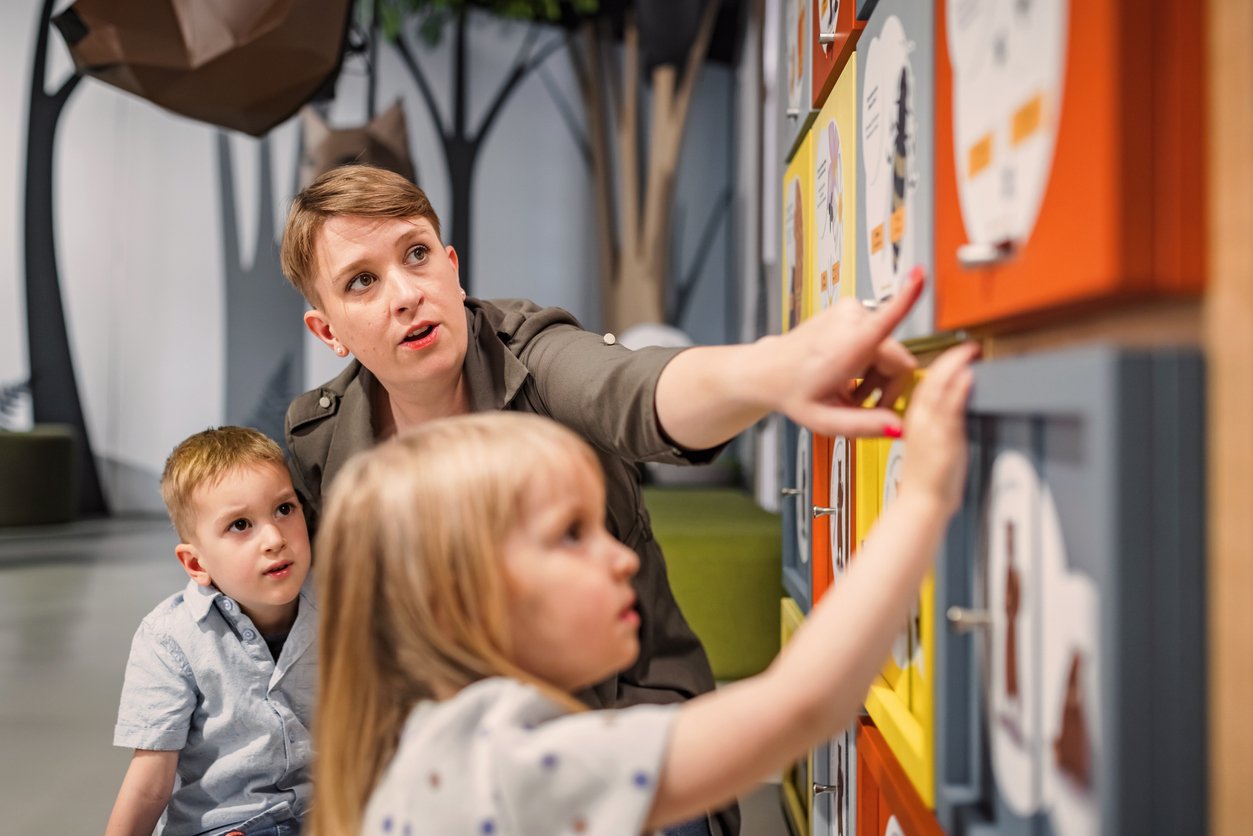
Set the paper out on August 2 and see where your kiddo takes it. And when you’re ready to see what a room full of preschoolers does with real creative freedom, find a school near you and come visit us!

Related Articles
-
10 Storytime Favorites for Random Acts of Kindness Day
-
10 Sweet and Simple Valentine’s Day Ideas Preschoolers Will Love

-
20 Wacky Animal Facts to Celebrate World Animal Day

-
38 Surprising Facts to Celebrate Read Across America Day
-
6 Tasty Ways to Turn National Grilled Cheese Day into a Learning Adventure for Your Preschooler
Categories
- About Creative World (3)
- All About Water (4)
- Altamonte Springs (1)
- Animal Adventures (4)
- Apollo Beach (6)
- Apopka (4)
- Art (5)
- Avalon (2)
- Avalon Park (5)
- Away We Go (3)
- Back to school (4)
- Belton (4)
- Blogs to Share on Social Media (7)
- Bonita Springs (1)
- Brandon (2)
- Brrr... Cold! (2)
- Buggin' Out (2)
- Build It Up Theme (6)
- CampTastic (3)
- Chesapeake (3)
- Childhood Development (33)
- Children Book Recommendations (14)
- Children Quotes (1)
- Children Songs (1)
- Construction Theme (1)
- Contests (1)
- Creative World Curriculum (4)
- Creative World School (2)
- Crosscreek (4)
- CW Activity (2)
- CW Books (11)
- CW Celebrates (10)
- CW Character Traits (1)
- CW Educational Focus (4)
- CW Spotlight (1)
- Cypress Springs (3)
- Delicious Recipes (2)
- Did You Know? (1)
- Down To Earth (3)
- Early Education (19)
- Education (7)
- Estero (8)
- Fall Activities (10)
- Fall Festival (1)
- Fishhawk (3)
- Food (2)
- Franchise (1)
- Franklin Township (4)
- Friendship Theme (1)
- Fun National Holidays (19)
- Georgetown, TX (3)
- Health & Safety (5)
- In The Sky (2)
- In The Trees (4)
- iSTEAM (5)
- Katy, TX (5)
- Kindergarten (5)
- Land O' Lakes (3)
- Leander, TX (1)
- Lee's Summit (5)
- Liberty (1)
- Literacy (8)
- Loudoun County, VA (2)
- Mealtimes (1)
- Naples (4)
- New Schools (3)
- North Naples (4)
- Oakstead (4)
- Ooey Gooey (1)
- Orlando (5)
- Our Staff Recommends (2)
- Outdoor Activities (14)
- Oviedo (4)
- Parenting (62)
- Parenting Advice (60)
- People We Know (3)
- psychology (1)
- Rivercrest (1)
- Riverview (4)
- RiverWalk (1)
- School Events (3)
- School Readiness (5)
- Sensory Play (2)
- social-emotional (3)
- Space Topic (1)
- Special Events (17)
- St. Cloud (1)
- St. Cloud (5)
- Starkey Ranch (5)
- STEAM (5)
- Summer (3)
- Summer Activities (38)
- Tampa (6)
- That's Me! (2)
- Tips (3)
- To The Grocery Store (2)
- Try this with your kids! (4)
- Tuition (1)
- TX (1)
- UCF (5)
- Uncategorized (72)
- Vinings (2)
- water (1)
- We're SERIOUS about PLAY (2)
- Week of the Young Child (2)
- Wesley Chapel (2)
- Winter Activities (3)