
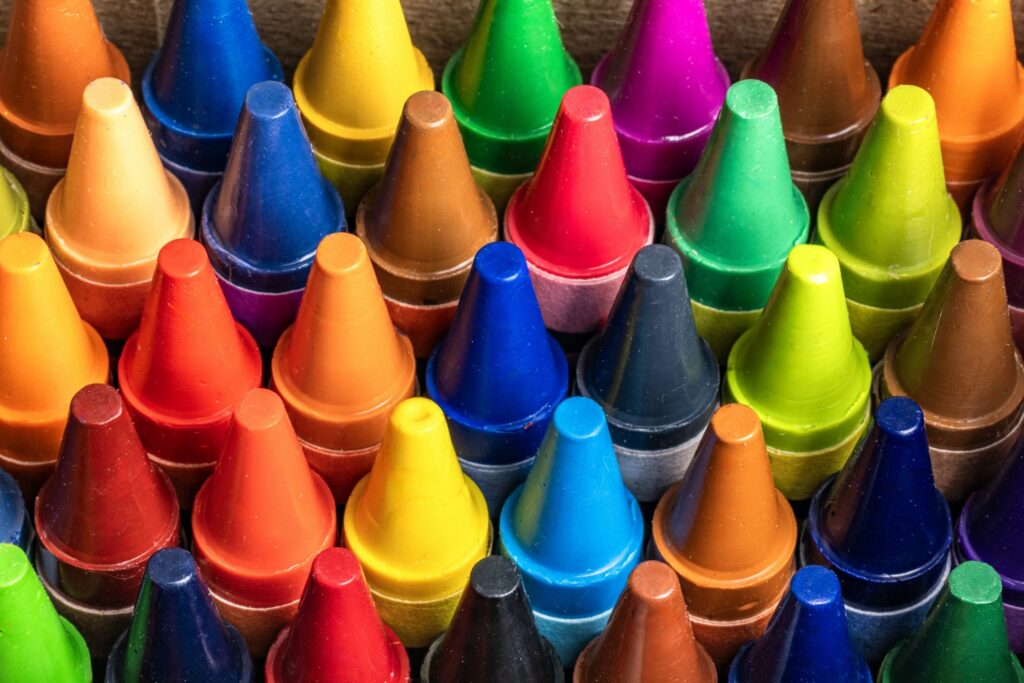
National Crayon Day Is the Best Excuse to Get Creative
Creative world school Mar 31, 2026March 31 is National Crayon Day, and if there’s one holiday that preschoolers were born ready for, this is it. Crayons are usually the first art tool a child picks up, the first thing they use to make a mark that means something, and the first thing that fills a blank page with something entirely their own. They deserve a day.
Here are some ways to actually celebrate, beyond just pulling out the coloring book.
Start with a Color Mixing Experiment
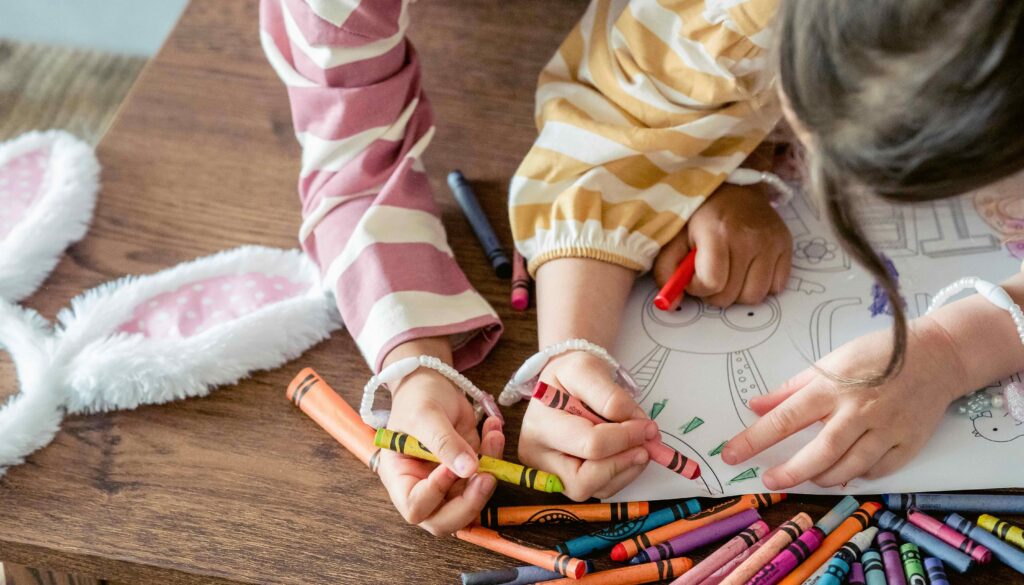
Most preschoolers know their basic colors, but color mixing is a genuinely exciting discovery at this age. Set out red, blue, and yellow crayons and a white sheet of paper, and show your child what happens when you layer one on top of another with firm pressure. Blue over yellow makes green. Red over blue makes purple. The colors don’t disappear; they combine.
This works even better with translucent crayon layers on white paper, and you can extend it by asking your child to predict what will happen before they try it. Prediction is one of the earliest science skills, and crayons are apparently excellent at teaching it.
Scribbles That Strengthen: How Art Builds Fine Motor Skills in Preschoolers explains how this kind of hands-on art work is doing more for your child’s development than it looks like from the outside.
Try Crayon Rubbings
Crayon rubbings are one of those activities that look like pure fun but are quietly teaching texture recognition, fine motor control, and cause-and-effect. Place a coin, a leaf, or a piece of mesh fabric under white paper, lay the crayon on its side, and rub. The hidden object appears.
Preschoolers find this genuinely surprising every single time. Try it with a variety of objects and let your child guess what’s underneath before they rub it. Bark, a hair comb, a piece of corrugated cardboard, and bubble wrap all work well. The whole activity takes about 20 minutes and leaves behind something that looks surprisingly impressive framed on the wall.
Read the Books (Yes, There Are Two Perfect Ones)
Harold and the Purple Crayon by Crockett Johnson is the obvious choice, and it holds up completely. Harold draws his own world into existence, one line at a time. For preschoolers who love to draw, the concept that your crayon can create anything is pretty thrilling.
The Day the Crayons Quit by Drew Daywalt is the modern companion piece. Each crayon writes a letter complaining about how it’s being used (or not used), and the humor lands with kids and parents equally. Read both back-to-back and you have a full National Crayon Day literary celebration on your hands.
Make Melted Crayon Art
This one requires a little adult supervision, but it’s worth it. Break old, worn-down crayons into small pieces and arrange them on a sheet of paper or cardstock. Cover with a second sheet of wax paper and press with a warm iron for a few seconds. The crayons melt together into stained-glass-like artwork that preschoolers are consistently amazed by.
Old crayons that are too short to hold, the ones usually in a pile at the bottom of the crayon box, work perfectly for this. It’s also a good lesson in how broken things can still make something beautiful, which is the kind of message that lands naturally without having to say it out loud.
The Power of Open-Ended Art: Sparking Creativity in Preschoolers is a great read for parents who want to understand why unstructured, process-focused art matters for early childhood development.
Let Them Experiment. That’s the Point.
Preschoolers learn by doing, and “what happens if” is one of the most powerful questions in early childhood. On National Crayon Day, let your child break a crayon. On purpose, together. How many pieces does it make? Can you still color with the smaller ones? Do they leave different marks than the whole crayon did?
This kind of child-led experimentation is how young kids build real understanding. There’s no wrong answer, and nothing goes wrong. The point is to try something, notice what happens, and let the next question come naturally. Mistakes and surprises are where the learning actually lives.
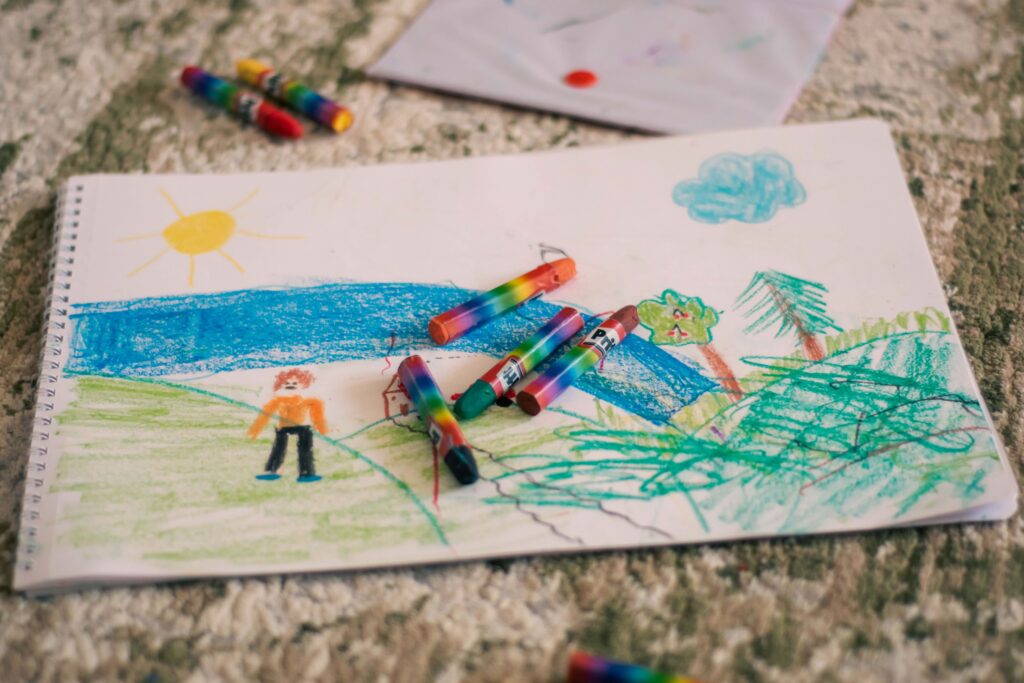
At Creative World School, creativity is woven into everything we do, from the Exploratorium™ to our daily classroom rotations. Creative expression isn’t a Friday afternoon add-on for us. It’s part of how children process and communicate what they’re learning. Find a school near you and come see it in action!

Related Articles
-
10 Storytime Favorites for Random Acts of Kindness Day
-
10 Sweet and Simple Valentine’s Day Ideas Preschoolers Will Love

-
20 Wacky Animal Facts to Celebrate World Animal Day

-
38 Surprising Facts to Celebrate Read Across America Day
-
6 Tasty Ways to Turn National Grilled Cheese Day into a Learning Adventure for Your Preschooler
Categories
- About Creative World (3)
- All About Water (4)
- Altamonte Springs (1)
- Animal Adventures (4)
- Apollo Beach (6)
- Apopka (4)
- Art (5)
- Avalon (2)
- Avalon Park (5)
- Away We Go (3)
- Back to school (4)
- Belton (4)
- Blogs to Share on Social Media (7)
- Bonita Springs (1)
- Brandon (2)
- Brrr... Cold! (2)
- Buggin' Out (2)
- Build It Up Theme (6)
- CampTastic (3)
- Chesapeake (3)
- Childhood Development (33)
- Children Book Recommendations (14)
- Children Quotes (1)
- Children Songs (1)
- Construction Theme (1)
- Contests (1)
- Creative World Curriculum (4)
- Creative World School (2)
- Crosscreek (4)
- CW Activity (2)
- CW Books (11)
- CW Celebrates (10)
- CW Character Traits (1)
- CW Educational Focus (4)
- CW Spotlight (1)
- Cypress Springs (3)
- Delicious Recipes (2)
- Did You Know? (1)
- Down To Earth (3)
- Early Education (19)
- Education (7)
- Estero (8)
- Fall Activities (10)
- Fall Festival (1)
- Fishhawk (3)
- Food (2)
- Franchise (1)
- Franklin Township (4)
- Friendship Theme (1)
- Fun National Holidays (19)
- Georgetown, TX (3)
- Health & Safety (5)
- In The Sky (2)
- In The Trees (4)
- iSTEAM (5)
- Katy, TX (5)
- Kindergarten (5)
- Land O' Lakes (3)
- Leander, TX (1)
- Lee's Summit (5)
- Liberty (1)
- Literacy (8)
- Loudoun County, VA (2)
- Mealtimes (1)
- Naples (4)
- New Schools (3)
- North Naples (4)
- Oakstead (4)
- Ooey Gooey (1)
- Orlando (5)
- Our Staff Recommends (2)
- Outdoor Activities (14)
- Oviedo (4)
- Parenting (62)
- Parenting Advice (60)
- People We Know (3)
- psychology (1)
- Rivercrest (1)
- Riverview (4)
- RiverWalk (1)
- School Events (3)
- School Readiness (5)
- Sensory Play (2)
- social-emotional (3)
- Space Topic (1)
- Special Events (17)
- St. Cloud (1)
- St. Cloud (5)
- Starkey Ranch (5)
- STEAM (5)
- Summer (3)
- Summer Activities (38)
- Tampa (6)
- That's Me! (2)
- Tips (3)
- To The Grocery Store (2)
- Try this with your kids! (4)
- Tuition (1)
- TX (1)
- UCF (5)
- Uncategorized (72)
- Vinings (2)
- water (1)
- We're SERIOUS about PLAY (2)
- Week of the Young Child (2)
- Wesley Chapel (2)
- Winter Activities (3)