
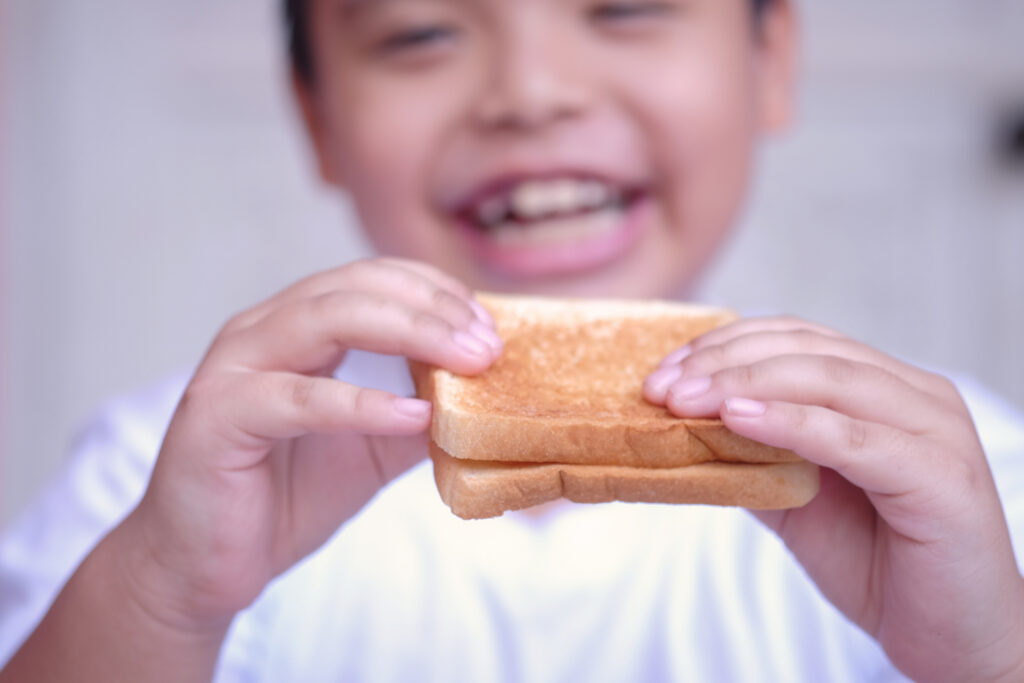
6 Tasty Ways to Turn National Grilled Cheese Day into a Learning Adventure for Your Preschooler
Creative world school Apr 10, 2026Every preschooler has opinions about grilled cheese. Crust or no crust. Extra crispy or soft. That specific shade of bright yellow cheese only, and please don’t try anything else, thank you. April 12 is National Grilled Cheese Day, and what looks like an excuse to eat a sandwich turns out to be a pretty solid hour of food-based learning. Here are six ways to make it special.
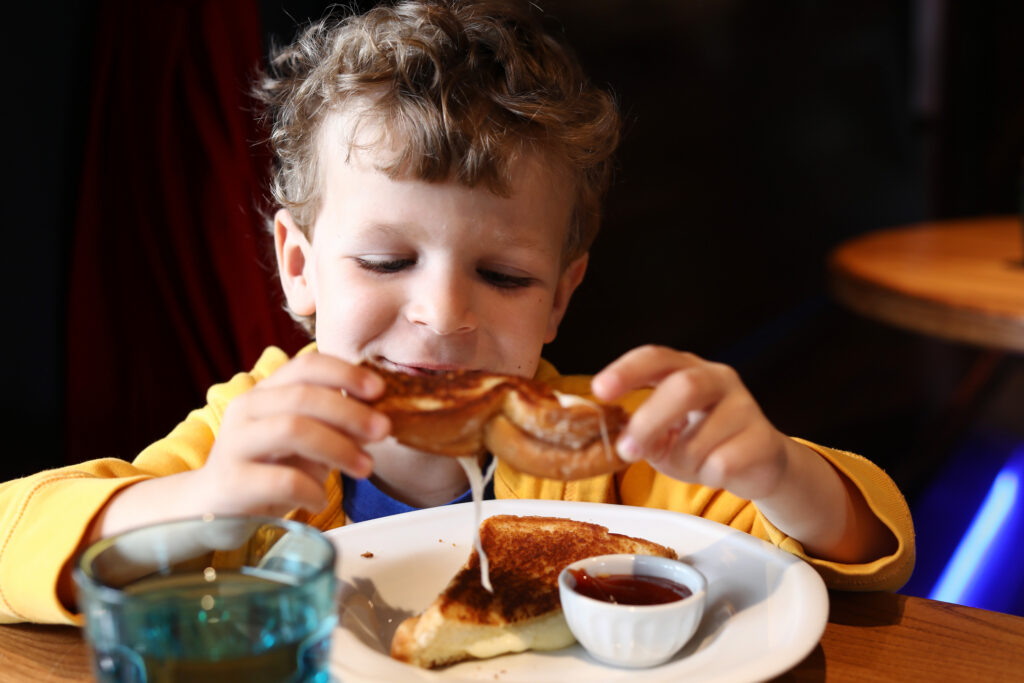
1. Count and Sort the Ingredients
Before you start cooking, line up the ingredients and count them together. How many slices of bread? How many pieces of cheese? If you’re using two slices per sandwich, how many sandwiches can you make from six slices? That’s early multiplication reasoning, and it fits entirely in a kitchen.
2. Talk About Where Cheese Comes From
If your preschooler thinks cheese only comes from ‘the store’, today’s a good day to go further up the supply chain. Cheese comes from milk, which comes from cows, goats, or sheep. Ask them what they think happens between “cow” and “cheese wrapper.” The answers are almost always creative.
3. Run a Cheese Taste Test
If your kiddo’s the adventurous type, get three or four different cheeses, American, cheddar, mozzarella, Swiss, and cut them into small pieces for a tasting. Before your child says whether they like it, ask them to describe it. What color is it? Is it squishy or firm? Does it smell like anything? That’s categorization, observation, and vocabulary all happening at once. They might even discover a new favorite!
The Little Book of Cheese by Christina Sicoli and Caitlin Renee Steuer is an excellent fit for this activity. This board book uses fun poems and rhymes to introduce toddlers to the stories of aging cheeses and fun Italian foodie facts!
4. Let Them Make It
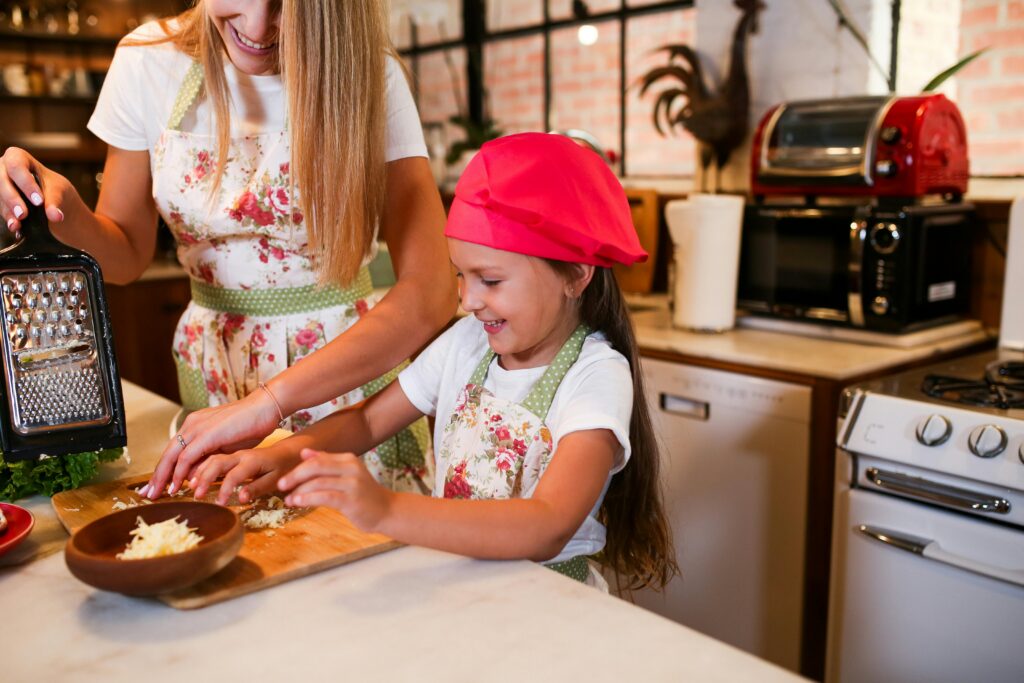
A four-year-old can spread the butter, layer the cheese, and help press the sandwich down in the pan with your hands nearby. The work is perfect for building fine motor skills and multi-step comprehension. It also gives them a chance to practice independence. Eating something they made themselves makes it that much more rewarding. If one side comes out slightly burnt, that’s a learning outcome.
5. The Great Melt Experiment
Turn the cooking process into a mini-science experiment. Before putting the sandwiches in the pan, ask your child to predict which cheese will melt the fastest or become the “stretchiest.” As the cheese warms up, watch the transformation together (from a safe distance). Observing how solid cheese becomes a liquid-like “goo” introduces basic concepts of physics and temperature change.
6. Shape Play
Use food-safe, kid-friendly sandwich cutters to press shapes into the finished sandwich before it’s cut. Stars, hearts, circles, dinosaurs – whatever you have on hand will work! If you don’t have cutters, you can use the rim of a sturdy plastic cup to press out “perfect circles” or simply help your child pull the crusts off to create different-sized rectangles. Shape recognition is a math skill, and this is the most delicious way to practice it. Using their hands to “punch out” shapes is a fantastic way to build hand strength without needing any sharp tools
A Bonus Read for Picky Eaters
Bread and Jam for Frances by Russell Hoban is perfect for not-so-adventurous preschoolers. In this book, Frances refuses to eat anything except bread and jam, which is very relatable at four, and the story handles it with patient, funny energy that parents will appreciate just as much as kids.
At Creative World School, we believe that mealtime is more than just a break in the day. It is a prime opportunity for hands-on discovery. From the kitchen to the classroom, we encourage children to ask “why” and “how” as they engage with the world around them.
Our Exploratorium™ and inquiry-based curriculum are designed to carry that same “figure it out yourself” energy into every moment of the school day. In this dedicated space, preschoolers aren’t just told how things work. They’re given the tools to test, build, and observe for themselves, turning everyday curiosity into lifelong critical thinking skills. Whether we’re exploring the science of a melting sandwich or the physics of a building block, we make learning a delicious adventure.
Find a school near you and see how we bring discovery to life every single day!

Related Articles
-
10 Storytime Favorites for Random Acts of Kindness Day

-
10 Sweet and Simple Valentine’s Day Ideas Preschoolers Will Love

-
20 Wacky Animal Facts to Celebrate World Animal Day

-
38 Surprising Facts to Celebrate Read Across America Day

-
April 2 Is World Autism Awareness Day. Here’s How to Bring It into Your Week.
Categories
- About Creative World (3)
- All About Water (4)
- Altamonte Springs (1)
- Animal Adventures (4)
- Apollo Beach (6)
- Apopka (4)
- Art (5)
- Avalon (2)
- Avalon Park (5)
- Away We Go (3)
- Back to school (4)
- Belton (4)
- Blogs to Share on Social Media (7)
- Bonita Springs (1)
- Brandon (2)
- Brrr... Cold! (2)
- Buggin' Out (2)
- Build It Up Theme (6)
- CampTastic (3)
- Chesapeake (3)
- Childhood Development (33)
- Children Book Recommendations (14)
- Children Quotes (1)
- Children Songs (1)
- Construction Theme (1)
- Contests (1)
- Creative World Curriculum (4)
- Creative World School (2)
- Crosscreek (4)
- CW Activity (2)
- CW Books (11)
- CW Celebrates (10)
- CW Character Traits (1)
- CW Educational Focus (4)
- CW Spotlight (1)
- Cypress Springs (3)
- Delicious Recipes (2)
- Did You Know? (1)
- Down To Earth (3)
- Early Education (19)
- Education (7)
- Estero (8)
- Fall Activities (7)
- Fall Festival (1)
- Fishhawk (3)
- Food (2)
- Franchise (1)
- Franklin Township (3)
- Friendship Theme (1)
- Fun National Holidays (19)
- Georgetown, TX (2)
- Health & Safety (5)
- In The Sky (2)
- In The Trees (4)
- iSTEAM (3)
- Katy, TX (4)
- Kindergarten (5)
- Land O' Lakes (3)
- Leander, TX (1)
- Lee's Summit (5)
- Liberty (1)
- Literacy (8)
- Loudoun County, VA (2)
- Mealtimes (1)
- Naples (4)
- New Schools (3)
- North Naples (4)
- Oakstead (4)
- Ooey Gooey (1)
- Orlando (5)
- Our Staff Recommends (2)
- Outdoor Activities (13)
- Oviedo (3)
- Parenting (60)
- Parenting Advice (56)
- People We Know (3)
- psychology (1)
- Rivercrest (1)
- Riverview (4)
- RiverWalk (1)
- School Events (3)
- School Readiness (5)
- Sensory Play (2)
- social-emotional (3)
- Space Topic (1)
- Special Events (17)
- St. Cloud (1)
- St. Cloud (5)
- Starkey Ranch (5)
- STEAM (5)
- Summer (3)
- Summer Activities (38)
- Tampa (6)
- That's Me! (2)
- Tips (3)
- To The Grocery Store (2)
- Try this with your kids! (4)
- Tuition (1)
- TX (1)
- UCF (5)
- Uncategorized (74)
- Vinings (2)
- water (1)
- We're SERIOUS about PLAY (2)
- Week of the Young Child (2)
- Wesley Chapel (2)
- Winter Activities (3)