

Encouraging Literacy at Home for Preschoolers in the Gen Alpha Era
Creative world school Dec 23, 2025If you’re raising a preschooler right now, you’re navigating something totally new. Gen Alpha (children born between 2010-2024) has grown up with screens glowing in the background of nearly everything. You’re probably hearing the same thing from schools, news stories, and other parents. Kids in the U.S. today are struggling to read. Videos are fast, apps respond instantly, and real books can feel slow in comparison. Parents everywhere are wondering how to keep reading exciting and how to support strong literacy skills without turning home into a classroom. The heart of it all is connection.
Every time you talk with your child, share a story from your day, or laugh through a picture book together, you’re building the foundation of reading. Long before they recognize letters, they’re building language skills that shape comprehension, attention, memory, and imagination. Those ordinary moments count more than they realize and more than you might feel in the moment.
Why Reading Feels Harder for Today’s Kids
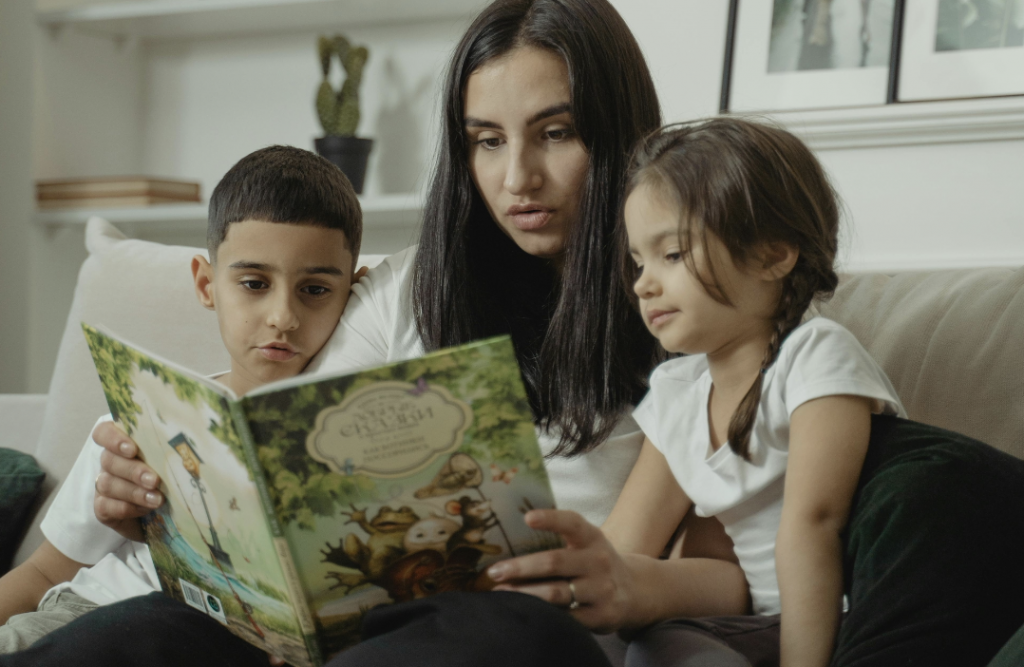
Kids right now live in a digital world. That world can be fun and helpful, but it also changes how long they stay focused and what captures their interest. It’s easy to think that books can’t compete with the bright, fast-paced rhythm of screens. But preschoolers are wired for stories. They want characters with big feelings, silly adventures, and simple plot twists. They lean into repetition and love when a familiar page comes next. They’re curious and imaginative by nature, and books feed those instincts in quiet ways that matter over time.
If you’re looking for healthier ways to balance screens with daily life, our guide on screen time recommendations for toddlers and parents can help you set a rhythm that supports learning and connection.
Fill Your Home With Everyday Stories
Inquiry-based learning begins with wonder. You can nurture early literacy by turning ordinary routines into small investigations. When you make breakfast, talk about what you’re doing and let your child ask why ingredients look or smell different. When you’re driving to preschool, point out signs and ask what they notice outside the window. When you fold laundry, wonder aloud about colors, sizes, and textures. These conversations support vocabulary growth, which is one of the strongest predictors of later reading success.
Storytime becomes even more powerful when you invite your child to join the storytelling. Preschoolers learn by experimenting, predicting, and acting out ideas. If they want to move around or pretend to be the characters, lean into it. If they want to flip back to investigate a picture again, follow them. Interaction deepens understanding, especially when it comes from their own questions.
Make Books a Natural Part of Play
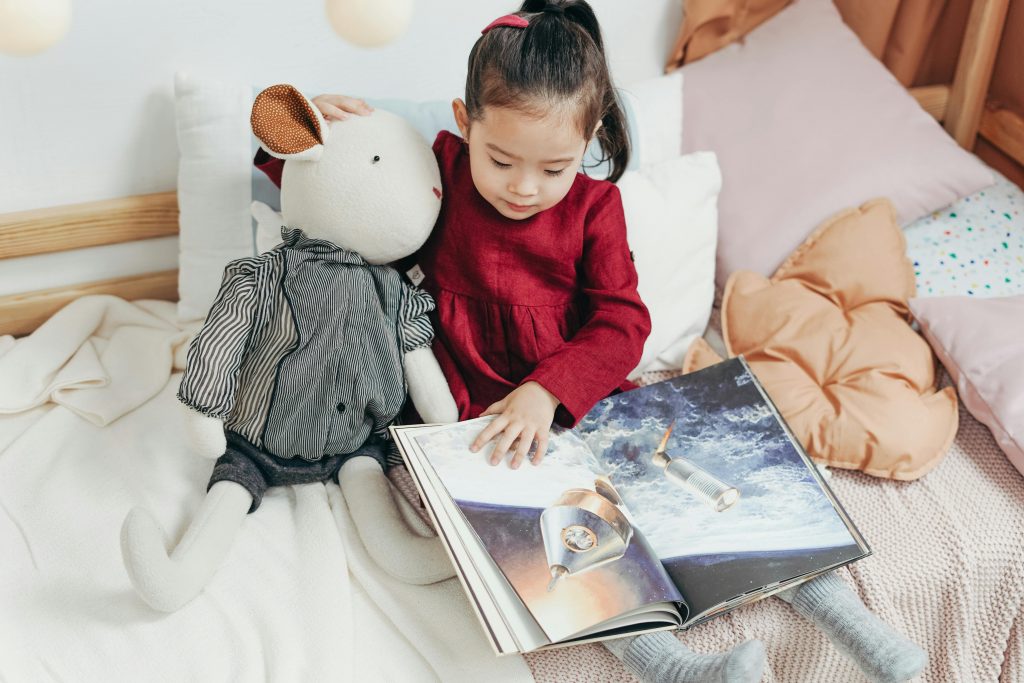
Books don’t have to stay on the bookshelf. You can weave them into the games your preschooler already loves. A play kitchen becomes more fun with pretend menus. A doctor’s set comes alive when you add appointment cards or patient forms. A block tower scene suddenly becomes a storytelling moment when you add characters or simple props. Print is everywhere in the real world, and kids benefit when they see that it serves a purpose.
Pretend play also gives kids a safe space to explore new words, feelings, and roles. When your child uses language to make sense of a story, a problem, or a character, they’re practicing the same mental skills they’ll use while reading later on.
Look for Literacy in Everyday Routines
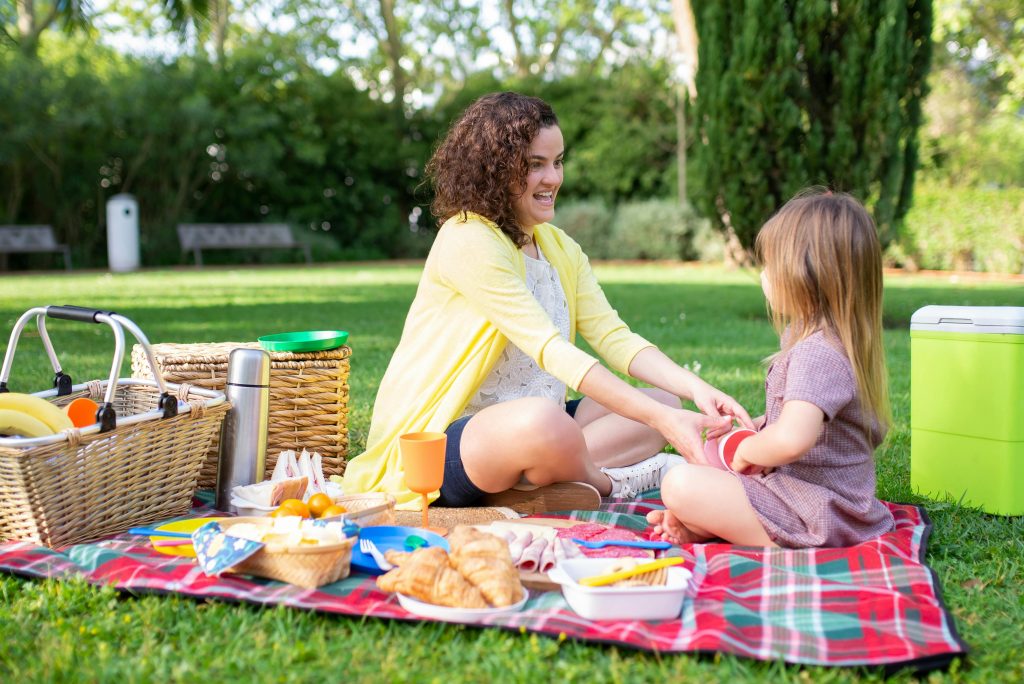
Early literacy goes far beyond spelling or sounding out words. It grows from the habits and skills that make future reading feel natural instead of frustrating. You can support these skills during almost any routine. Cooking together encourages sequencing as your child learns what comes first and next. Sorting laundry encourages categorization. Grocery shopping encourages observation as you name labels, signs, and familiar letters. Walks outside encourage description and curiosity when your child points out shapes, textures, or colors in the world around them. Even chatting about your day helps your child build an understanding of storytelling, structure, and vocabulary.
These same moments strengthen early comprehension too. When your child predicts what might happen during a story, connects something in a book to something they’ve experienced, or asks why a character feels a certain way, they’re practicing the deeper thinking that supports understanding. These everyday experiences also give your child gentle practice with early phonics. When they notice the first letter of their name on a cereal box or giggle while trying to match a sound to a picture, they’re laying the groundwork for spelling and sounding out words later. When you talk your way through life with your child, you’re modeling how reading works. You’re showing them how stories unfold, how letters and sounds connect, and how language helps make sense of big and small moments.
Word Exposure Comes First
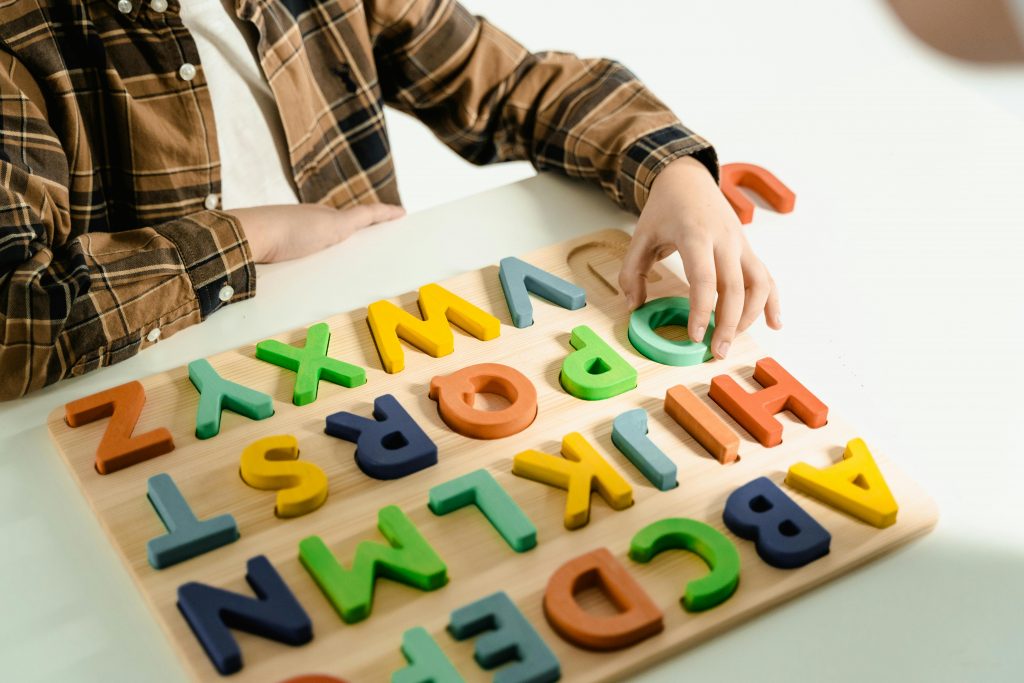
Many parents worry when their child shows little interest in letters at first. Preschoolers typically grow into letter awareness through exposure, repetition, and play. You can support this without pressure. Point out letters in the environment during errands. Write your child’s name in chalk outside and let them decorate it. Offer magnetic letters on the fridge for free play. The more your child sees letters in joyful, meaningful ways, the more naturally they’ll want to explore them.
Kids build reading confidence when books feel fun, not forced. Celebrate when your child retells a story in their own words. Celebrate when they notice something in a picture they’ve never pointed out before. Celebrate when they ask you to read the same book for the tenth time. Confidence grows in these tiny, everyday moments.
Reading Confidence Starts With Connection
The strongest early readers usually have one thing in common. They grew up in homes where stories felt important. Not serious or formal. Just warm and familiar. When your child sees you enjoying books, when they feel your excitement about a story, and when they know you’ll take time to read together, they begin to see reading as something special. That’s how lifelong readers begin.
At Creative World School, we nurture literacy through hands-on learning, conversation-rich classrooms, and story-filled play. We believe that reading confidence comes from curiosity, connection, and a sense of belonging. Our teachers support children with joyful storytelling, open-ended exploration, and activities that spark a love of language from the inside out.

Related Articles
-
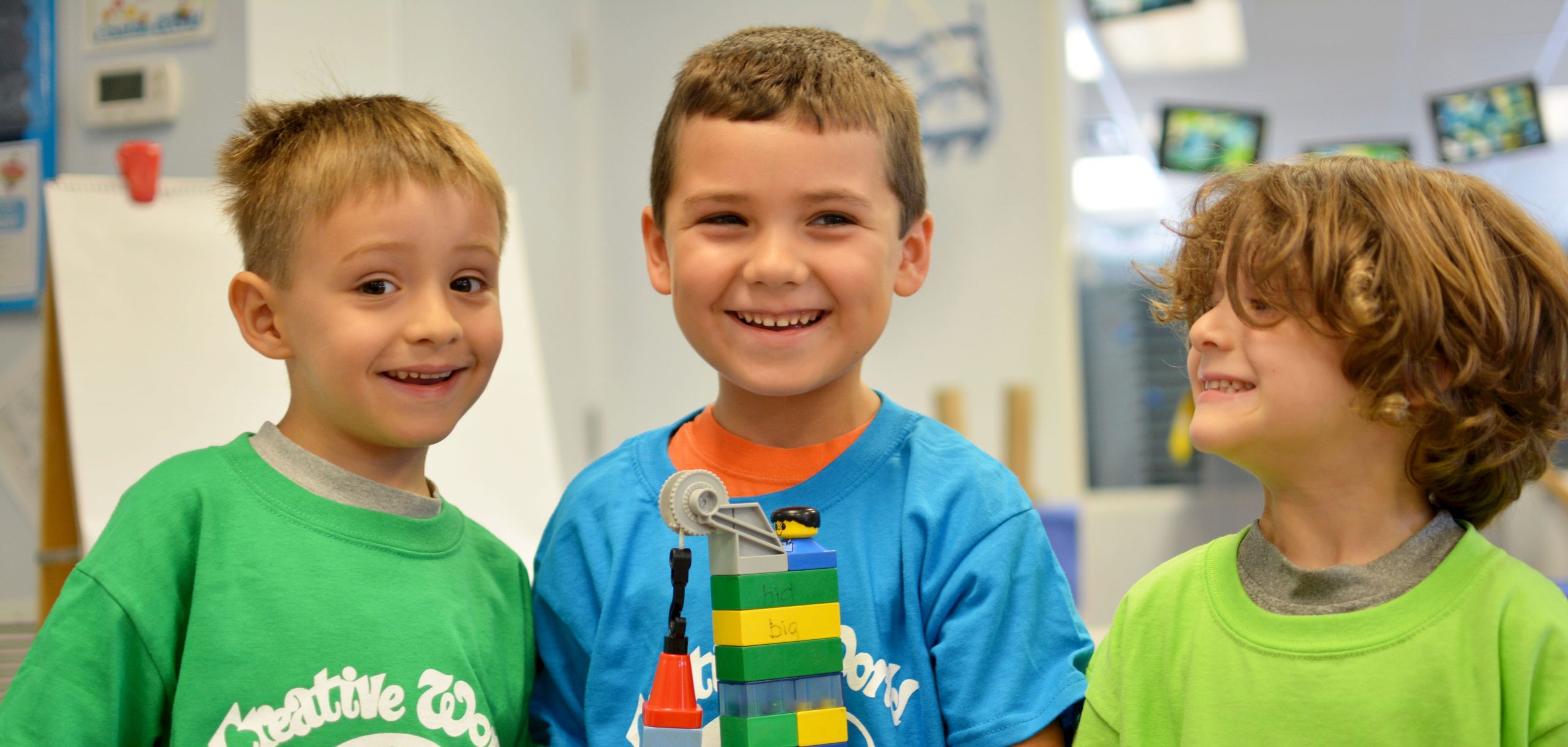
A Big Day for Little Learners: Celebrating National Preschooler’s Day
-
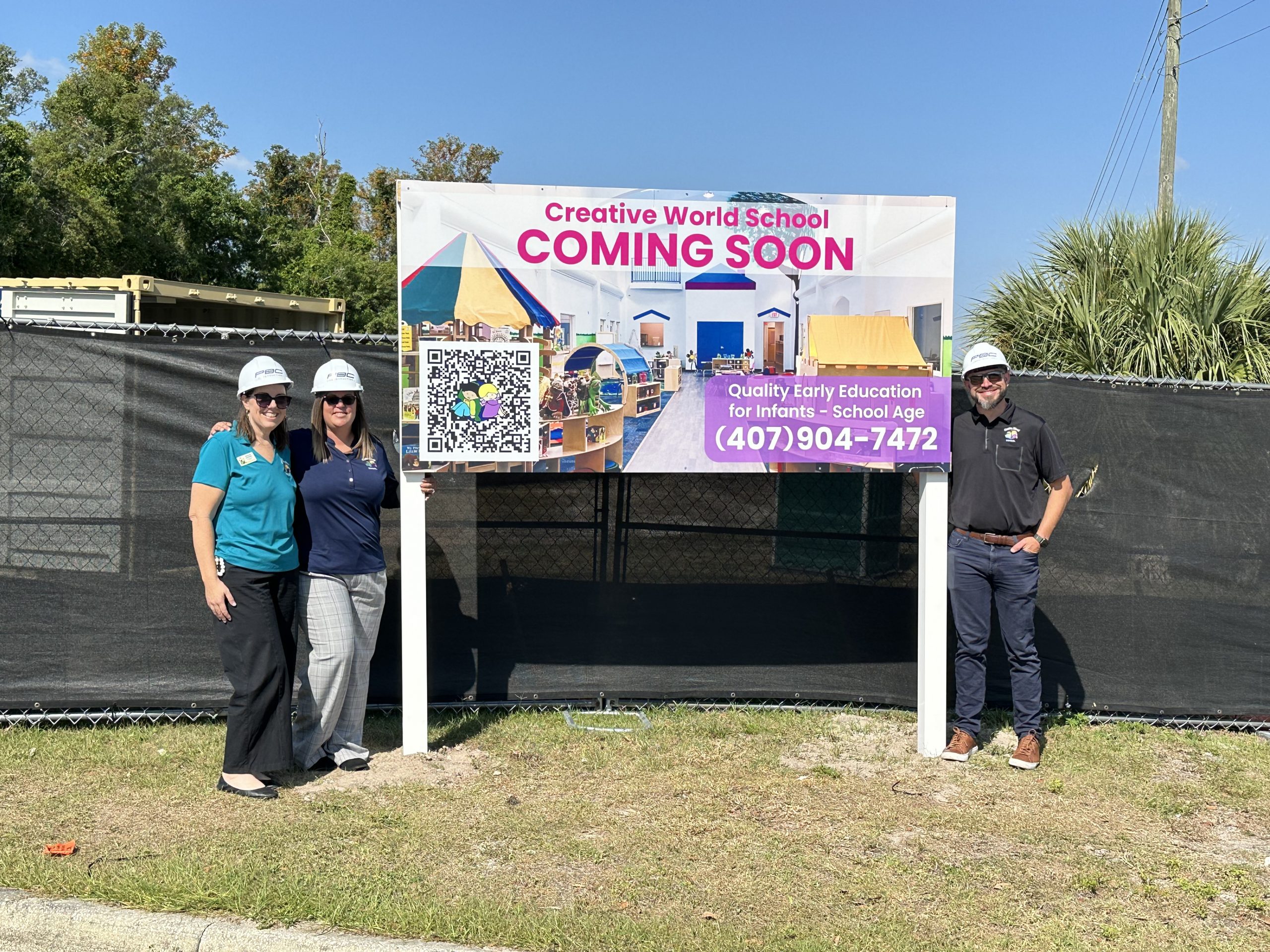
A New Era of Early Childhood Education in Apopka, FL
-
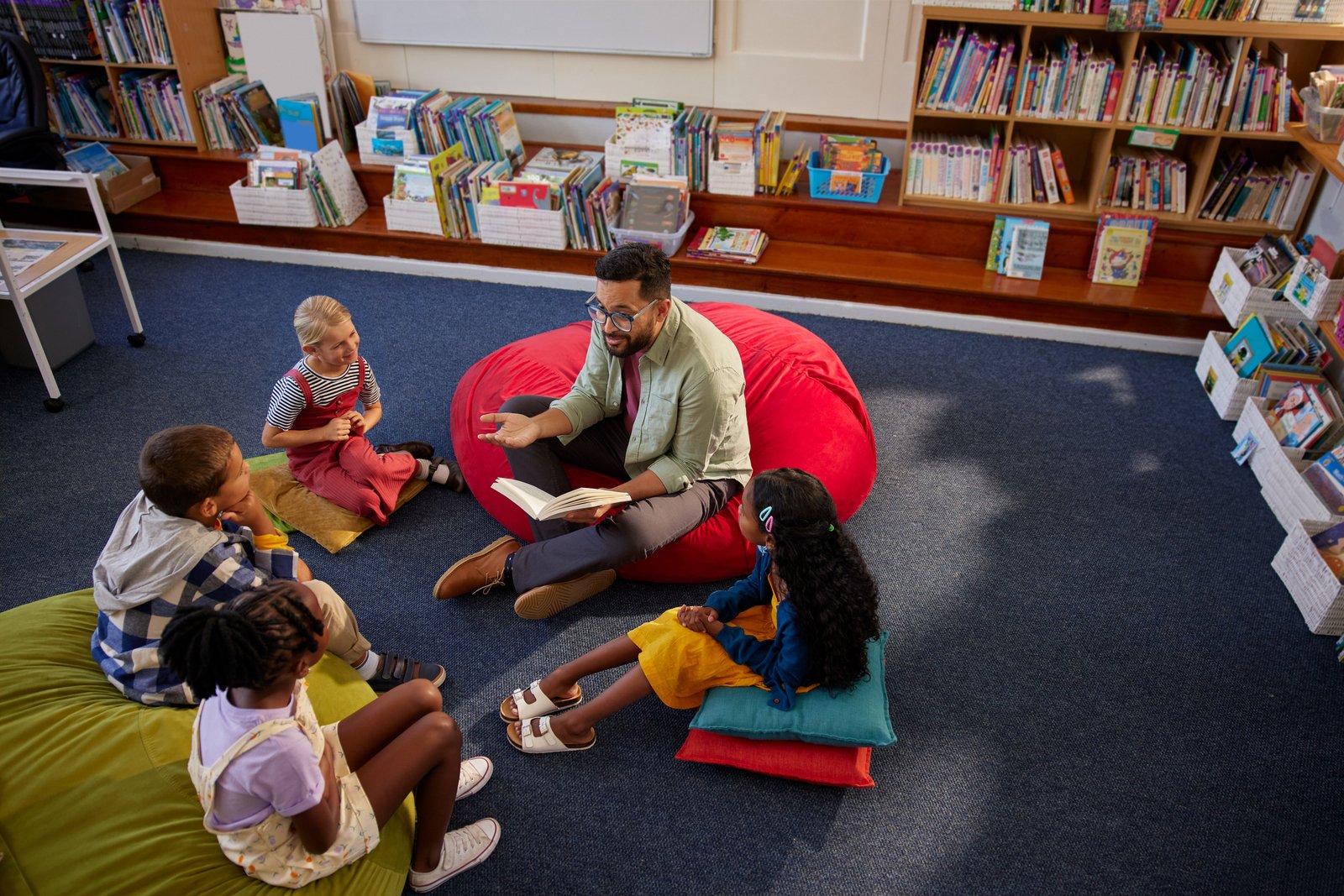
A Summer Reading Stack That Sets Your Future Kindergartener Up to Win
-
Academic Advantage: Educational Resources Near UCF for Preschool Families

-
Airport Adjacent: Teaching Gateway Children About Global Connections

Categories
- About Creative World (3)
- All About Water (4)
- Altamonte Springs (1)
- Animal Adventures (4)
- Apollo Beach (6)
- Apopka (4)
- Art (5)
- Avalon (2)
- Avalon Park (5)
- Away We Go (3)
- Back to school (4)
- Belton (4)
- Blogs to Share on Social Media (7)
- Bonita Springs (1)
- Brandon (2)
- Brrr... Cold! (2)
- Buggin' Out (2)
- Build It Up Theme (6)
- CampTastic (3)
- Chesapeake (3)
- Childhood Development (33)
- Children Book Recommendations (14)
- Children Quotes (1)
- Children Songs (1)
- Construction Theme (1)
- Contests (1)
- Creative World Curriculum (4)
- Creative World School (2)
- Crosscreek (4)
- CW Activity (2)
- CW Books (11)
- CW Celebrates (10)
- CW Character Traits (1)
- CW Educational Focus (4)
- CW Spotlight (1)
- Cypress Springs (3)
- Delicious Recipes (2)
- Did You Know? (1)
- Down To Earth (3)
- Early Education (19)
- Education (7)
- Estero (8)
- Fall Activities (10)
- Fall Festival (1)
- Fishhawk (3)
- Food (2)
- Franchise (1)
- Franklin Township (4)
- Friendship Theme (1)
- Fun National Holidays (19)
- Georgetown, TX (3)
- Health & Safety (5)
- In The Sky (2)
- In The Trees (4)
- iSTEAM (5)
- Katy, TX (5)
- Kindergarten (5)
- Land O' Lakes (3)
- Leander, TX (1)
- Lee's Summit (5)
- Liberty (1)
- Literacy (8)
- Loudoun County, VA (2)
- Mealtimes (1)
- Naples (4)
- New Schools (3)
- North Naples (4)
- Oakstead (4)
- Ooey Gooey (1)
- Orlando (5)
- Our Staff Recommends (2)
- Outdoor Activities (14)
- Oviedo (4)
- Parenting (62)
- Parenting Advice (60)
- People We Know (3)
- psychology (1)
- Rivercrest (1)
- Riverview (4)
- RiverWalk (1)
- School Events (3)
- School Readiness (5)
- Sensory Play (2)
- social-emotional (3)
- Space Topic (1)
- Special Events (17)
- St. Cloud (1)
- St. Cloud (5)
- Starkey Ranch (5)
- STEAM (5)
- Summer (3)
- Summer Activities (38)
- Tampa (6)
- That's Me! (2)
- Tips (3)
- To The Grocery Store (2)
- Try this with your kids! (4)
- Tuition (1)
- TX (1)
- UCF (5)
- Uncategorized (72)
- Vinings (2)
- water (1)
- We're SERIOUS about PLAY (2)
- Week of the Young Child (2)
- Wesley Chapel (2)
- Winter Activities (3)