
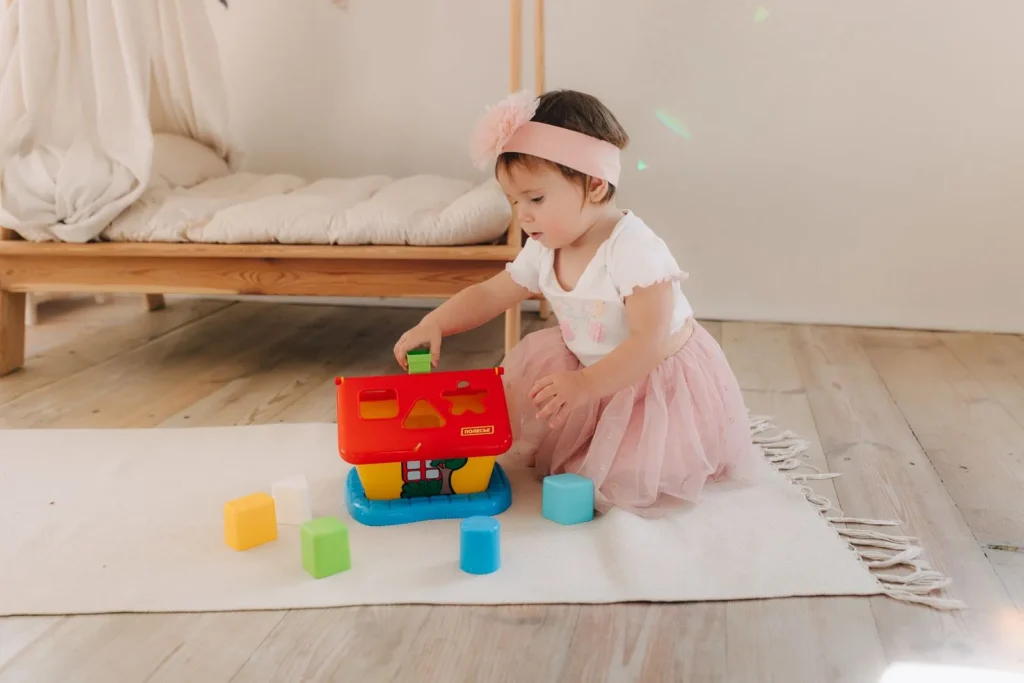
Colors and Shapes Are Hiding All Over Your Day
Creative world school Nov 20, 2026Your preschooler is learning colors and shapes everywhere they look, from the red apple in the fruit bowl to the round wheels on the bus! Every time you name one out loud, you hand them a word for something they’re already seeing.
You can fold this learning into what you already do together, like making breakfast, riding in the car, or building with blocks on the floor. A few playful habits are all it takes to help colors and shapes click.
Spotting Colors and Shapes Around the House
Your home is full of teaching tools you already own, and the kitchen is packed with them. Plates are circles, a cereal box is a rectangle, and a folded napkin can become a square or a triangle. The fruit bowl is a color lesson all on its own.
Name things out loud as you go. “Can you hand me the yellow banana?” “Look, your cracker is a square!” Short, specific comments like these give your child the words to match what they see.
Turn tidying into a sorting game. Ask your kiddo to put all the red toys in one basket and the blue ones in another, or to find every round thing in the toy bin. Sorting by one feature at a time is simple early math practice, and you can start with whatever toys are already on the floor.
The same idea works all over the house. Getting dressed is a color chat when you ask which socks go with the green shirt, and bath time becomes shape play with stacking cups. Even a walk around the block can be a shape hunt when you point out round manhole covers, triangle yield signs, and rectangle front doors.
How Colors and Shapes Build Early Math Skills
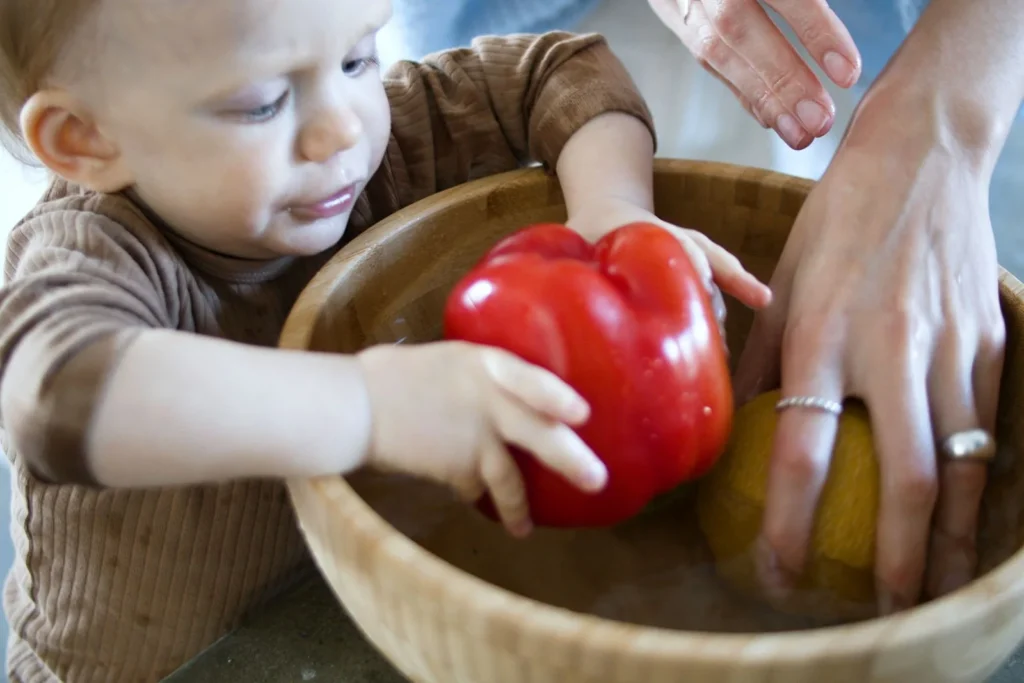
There’s real brain-building going on under all this play. Describing shapes and space is one of the two main parts of kindergarten math in the Common Core standards, and preschoolers can start building that understanding long before then through everyday routines and play. When your child notices that a ball and an orange are both round, or that a stop sign has more sides than a window, they’re getting ready for geometry later on.
The space part is mostly about position words. Words like above, under, beside, between, and behind help a child describe where things are, so use them while you play. “Your bear is under the chair.” “Put the red block beside the blue one.”
Colors do similar work. Sorting, matching, and naming colors gives kids practice grouping things by a shared trait, and that kind of grouping shows up again in math and science. Counting and patterns are the other big piece of early math, and our guide to early math at home with counting and patterns has easy ideas for both. For the bigger picture on hands-on learning, see how play boosts your child’s brain development.
Color and Shape Games for the Car and the Store
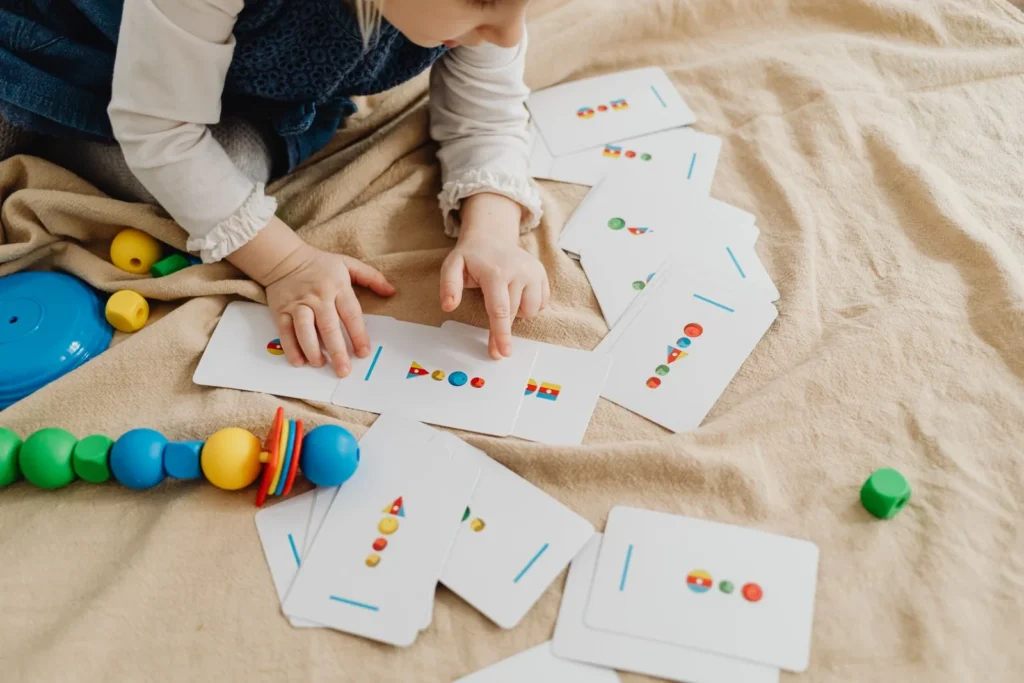
Errands become easy learning time with a couple of go-to games. I Spy is the classic, so try “I spy something orange” or “I spy something round.” At the grocery store, give your child one color or shape to hunt for and let them call out every match down the aisle.
In the car, watch for red cars, yellow school buses, and eight-sided stop signs, and let your little one shout out each one they spot! For a rainy day at home, hand over a strip of paper with a few color dots on it and send them around the house to find something that matches each one.
In Color Zoo by Lois Ehlert, bright die-cut pages peel away one shape at a time, so a tiger with a round face becomes a mouse inside a square, and then a fox made from a triangle. Go slowly and let your preschooler name each shape and color before you turn the page.
Mixing Colors and Building Shapes by Hand
Preschoolers learn a lot with their hands busy, so give them ways to build colors and shapes themselves. Playdough is great for this. Roll it into balls, snakes, and cubes, then talk about what you’ve made together.
Toothpicks or straws pushed into playdough make triangles and squares your child can hold, and blocks and magnetic tiles let them stack shapes into something new. A simple paint set covers the colors. Let your child mix two colors and guess what they’ll get before the brush touches the paper. Red and yellow make orange!
You can also dip a cup or an empty spool in paint and press it onto paper. Your child gets to see a solid cup leave a flat circle behind, which is the same shape hiding on its bottom.
Snack time can join in when you arrange apple slices into a circle or build a little shape picture on the plate before eating. Outside, collect leaves, rocks, and acorns and sort them by shape or color on the porch steps. Sidewalk chalk circles and torn-paper collages give little hands even more ways to explore.
Find a Hands-On Preschool Near You
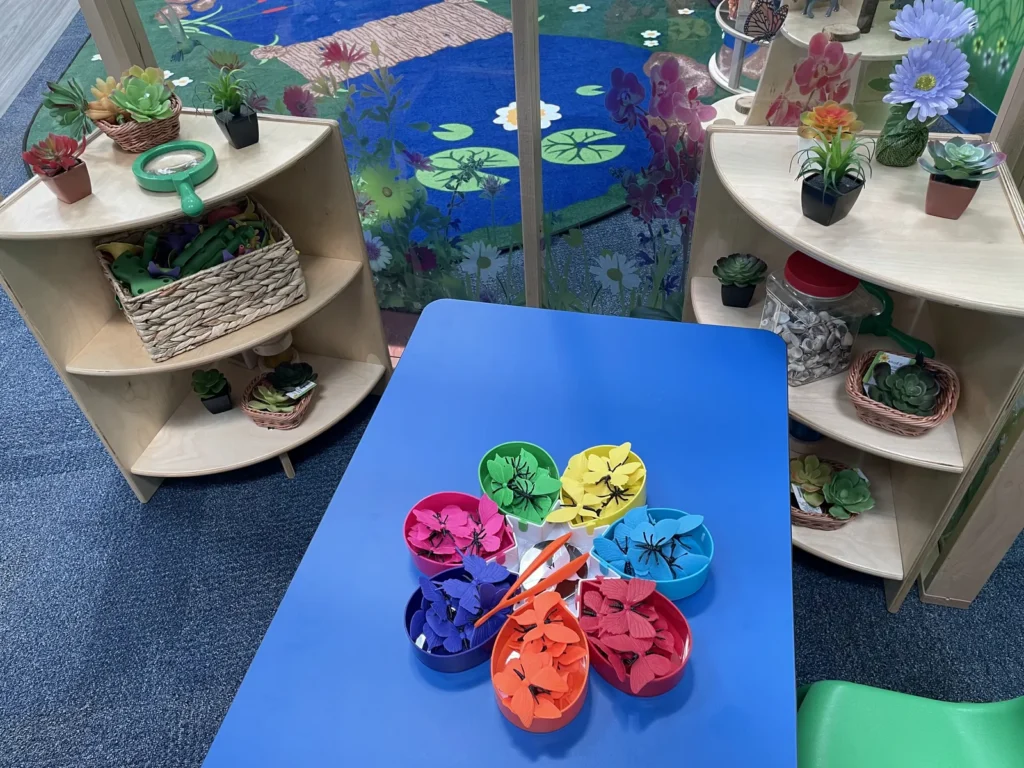
Hands-on discovery is at the heart of how we teach at Creative World School. In our Exploratorium™, children explore colors, shapes, and how the world works by touching, building, and asking questions, the same kind of play you’re doing at home. Our iSTEAM curriculum starts with inquiry, which means your child’s own questions, and then brings in science, technology, engineering, art, and math through things like balancing block towers, rolling cars down ramps, and comparing shapes.
Our teachers follow each child’s curiosity and explore right alongside them. Come see a day of hands-on learning up close!

Related Articles

Categories
- About Creative World (2)
- All About Water (1)
- Altamonte Springs (1)
- Animal Adventures (2)
- Apollo Beach (6)
- Apopka (5)
- Art (3)
- Avalon Park (4)
- Back to school (4)
- Belton (4)
- Blogs to Share on Social Media (7)
- Brandon (3)
- Build It Up Theme (2)
- CampTastic (3)
- Chesapeake (3)
- Childhood Development (31)
- Children Book Recommendations (5)
- Construction Theme (1)
- Creative World Curriculum (2)
- Crosscreek (4)
- CW Activity (2)
- CW Books (2)
- CW Celebrates (3)
- CW Spotlight (1)
- Cypress Springs (4)
- Did You Know? (1)
- Down To Earth (1)
- Early Education (4)
- Education (1)
- Estero (2)
- Fall Activities (22)
- Fall Festival (1)
- Fishhawk (4)
- Food (1)
- Franchise (1)
- Franklin Township (5)
- Friendship Theme (1)
- Fun National Holidays (19)
- Georgetown, TX (4)
- Health & Safety (4)
- In The Sky (2)
- iSTEAM (9)
- Katy, TX (5)
- Kindergarten (5)
- Land O' Lakes (3)
- Leander, TX (3)
- Lee's Summit (6)
- Liberty (1)
- Literacy (5)
- Loudoun County, VA (2)
- Naples (4)
- New Schools (4)
- North Naples (4)
- Oakstead (5)
- Ooey Gooey (1)
- Orlando (5)
- Outdoor Activities (14)
- Oviedo (4)
- Parenting (53)
- Parenting Advice (62)
- psychology (1)
- Riverview (5)
- RiverWalk (1)
- School Events (3)
- School Readiness (4)
- Sensory Play (1)
- social-emotional (2)
- Space Topic (1)
- Special Events (14)
- St. Cloud (2)
- St. Cloud (5)
- Starkey Ranch (6)
- STEAM (1)
- Summer Activities (35)
- Tampa (7)
- That's Me! (1)
- Tips (2)
- To The Grocery Store (1)
- Try this with your kids! (2)
- Tuition (1)
- TX (1)
- UCF (6)
- Uncategorized (62)
- Vinings (2)
- We're SERIOUS about PLAY (2)
- Week of the Young Child (1)
- Wesley Chapel (3)
- Winter Activities (1)