
The Best Ways to Feed Your Preschooler’s Endless Curiosity Without Burning Out
Creative world school Jul 3, 2026“Why is the sky that color?”
“Why does the dog do that?”
“Why don’t grown-ups eat candy for breakfast?”
You’re a few sips into your coffee and your preschooler is hosting trivia you may or may not be able to answer. They’re wired for this. The questions kids ask between three and five count as some of the sharpest, most original thinking happening in your house.
Here’s why their curiosity is so good, and how to feed it without burning out.
How Many Questions Preschoolers Ask Each Hour
Buckle up. Three-year-olds ask an average of 76 information-seeking questions per hour during conversations with caregivers, according to a landmark study from developmental psychologist Michelle Chouinard and her colleagues. Per. Hour. That’s more than one question every minute.
Yes, that includes the “why” loops that drive parents up the wall. The same study found that most of those questions are real attempts to gather information about how the world works. Most of them are real thinking happening in front of you. Our explainer on why curiosity matters in early learning digs deeper into the why.
The kicker is that this peaks during the preschool years and tapers as kids get older. Whatever you can pour in now pays off for years.
Why “Why” Questions Drive Real Learning
When your kid asks “why does the dog breathe with his tongue out,” they’re doing something pretty amazing. They’ve noticed something they don’t understand. They’ve spotted the gap. And they’ve decided you’re the right person to fill it. That’s three steps in about two seconds.
Researchers call this inquiry-based learning. The inquiry (or question) sets the lesson plan. Their brain is ready for the answer because they genuinely wanted it. The information is easy to recall later because it answered a question they actually had. Read Ada Twist, Scientist by Andrea Beaty the next time your preschooler hits a “why” streak. Ada’s head is full of the same kind of questions you’re getting at breakfast.
Those “why” loops are how preschoolers refine their model of the world, one explanation at a time.
How to Answer When You Don’t Know
You’ll get questions you can’t answer. Treat that as an opportunity.
The best response is “I don’t know. Let’s find out together!” Then actually find out. Pull up a kid-friendly explainer video. Look it up in a children’s encyclopedia. The answer matters just as much as the process. Your preschooler is learning that questions have answers, that grown-ups are humble enough to admit when they don’t know, and that finding out is fun!
Resist the urge to make something up on the spot. A preschooler may accept a wild answer at age four and quote it back to a teacher at age five. Saying “just because” is convenient, but not helpful. For more on supporting their thinking skills, check our guide on nurturing critical thinking in young children.
Turn Their Questions Into Mini Adventures
Some questions deserve a quick answer. Others deserve an entire afternoon. Most parents learn to spot the difference after the first dozen.
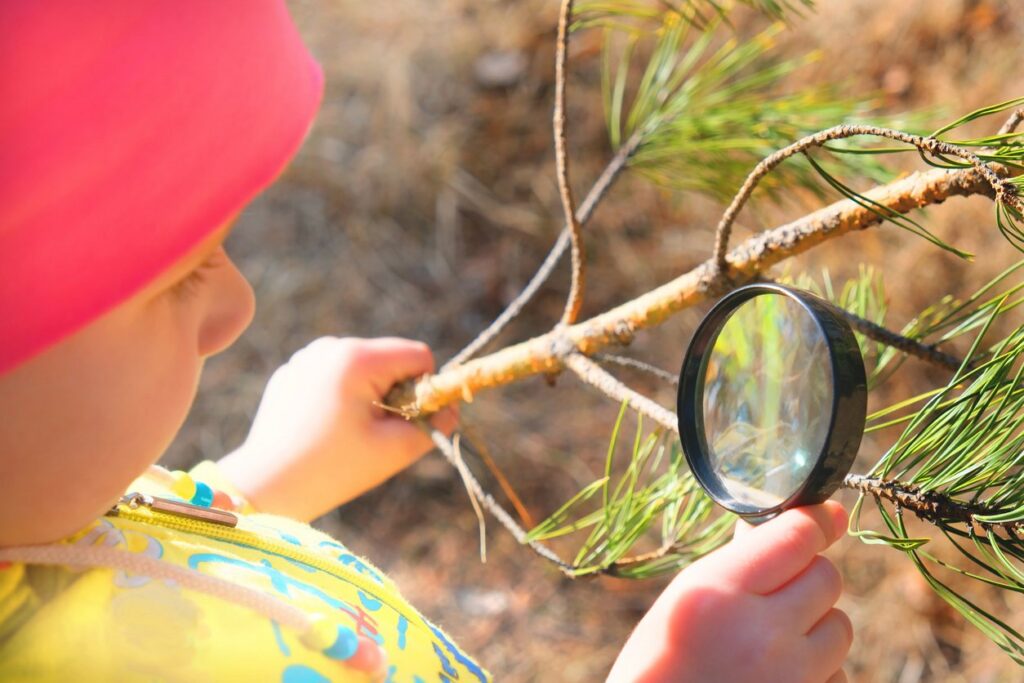
If your kid asks why ants walk in a line, take ten minutes and follow some ants in the yard with them. If they ask whether ice melts faster on the sidewalk than in the sink, set up a little experiment with two ice cubes. If they ask why the moon looks different at night, stay up an extra five minutes to point at it together. None of this needs a budget. It just needs you noticing that your kid handed you a gift-wrapped teaching moment.
Pull What Do You Do With an Idea? by Kobi Yamada off the shelf for the bedtime after one of those deep-dive days. The story follows a child who’s unsure what to do with a new idea and slowly figures out it’s worth holding onto, which is exactly what your preschooler is doing all day.
Save the deep dives for the questions that grab them most. Five minutes of curiosity once a day will do more than a whole Saturday of forced “educational” activities.
When to Slow Down and Ask Questions Back
Sometimes the best response to a preschooler’s question is another question. Try asking them what they think first.
“Why is the sky blue?”
“What do you think? Why does the sky look blue and not purple?”
Then listen. Their answer is often full of wonder, and often surprisingly close to a real explanation. The answer also tells you exactly where their thinking is, which makes your real answer way more useful.
This back-and-forth builds a habit a kid may carry for life. A child who learns that their guesses matter tends to be the one who later raises their hand, tries the hard problem, and pushes back on what doesn’t sit right.
So lean into the question marathon. You may miss it a few years from now.
When you’re ready to find a place where every “why” gets fed every single day, come visit Creative World School. Our classrooms are built around inquiry-based learning, and our Exploratorium™ is the hands-on discovery space where preschoolers chase the questions they walk in with. Our 3 E’s of Excellence™ curriculum keeps Education, Exploration, and Enrichment built into every day, so your kid’s curiosity has somewhere big to land.

Related Articles
-
“Let’s Find Out” Is the Best STEM Answer You Can Give Your Preschooler

-
10 Creative Strategies for Introducing New Foods to Picky Toddlers: Tips and Tricks

-
10 Earth Day Adventures for Preschoolers
-
10 Fun Ways to Boost Fine Motor Skills in Your Preschooler
-
10 Wacky Facts About Play-Doh That Will Amaze You

Categories
- About Creative World (2)
- All About Water (1)
- Altamonte Springs (1)
- Animal Adventures (2)
- Apollo Beach (6)
- Apopka (5)
- Art (3)
- Avalon Park (4)
- Back to school (4)
- Belton (4)
- Blogs to Share on Social Media (7)
- Brandon (3)
- Build It Up Theme (2)
- CampTastic (3)
- Chesapeake (3)
- Childhood Development (31)
- Children Book Recommendations (5)
- Construction Theme (1)
- Creative World Curriculum (2)
- Crosscreek (4)
- CW Activity (2)
- CW Books (2)
- CW Celebrates (3)
- CW Spotlight (1)
- Cypress Springs (4)
- Did You Know? (1)
- Down To Earth (1)
- Early Education (4)
- Education (1)
- Estero (2)
- Fall Activities (22)
- Fall Festival (1)
- Fishhawk (4)
- Food (1)
- Franchise (1)
- Franklin Township (5)
- Friendship Theme (1)
- Fun National Holidays (19)
- Georgetown, TX (4)
- Health & Safety (4)
- In The Sky (2)
- iSTEAM (9)
- Katy, TX (5)
- Kindergarten (5)
- Land O' Lakes (3)
- Leander, TX (3)
- Lee's Summit (6)
- Liberty (1)
- Literacy (5)
- Loudoun County, VA (2)
- Naples (4)
- New Schools (4)
- North Naples (4)
- Oakstead (5)
- Ooey Gooey (1)
- Orlando (5)
- Outdoor Activities (14)
- Oviedo (4)
- Parenting (53)
- Parenting Advice (62)
- psychology (1)
- Riverview (5)
- RiverWalk (1)
- School Events (3)
- School Readiness (4)
- Sensory Play (1)
- social-emotional (2)
- Space Topic (1)
- Special Events (14)
- St. Cloud (2)
- St. Cloud (5)
- Starkey Ranch (6)
- STEAM (1)
- Summer Activities (35)
- Tampa (7)
- That's Me! (1)
- Tips (2)
- To The Grocery Store (1)
- Try this with your kids! (2)
- Tuition (1)
- TX (1)
- UCF (6)
- Uncategorized (62)
- Vinings (2)
- We're SERIOUS about PLAY (2)
- Week of the Young Child (1)
- Wesley Chapel (3)
- Winter Activities (1)